
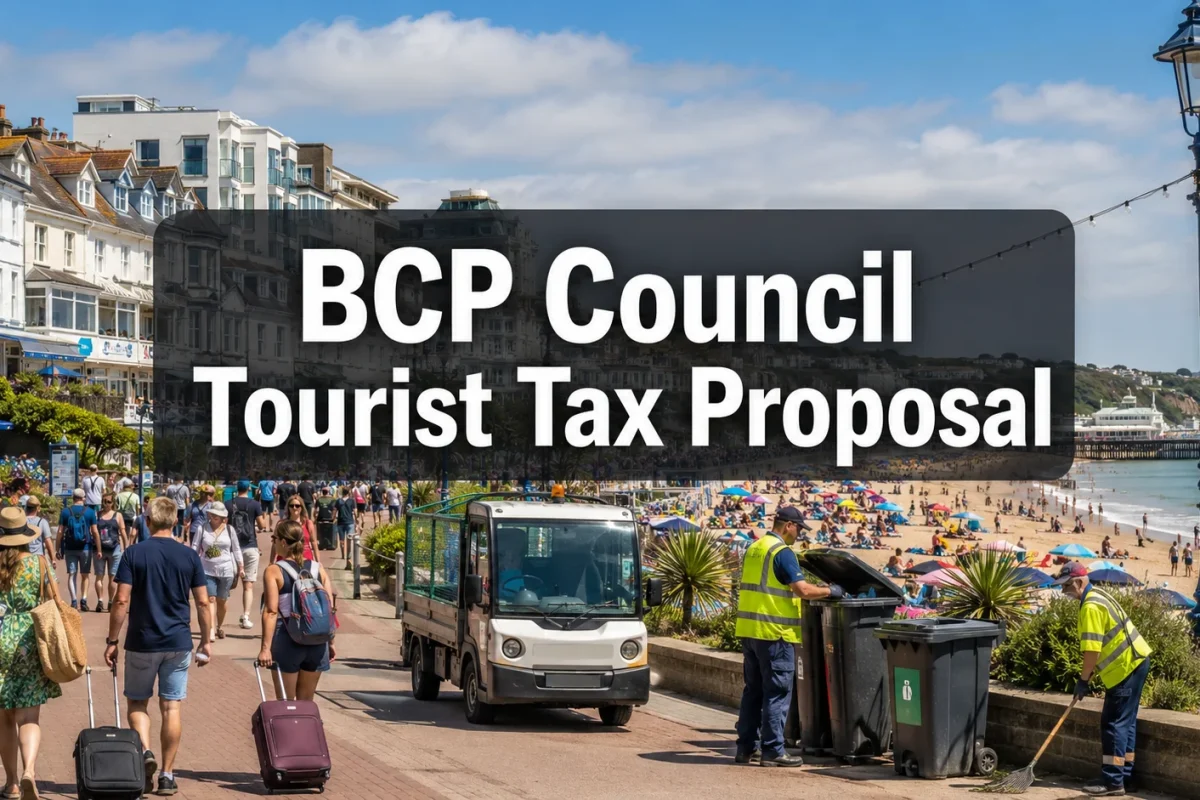
The BCP Council tourist tax proposal could mean Bournemouth visitors may pay an extra charge on overnight stays if the UK Government gives the council permission to introduce a visitor levy.
The charge is not confirmed yet, but it is being discussed as a way to fund services affected by high visitor numbers, especially around the seafront.
Key takeaways:
- The proposal may apply to hotels, B&Bs, guesthouses and holiday lets.
- Day visitors are unlikely to be affected.
- BCP Council says the levy could help fund waste management, transport, policing and beach maintenance.
- Some hoteliers worry higher costs may discourage tourists.
- Tourism leaders say the money should be ring-fenced for local tourism.
- The final decision depends on UK Government approval.
What Is the BCP Council Tourist Tax Proposal?

The BCP Council tourist tax proposal is a plan that could allow the local authority to charge visitors who stay overnight in paid accommodation. This may include hotels, guesthouses, B&Bs and short-term holiday lets.
BCP Council cannot introduce the levy without government approval. The Ministry of Housing, Communities and Local Government has said the final design of the visitor levy has not been decided. It has also consulted on whether the levy could be available to some areas without mayors, such as BCP.
Meaning of a Tourism Levy
A tourism levy is usually a small charge added to overnight accommodation. It is common in many international destinations and is often used to support local tourism services.
| Visitor type | Could the levy apply? |
| Hotel guest | Yes |
| B&B guest | Yes |
| Holiday let guest | Possibly |
| Day visitor | Usually no |
The exact amount, rules and exemptions are not yet confirmed.
Why BCP Council Wants Levy Powers?
BCP Council says visitor numbers place pressure on local services. Bournemouth’s seafront can become extremely busy, especially in summer and during half-term breaks.
The council has highlighted issues such as seafront waste, road pressure, busier public spaces, illegal parking and the need to keep beaches ready for visitors.
Why Is Bournemouth Being Linked With a Tourist Tax?
Bournemouth is being linked with a tourist tax because it receives large numbers of visitors but has limited ways to raise direct income from them. Local businesses benefit from tourism, but the council still has to manage the cost of keeping the destination clean, safe and accessible.
Richard Herrett, BCP Council’s cabinet member for destination, leisure and commercial operations, said a tourism levy could help the council deal with pressure on services such as roads, buses, hospitals, policing and seafront waste.
A coastal tourism adviser described the issue clearly:
“I see this as a question of fairness. Visitors expect clean beaches, safe streets and working facilities, but those services need proper funding.”
Pressure on the Seafront and Public Services
The seafront is one of the biggest areas of concern. Large visitor numbers can create heavy waste, crowd management challenges and extra work for council teams.
BCP Council has referred to the scale of seafront waste capacity and the effort needed to prepare the beach again by the following morning after busy days.
The Push for a Year-Round Destination
Supporters also argue that a levy could help Bournemouth become a stronger year-round destination. Instead of relying heavily on summer visitors, the town could invest in events, facilities and promotion across the whole year.
How Could the Tourism Levy Affect Bournemouth Visitors?

For Bournemouth visitors, the main impact would be cost. A tourist levy could make overnight stays slightly more expensive.
| Possible charge type | What it means for visitors |
| Fixed nightly fee | A set amount added per night |
| Percentage charge | A small percentage added to the booking |
| Seasonal charge | Higher chance of applying during busy periods |
For a short break, the extra cost may be small. For families or longer stays, it could be more noticeable. This is why clear communication would be important. Visitors should know about any charge before they book, not when they arrive.
Some hoteliers fear tourists would “go elsewhere” if they had to pay more. That concern matters because Bournemouth competes with many other UK seaside destinations.
What Could the Visitor Levy Mean for Hotels and Local Businesses?
The visitor levy could create both risks and opportunities for local businesses. Hotels, B&Bs and guesthouses may worry that even a small extra charge could make bookings harder, especially during quieter months.
At the same time, some business voices believe a levy could help if the money is spent properly. Andy Lennox, chair of BCP’s Destination Management Board, said a tourism levy would benefit businesses if it is spent in the right way.
A hotel business consultant explained the concern clearly:
“I would not support a levy that simply disappears into a general fund. I would want to see the money spent on tourism, cleaner public spaces, better events and stronger reasons for guests to return.”
This shows the main issue: trust. Businesses may be more open to the proposal if the money is ring-fenced for tourism and the local industry has a say in how it is used.
How Might the Money From a Bournemouth Tourist Tax Be Used?
A key question is how the money would be spent. Local tourism representatives have said any levy should support tourism rather than become another general tax.
Possible uses include:
- Seafront cleaning and waste management
- Better visitor facilities
- Transport and road improvements
- Public safety measures
- Tourism promotion
- Year-round events
| Spending area | Possible benefit |
| Beach cleaning | Cleaner seafront for visitors and residents |
| Events | More reasons to visit outside summer |
| Transport | Easier movement on busy days |
| Public safety | Better management of crowded areas |
If visitors can see visible improvements, the levy may be easier to accept. If the money is not clearly linked to tourism, opposition is likely to grow.
What Role Does the UK Government Play in the BCP Council Tourist Tax Proposal?
The UK Government plays a central role because BCP Council needs permission to introduce a visitor levy. The proposal is connected to wider plans allowing some authorities to charge visitors for overnight stays.
The government has said the final design has not yet been decided. It has also consulted on whether areas without mayors could be included.
This means the BCP Council tourist tax proposal is not yet a confirmed charge. Visitors booking Bournemouth trips do not currently need to assume a tourist tax will apply unless a formal scheme is announced.
Why Are Some Hoteliers Opposed to the Tourist Tax?
Some hoteliers oppose the tourist tax because they believe it could damage Bournemouth’s competitiveness. If visitors compare Bournemouth with another seaside town and see extra charges, they may choose the cheaper option.
This concern is especially strong for smaller hotels and guesthouses. These businesses often work with tight margins and rely heavily on seasonal demand.
However, supporters argue that a well-designed levy could improve the destination. Better facilities, cleaner beaches and stronger events could encourage repeat visits and longer stays.
The debate is not only about cost. It is about whether the charge would create enough value to justify itself.
Could a Tourist Tax Help Bournemouth Become a Better Year-Round Destination?
A tourist tax could help Bournemouth become a better year-round destination if the funds are used carefully. The council’s leisure leadership has described the levy as an opportunity to transform the destination into a real year-round offer.
This could mean more events outside peak season, better promotion, improved public spaces and stronger support for the visitor economy.
For Bournemouth, this matters because tourism should not depend only on summer weather. A broader year-round offer could help hotels, restaurants, attractions and local shops.
What Should Bournemouth Visitors Know Before Planning a Trip?
Visitors should know that the proposal has not been fully confirmed. It is still dependent on government decisions and local planning.
Before booking, visitors should check whether accommodation prices include all local charges. If a levy is introduced in the future, hotels and booking platforms should explain it clearly.
Visitors should also remember that any well-managed levy would be intended to support the destination. The aim would be to help fund the services and facilities that make Bournemouth attractive.
What Is the Future of the BCP Council Tourist Tax Proposal?
The future of the proposal depends on the government’s final decision. BCP Council wants the power to introduce a levy, but the rules are still not settled.
The most important questions are:
- Who would pay the levy?
- How much would it cost?
- Would the money be ring-fenced for tourism?
- How would local businesses be involved?
Until these details are confirmed, the proposal will remain under discussion.
Conclusion
The BCP Council tourist tax proposal could change how Bournemouth funds tourism-related services. Supporters believe it could help manage seafront waste, improve public spaces, support events and create a stronger year-round destination.
Critics worry that it could increase costs for visitors and make life harder for hotels and guesthouses.
For Bournemouth visitors, the key point is that the levy is not yet confirmed. If introduced, its success will depend on fairness, transparency and whether the money is clearly spent on improving the destination.
FAQs
What is the BCP Council tourist tax proposal?
The BCP Council tourist tax proposal is a plan that could allow the council to charge overnight visitors a tourism levy.
Would Bournemouth visitors have to pay the tourist tax?
Visitors may pay it if they stay overnight in hotels, B&Bs or holiday lets, but only if the scheme is approved.
Has the Bournemouth tourist tax been approved?
No final local scheme has been confirmed yet. The government still needs to decide the final rules.
Why does BCP Council want a tourism levy?
BCP Council says tourism creates pressure on waste services, roads, public spaces, policing and seafront management.
Would the tourist tax apply to day visitors?
It would usually apply to overnight stays, not day visitors, but the final rules are not confirmed.
How could a visitor levy affect hotel prices in Bournemouth?
It could add a small extra charge to accommodation bookings, depending on how the levy is designed.
Could the tourism levy benefit local businesses?
Yes, if the money is spent on tourism improvements, events, public spaces and visitor facilities.
Would the money be ring-fenced for tourism?
Tourism representatives have called for the money to be ring-fenced, but the final arrangement has not been confirmed.