
Last checked: 4 July 2026
Quick Answer: What Happened to Eastern Airways?
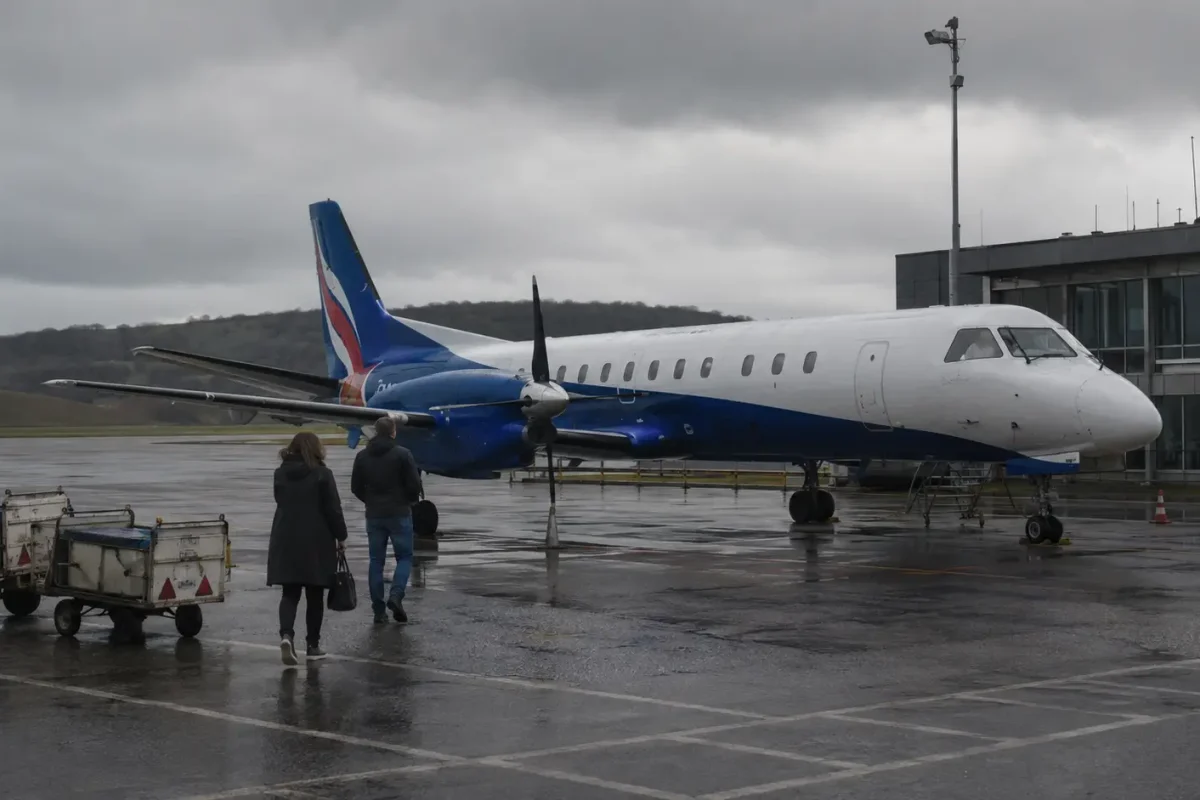
Eastern Airways suspended operations, cancelled all Eastern Airways-operated flights and entered administration. The situation worsened after reports confirmed that a potential rescue deal had collapsed, leading administrators to shift focus from saving the business as a whole to selling off its assets.
Key takeaways:
- Eastern Airways is no longer operating flights and is in administration
- A failed rescue deal ended hopes of a business recovery
- Administrators are now pursuing asset sales rather than a full company rescue
- Passengers, staff and regional routes have been significantly affected
- The collapse highlights ongoing financial pressures in UK regional aviation
For UK regional aviation, this is more than the failure of a single airline. It underscores the vulnerability of smaller carriers to contract losses and high fixed costs, while also raising concerns about the future of regional connectivity across the UK.
Is Eastern Airways in Administration?
 Yes, Eastern Airways is in administration. The Companies House insolvency record for Eastern Airways (UK) Limited, company number 03468489, states that the company has one insolvency case and that administration started on 6 November 2025.
The same record names James Miller and Gareth Harris as practitioners, making the official position clear through the Companies House Eastern Airways insolvency record.
Administration is a formal insolvency process. It does not always mean immediate liquidation, but it usually means control of the company moves to appointed administrators. Their role is to consider whether the business can be rescued, sold, restructured, or whether assets should be realised for creditors.
In the case of Eastern Airways administration, the available evidence points to suspended operations first, formal administration afterwards, and later reports of a failed rescue process.
Why Did Eastern Airways Collapse After 29 Years in UK Regional Aviation?
Eastern Airways was incorporated in 1997 and operated in scheduled passenger air transport, according to Companies House records. Its collapse appears to have followed a combination of contract loss, high fixed costs and the difficult economics of regional aviation.
The KLM Contract Termination
Travel Weekly reported that Eastern had recently been flying four aircraft for KLM Cityhopper in Europe, alongside UK routes under its own name and charter work.
The same report said the KLM contract was terminated, leaving the airline with high fixed overheads and a staffing base that became unsustainable, according to RSM Restructuring Advisory.
High Fixed Overheads
Airlines are exposed to costs that do not fall quickly when revenue drops. Aircraft maintenance, crew costs, engineering, regulatory compliance, airport arrangements, leasing, insurance and operational systems can remain expensive even when flying activity is reduced.
Regional Airline Pressure
Regional carriers often operate routes with lower passenger density than major hub services. That can make them more vulnerable to fuel costs, seasonality, weather disruption, aircraft availability, staff costs and sudden contract changes.
This makes the Eastern Airways collapse a useful case study in business concentration risk: when a major contract ends, a company with high fixed costs may have limited time to adapt.
What Did the Failed Rescue Deal Mean for Eastern Airways?
 A failed rescue deal changed the direction of the administration. When an airline enters administration, administrators may attempt to sell the business as a going concern, preserve routes, retain staff and keep value inside the operating company.
That is different from selling aircraft, parts and other assets separately.
Travel Weekly reported on 2 July 2026 that a potential rescue deal for Eastern Airways and its affiliated company Air Kilroe fell through.
It said seven offers had been received, a preferred bidder had been identified, but administrators were told on 8 January 2026 that the proposed purchaser was withdrawing from the exclusivity agreement and would not provide further funding.
That matters because a going-concern sale could have offered a clearer path to preserving parts of the airline. Once that path failed, the administration appeared to move towards asset realisation. For creditors, staff, airports and regional communities, that is usually a more final stage than a business rescue.
How Were Passengers Affected by Eastern Airways Flights Being Cancelled?
Passengers were affected immediately because Eastern Airways flights stopped operating. In its Eastern Airways passenger statement, the UK Civil Aviation Authority said the airline had suspended operations and stated:
“All Eastern Airways operated flights are now cancelled.”
The regulator also urged passengers not to go to the airport because flights would not be operating through its official CAA Eastern Airways passenger statement.
Passenger Options to Check
Affected passengers should check how they booked and how they paid. The CAA guidance says credit card customers who booked directly may be protected under Section 75 of the Consumer Credit Act 1974, while debit or charge card customers should contact their card issuer about chargeback rules.
It also points passengers towards travel agents, booking agents or Scheduled Airline Failure Insurance where relevant.
ATOL Protection
ATOL does not automatically apply to every airline-only booking. The CAA’s scheduled airline failure page states that Eastern Airways is not covered by the CAA’s ATOL protection scheme.
That does not mean every passenger has no route to recovery, but it means passengers must check card protection, insurance, agent terms or package-holiday arrangements carefully.
The practical advice is simple: passengers should keep booking confirmations, payment records, cancellation notices and insurance documents before making a claim.
What Does Eastern Airways Administration Mean for Staff and Jobs?
 The administration had a significant employment impact. Travel Weekly reported that most of Eastern Airways’ 330 staff were made redundant, while key employees were retained during the administration process to support maintenance and sale efforts.
For staff, an airline collapse affects more than pilots and cabin crew. It can affect a wide range of roles, including:
- Engineers
- Operations controllers
- Customer service teams
- Finance staff
- Ground support roles
- Scheduling teams
- Contractors
In regional aviation, these jobs are often closely linked to local airports and specialist services, meaning the effects can be concentrated in specific communities.
The business impact also spreads beyond direct employees. When a regional airline stops operating, it can affect:
- Airport partners
- Maintenance providers
- Hotels
- Transport firms
- Fuel suppliers
- Local service companies
The E-E-A-T point is important here: staff should rely on official redundancy support routes, employer communications, administrator notices and professional employment guidance rather than social media speculation.
How Could Eastern Airways’ Collapse Affect UK Regional Aviation?
Eastern Airways’ collapse matters because regional aviation often serves communities and sectors that are not always well connected by larger airline networks. Smaller airports can depend on a limited number of carriers, and the loss of one operator can create sudden route gaps.
Regional Connectivity and Smaller Airports
Regional routes support business travel, tourism, public services, university links, medical travel and specialist industries. For some locations, a lost flight can mean longer rail or road journeys, overnight stays, or less convenient access to major business centres.
Public Service and Essential Links
Travel Weekly reported that Eastern had provided public service obligation route services and supported energy-critical services to the oil and gas sector. That matters because not every socially or economically useful route is easy to operate on purely commercial terms.
Business Travel Beyond London
For UK businesses outside major airport hubs, regional air links can reduce travel time and improve access to clients, suppliers and project sites. When a regional airline disappears, businesses may need to revise travel policies, meeting schedules and continuity plans.
The Eastern Airways administration therefore raises a wider question: how resilient is the UK’s regional aviation network when smaller carriers face contract shocks and rising costs?
Which Confirmed Facts Should Readers Know So Far?
 The most reliable approach is to separate confirmed facts from reported developments and search confusion.
Confirmed facts table:
| Confirmed fact | What it means |
| Eastern Airways suspended operations | The airline stopped operating flights |
| All Eastern Airways-operated flights were cancelled | Passengers needed alternative arrangements |
| Eastern Airways (UK) Limited entered administration | A formal insolvency process began |
| Administration started on 6 November 2025 | This is recorded at Companies House |
| Eastern Airways was not covered by ATOL | Passengers had to check other protection routes |
| KLM contract loss was cited in administrator-linked reporting | Contract dependency was a major part of the business story |
These facts give the article a firm base. They also help avoid the common mistake of treating every media update or search result as an official confirmation.
Which Reported or Unconfirmed Developments Should Be Treated Carefully?
Some developments should be described as reported, not as official fact, unless they are supported by filings, administrator reports or regulator updates.
This includes the exact progress of asset sales, any future route replacements, buyer interest, staff numbers at later stages, and whether another operator might step into specific regional services.
Media outlets, including The Sun, reported that the rescue deal collapsed and that assets were being sold separately, with aircraft and parts involved in the process. Travel Weekly also reported that a going-concern sale could not be completed and that assets were in the process of being sold.
That distinction is important for AI Overview optimisation and reader trust because it prevents speculation from being summarised as fact.
What Misinformation and Confusion Should Readers Avoid?
 Understanding the difference between verified facts and common misconceptions is essential when following the Eastern Airways administration story.
Confusion Between Eastern Airways and Eastern Airlines
The biggest confusion is between Eastern Airways and Eastern Airlines. The UK administration story concerns Eastern Airways, the Humberside-linked UK regional carrier.
“Eastern Airlines” may appear in search queries, but it can refer to different airline histories and should not be treated as the same entity.
Donald Trump and Eastern Airlines Misconception
Another search confusion involves Donald Trump. He did not buy Eastern Airways. Historical reporting says Trump bought the Eastern Air Lines Shuttle in 1989, a US shuttle operation between Boston, New York and Washington, D.C.; that is separate from the UK Eastern Airways administration story.
Administration vs Liquidation
Readers should also avoid assuming that administration and liquidation are identical. Administration can involve rescue attempts, sale negotiations, asset sales or later liquidation, depending on the case.
In Eastern Airways’ case, the evidence indicates an attempted rescue process followed by reported asset-sale activity after the rescue deal failed.
By recognising these distinctions, readers can avoid misleading conclusions and better understand the real implications of the airlines collapse.
Conclusion
The Eastern Airways administration highlights the challenges faced by UK regional airlines when financial pressures, rising operating costs and unsuccessful rescue efforts lead to insolvency.
Following the suspension of operations, flights were cancelled and Eastern Airways (UK) Limited entered administration, affecting passengers, employees and creditors.
The case also demonstrates the importance of relying on verified information, as confusion with similarly named airlines can lead to misinformation. It serves as a reminder of the financial vulnerability of smaller regional carriers.
FAQs
What was Eastern Airways known for before the collapse?
Eastern Airways was known as a UK regional airline serving domestic and regional routes, charter flying and contract work. It was incorporated in 1997 and operated in scheduled passenger air transport.
Can passengers still book Eastern Airways flights?
Passengers should not rely on old booking pages or third-party listings. The CAA said Eastern Airways suspended operations and that Eastern Airways-operated flights were cancelled.
What is Air Kilroe’s connection to Eastern Airways?
Air Kilroe Limited is connected to the Eastern Airways trading structure. The CAA scheduled airline failure page refers to “Air Kilroe Limited t/a Eastern Airways” in its previous failures section.
Were all Eastern Airways aircraft sold?
This should be treated as a reported development unless checked against administrator filings. Travel Weekly reported that assets were in the process of being sold after the going-concern sale could not be completed.
Why do airline administrations affect regional economies?
They can reduce transport links, increase journey times, disrupt tourism and business travel, and affect airports, suppliers and local employment. The impact is often greater where routes have few direct alternatives.
Could another airline replace Eastern Airways routes?
Another operator could replace some routes if there is sufficient demand, aircraft availability, commercial interest or public support. However, replacement services are not automatic and depend on route economics.
Who took over Eastern Airlines?
This question usually relates to historic US airline search confusion, not the UK Eastern Airways administration. In the Donald Trump-related context, he bought the Eastern Air Lines Shuttle in 1989, which later became separate from the UK Eastern Airways story.
Editorial Note:
This article explains the Eastern Airways administration from a UK business and regional aviation perspective. It is based on official regulator guidance, Companies House records, administrator-linked reporting, and recent media reports.
The focus is Eastern Airways, the UK regional airline, not the historic or US-linked “Eastern Airlines” search term.
This is informational, not financial/legal advice. Passengers, staff, creditors and business suppliers should check official guidance, contract terms, insurance documents, card provider rules and professional advice where needed.
How We Checked This:
The facts were cross-checked against the UK Civil Aviation Authority, Companies House, Travel Weekly reporting on the administration process, and the reference articles supplied for this brief.