

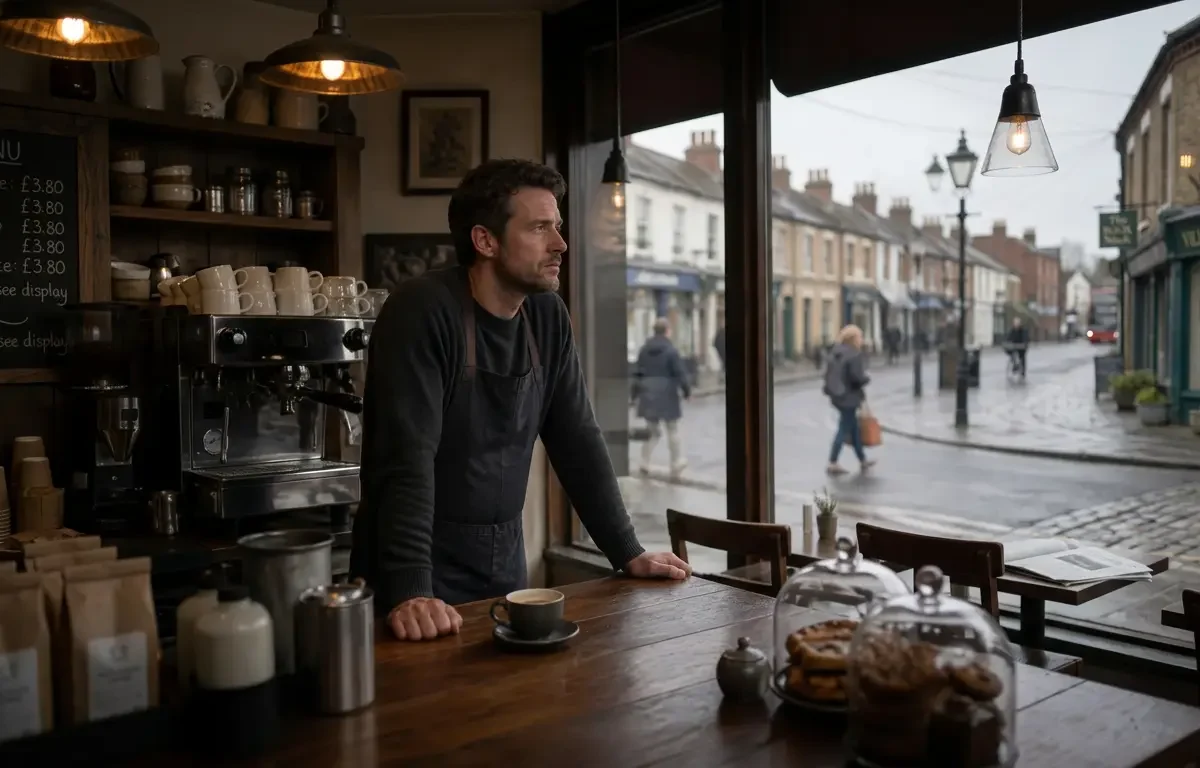
The England cafe business rate exclusion means cafés and restaurants are not included in the Government’s newly announced 20% reduction for pubs, social clubs and qualifying live music venues from April 2027.
It does not mean cafés have lost every form of business rates support. Eligible occupied cafés with rateable values below £500,000 may still use lower retail, hospitality and leisure multipliers, while smaller operators may qualify for Small Business Rate Relief or transitional support.
The announcement, published on 23 July 2026, is expected to benefit nearly 32,000 venues and save a typical pub about £1,100 in 2027–28. Detailed eligibility rules for the new cut are still due, including the treatment of the largest music venues and mixed-use properties.
Key Takeaways:
- Cafés remain outside the new 20% cut.
- Existing café reliefs have not disappeared.
- Local councils decide property-level eligibility.
- Rateable value and main use matter.
- Final 2027 guidance could materially alter eligibility details.
What Does the England Cafe Business Rate Exclusion Mean?
The exclusion applies to one targeted measure, not the entire business-rates system. Cafés, coffee shops and restaurants were not named among the businesses receiving the additional 20% reduction from the 2027–28 financial year.
This distinction matters because the temporary Retail, Hospitality and Leisure Relief scheme ended on 31 March 2026. It was replaced by permanent lower multipliers for qualifying occupied retail, hospitality and leisure properties with rateable values below £500,000.
Cafés can therefore remain within the wider RHL framework even though they are outside the new venue-specific cut.
“Excluded” should not be confused with “exempt”. An exempt property has no business-rates liability under specified rules. A café excluded from the new reduction may still have a normal liability calculated using a lower multiplier and then reduced by any other relief for which it qualifies.
What Has The Government Announced for Pubs, Clubs and Music Venues?
The Government announced a 20% business-rates cut for pubs, social clubs and qualifying live music venues across England from April 2027. The package is expected to cost about £100 million annually, support nearly 32,000 properties and save a typical pub an estimated £1,100 in the next financial year.
Prime Minister Andy Burnham said: “This government will back the businesses that people want to see in their communities.” He presented the measure as support for venues that bring people together, sustain local employment and contribute to active town centres.
The policy is expected to be partly funded by reviewing reliefs for businesses the UK Government believes do not make a positive community contribution, with vape shops given as an example.
Ministers are also consulting on making online marketplaces more responsible for sellers that fail to meet UK Pub tax obligations. Further funding and implementation details are due to be set out later.
The largest live music venues will not receive the new discount, although the precise size or valuation threshold has not yet been published. That detail is expected at the Budget.
Why Are Cafés and Restaurants Outside the New 20% Cut?

The published policy targets particular types of community and cultural venue rather than hospitality businesses generally. It does not provide a detailed economic explanation for treating a café differently from a pub selling food and hot drinks during the day.
The Government’s Community-Venue Focus
The official July rates announcement describes pubs, clubs and music venues as part of the backbone of local high streets. The stated objectives include reducing operating costs, encouraging investment, protecting jobs and preventing valued venues from disappearing.
That rationale does not establish that cafés lack community value. It shows that ministers have chosen a narrower beneficiary group for this particular intervention.
Are Cafés Facing Comparable Financial Pressures?
Independent cafés can face many of the same premises and employment costs as pubs and restaurants. The policy difference may therefore feel particularly significant where a pub and café compete for daytime customers on the same high street.
The concerns raised by café operators include:
- Higher wages and staffing costs
- Energy and ingredient price pressure
- Commercial rent and property expenses
- Reduced household discretionary spending
- Limited capacity to increase menu prices
- Competition from chains and nearby pubs
Recent reporting highlighted Ferdinand Geus of Sheba Coffee and Hakan Elbir of Dialogue Cafe, a deaf-run social enterprise. Both argued that cafés can provide employment, inclusion and community meeting spaces while being left outside support awarded to other local venues.
These are attributable concerns rather than proof that every café will be financially disadvantaged by the policy.
Cafés, Restaurants and Coffee Shops Under the Policy
Cafés, restaurants and snack bars are expressly outside the existing pub-specific relief definition. However, they can still qualify as hospitality properties under the broader RHL multiplier rules when their premises are wholly or mainly used to sell food and drink to visiting members of the public.
When Will The New Business-Rates Reduction Take Effect?
The additional 20% reduction is expected to start in April 2027. It follows a separate 15% relief for eligible pubs and live music venues during the 2026–27 billing year.
Business-Rates Timeline
| Billing Period | Relevant Development |
| 2023–24 | Eligible RHL properties received 75% relief, capped at £110,000 per business |
| 2024–25 | The 75% RHL relief and £110,000 cap continued |
| 2025–26 | RHL relief fell to 40%, with the same £110,000 business cap |
| 2026–27 | Permanent lower RHL multipliers began; eligible pubs and music venues received an additional 15% relief |
| 2027–28 | The newly announced 20% cut is expected to begin for qualifying pubs, clubs and music venues |
The historical percentages should not be applied to current café bills. New claims under the temporary RHL relief cannot be made for 2026–27, although councils may still handle eligible claims or corrections relating to earlier billing years.
What Business-Rate Support Can Cafés Still Receive?

Cafés may still qualify for lower multipliers and several property-based or business-specific reliefs. Eligibility depends on the rateable value, occupation, principal use and the operator’s wider property portfolio.
Lower RHL Multipliers For Eligible Cafés
Under the qualifying hospitality multiplier rules, an occupied property must be wholly or mainly used for an eligible purpose and provide in-person services to visiting members of the public. Councils may consider floor space, turnover, staffing and other evidence when identifying a mixed-use property’s principal use.
The permanent multipliers are five pence below the equivalent national rates and are expected to benefit more than 750,000 RHL properties. Unlike the former temporary discount, there is no £110,000 cash cap for qualifying properties below £500,000, and qualifying properties within a chain can each use the relevant multiplier.
Can Small Business Rate Relief Also Apply?
A café occupying one property can receive 100% Small Business Rate Relief where its rateable value is £12,000 or less. Relief tapers from 100% to zero between £12,001 and £15,000; for example, a £13,500 property receives 50%, while a £14,000 property receives 33%.
Businesses using additional properties face further tests. None of the additional properties may normally have a rateable value above £2,899, while the combined value must remain below £20,000 outside London or £28,000 in London.
Transitional, Discretionary and Hardship Support
The supporting small business rules protect qualifying operators that lost some or all of specified reliefs after the April 2026 revaluation. For 2026–27, the annual increase is limited to the greater of £800 or the relevant percentage cap: 5% for values up to £20,000, 15% from £20,001 to £100,000, and 30% above £100,000. The lower band extends to £28,000 in London.
Other possible support includes:
- Transitional Relief for revaluation-related increases
- Hardship relief where financial difficulty and local interests are demonstrated
- Discretionary relief for businesses benefiting the local community or economy
- Improvement relief following qualifying property improvements
- Temporary reductions after severe flooding, roadworks or similar disruption
- Part-occupation relief where part of a property is temporarily unused
- Empty property relief for an eligible vacant premises
A commercial property is generally free from empty-property rates for three months; qualifying industrial premises receive six months. Listed buildings and empty properties with rateable values below £2,900 can receive longer protection.
Charitable cafés may receive 80% mandatory charitable relief, potentially topped up by a council, while qualifying non-profit organisations can be considered for discretionary relief. Those provisions will not normally apply to a standard profit-making café.
How Are Café Business Rates Calculated in England?
A café’s initial annual liability is calculated by multiplying the property’s rateable value by the applicable multiplier. Reliefs and transitional adjustments are then applied to reach the amount payable.
England Multipliers For 2026–27
| Property Category | Rateable Value | Multiplier |
| Qualifying small-business RHL property | Below £51,000 | 38.2p |
| Other small-business property | Below £51,000 | 43.2p |
| Qualifying standard RHL property | £51,000–£499,999 | 43p |
| Other standard property | £51,000–£499,999 | 48p |
| High-value property of any use | £500,000 or more | 50.8p |
These rates show why a café can still benefit from RHL treatment despite its exclusion from the new 20% policy.
For example, a qualifying café with a £30,000 rateable value would have an initial calculation of £30,000 × 0.382 = £11,460 before other reliefs or adjustments. A qualifying café valued at £110,000 would use the 43p multiplier, giving an initial liability of £47,300.
Could A Café Qualify As A Pub Or Mixed-Use Property?
Selling alcohol does not automatically turn a café into a pub for business-rates purposes. Under the 2026–27 pub relief criteria, an eligible pub must be open to the public, permit drinks to be bought at a bar and allow customers to drink without being required to buy food. Restaurants, cafés, snack bars, hotels and nightclubs do not qualify merely because they serve alcohol.
A mixed-use venue may require closer assessment. A café that occasionally hosts music or sells wine in the evening will not necessarily become a pub or live music venue if food service remains its principal use.
For RHL multiplier purposes, a council can examine floor area, staff deployment, revenue sources, opening patterns and the actual use of the premises. Businesses should request a property-specific decision rather than redesignating their operations solely to seek relief.
What Could the Exclusion Mean For Independent Café Owners?
The effect will vary considerably between operators. A café already receiving full Small Business Rate Relief may experience no immediate difference, while a larger independent site with a substantial bill could see a clearer gap compared with a nearby qualifying pub.
Cost Pressure And Competitive Effects
The targeted cut could change relative operating costs where cafés, pubs and clubs compete for breakfast, lunch, coffee or daytime meeting customers. The difference may influence pricing, opening hours and investment decisions, although rates are only one element of a hospitality business’s total expenditure.
Could The Policy Affect Investment Or Employment?
A lower rates bill can release money for recruitment, repairs or refurbishment. Conversely, an excluded café may have less room to absorb wage, utility or ingredient increases than a similar venue receiving the additional reduction.
This does not mean closures or job losses are inevitable. The outcome will depend on turnover, rent, labour intensity, debt, current reliefs and the property’s rateable value.
Independent And Community-Focused Cafés
Cafés may support community life by providing:
- Informal meeting and working spaces
- Accessible daytime social venues
- Jobs for young or marginalised workers
- Local supply-chain spending
- Events and community partnerships
- Footfall for neighbouring businesses
Dialogue Cafe’s role in supporting deaf employment and Sheba Coffee’s links with Yemeni farmers illustrate why some operators dispute a policy distinction based heavily on venue category. Their experiences do not determine the tax rules, but they broaden the debate about what constitutes a community business.
What Should Café Businesses Do Before April 2027?

Café operators should review their existing bills rather than assuming the new exclusion leaves them with no options. Councils administer relief, issue bills and make initial eligibility decisions, while valuation disputes are handled through the business-rates valuation process.
Recommended Checks
- Confirm the property’s current rateable value.
- Check whether the 38.2p or 43p RHL multiplier has been applied.
- Review Small Business Rate Relief eligibility.
- Check for Supporting Small Business or Transitional Relief.
- Confirm how any mixed-use areas are classified.
- Ask about discretionary or hardship schemes.
- Report material changes in occupation or use.
- Keep evidence of customer use, floor space and turnover.
- Challenge a valuation only where evidence supports the correction.
- Monitor Budget and council guidance for the 2027–28 scheme.
Operators should also act promptly where part of a property becomes vacant or severe local disruption reduces its value, because backdated evidence can be difficult to verify.
Conclusion
The England cafe business rate exclusion applies to the additional 20% reduction announced for pubs, social clubs and qualifying live music venues from April 2027. It does not remove cafés from every part of England’s business-rates support system.
Eligible cafés can still benefit from lower RHL multipliers, Small Business Rate Relief, transitional protection and locally administered reductions. The practical priority is to check the current bill, rateable value and property classification while awaiting final 2027 eligibility guidance.
FAQs
Are Coffee Shops Covered by the Lower RHL Multiplier?
Qualifying occupied coffee shops can use the lower RHL multiplier when they mainly sell food or drink to visiting members of the public. The property must also have a rateable value below £500,000.
Does an Independent Café Automatically Receive Small Business Rate Relief?
No, independence alone does not establish eligibility. The rateable value, number of occupied properties and combined value of any additional premises must meet the applicable conditions.
Can a Café Receive More Than One Form of Relief?
Some reliefs can operate together, but their interaction depends on the individual scheme rules. The council calculates the final bill after applying relevant mandatory, transitional and discretionary provisions.
Are Café Chains Excluded From the Lower Hospitality Multipliers?
No, qualifying properties within a chain can use the lower RHL multipliers because the former £110,000 business-wide cash cap no longer applies. Each property must independently satisfy the use and valuation conditions.
Can Roadworks Reduce a Café’s Rateable Value Temporarily?
Severe local disruption may justify a temporary reduction where it materially affects the property’s value. The operator must report the circumstances through its valuation account for assessment.
What Happens When Part of a Café Is Temporarily Closed?
A council may consider part-occupation relief where part of the property is unused for a short period. Accurate plans, dates and evidence of occupied and unoccupied areas may be required.
Could Restaurants Be Added to the 20% Cut Later?
No extension to restaurants or cafés has been confirmed. Their inclusion should not be assumed unless it appears in a formal announcement, Budget document, legislation or billing guidance.
Note: The 20% reduction remains a newly announced measure for 2027–28, and detailed rules are still pending. A café’s actual liability depends on its rateable value, principal property use, occupation, applicable multiplier and reliefs awarded by its billing authority.