

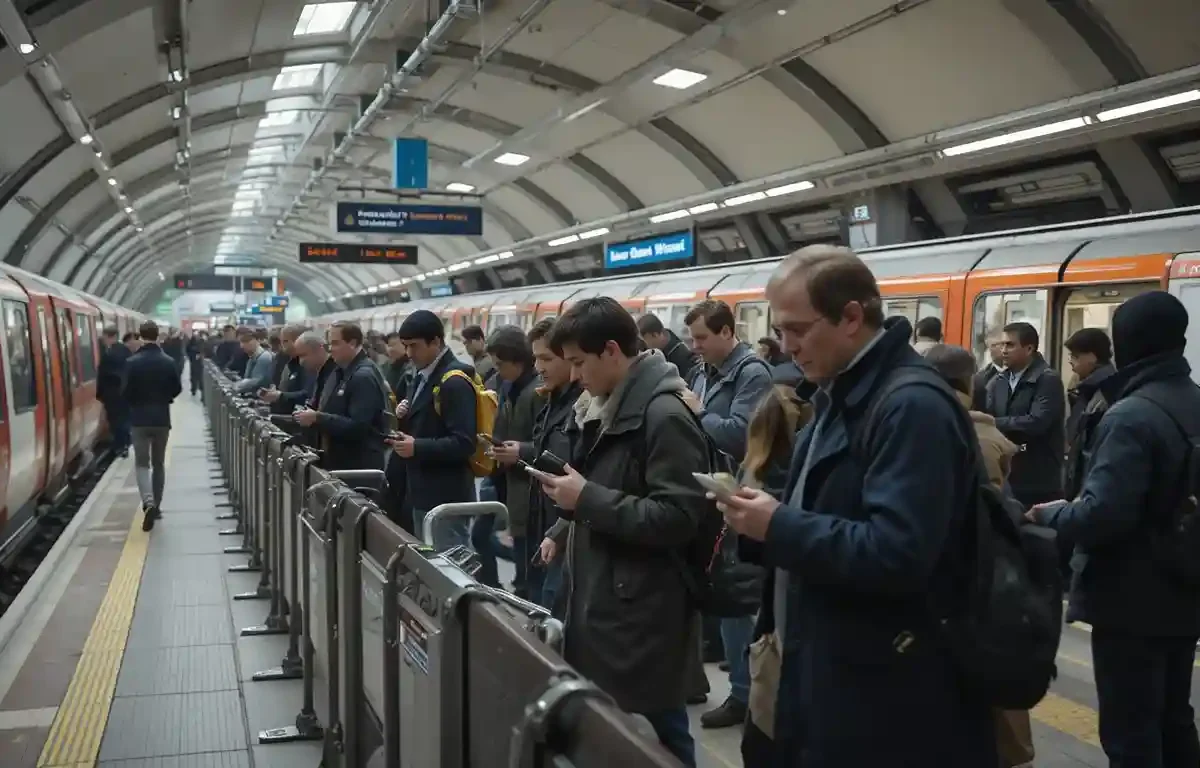
The london tube strikes june 2026 are planned for Tuesday,, 2 June and Thursday, 4 June, running from 00:01 to 23:59 on both days. Some disruption is also expected on the mornings of Wednesday 3 June and Friday, 5 June as services recover.
London Underground passengers should expect reduced services, delays and crowding, while the Elizabeth line, Overground, DLR and buses are expected to run, though likely busier than usual.
Key takeaways:
- Strike dates: Tuesday 2 June and Thursday 4 June 2026.
- Recovery disruption may affect 3 and 5 June mornings.
- All Tube lines could face delays or reduced services.
- Elizabeth line, Overground, DLR and buses are key alternatives.
- Passengers should check TfL updates before travelling.
When are the London Tube strikes in June 2026?

The confirmed london tube strikes june 2026 dates are currently set for early June. Tube drivers are expected to walk out on two separate 24-hour strike days.
Confirmed Tube strike dates in June 2026
| Date | Strike period | Expected impact |
| Tuesday 2 June 2026 | 00:01 to 23:59 | Reduced Tube services, delays and crowding expected |
| Wednesday 3 June 2026 | Morning period | Some disruption expected while services recover |
| Thursday 4 June 2026 | 00:01 to 23:59 | Further Tube disruption expected |
| Friday 5 June 2026 | Morning period | Some disruption expected while services resume |
Tube strike dates previously planned for May have been suspended, meaning services are expected to run normally during that period. Dates originally linked to 16 and 18 June have also been described as called off, with the main confirmed walk-outs now focused on 2 and 4 June.
Morning Disruption After the Strike Days
Passengers should not assume services will immediately return to normal after midnight. During previous transport strikes, disruption has often continued into the following morning because trains, staff and station operations need time to restart safely.
A London travel planning consultant described this issue clearly:
“I always tell commuters not to think of a Tube strike as ending the second the clock passes midnight. In reality, the next morning can still be difficult, especially if trains and staff are not in the right places to start a full service.”
This means people travelling on Wednesday 3 June and Friday 5 June should still check live updates before leaving home.
Why Are Tube Drivers Striking in June 2026?
The london tube strikes june 2026 action is linked to a dispute involving working hours. Earlier strike action was connected to members of a transport union voting for walk-outs after disagreements over conditions.
Strikes planned in March and May were called off, while 48 hours of industrial action went ahead in April. The June strikes are expected to continue unless talks between unions and Transport for London lead to a suspension.
For passengers, the reason behind the strike may matter less than the practical effect. The Underground is one of London’s busiest transport systems, and even a reduced service can quickly affect commuting, business meetings, airport journeys, events, school travel and hospitality bookings.
Which London Underground Lines Could Be Affected by the June Strikes?
The london tube strikes june 2026 action is expected to affect the Underground network widely. Even where some trains run, services may be reduced and stations may become crowded.
Lines Likely to Face Reduced Services
All London Underground lines could experience delays, gaps in service, crowding or last-minute changes.
These include:
- Bakerloo line
- Central line
- Circle line
- District line
- Hammersmith & City line
- Jubilee line
- Metropolitan line
- Northern line
- Piccadilly line
- Victoria line
- Waterloo & City line
Passengers should treat the whole Underground network as disrupted on strike days. Even if a specific line appears to be running, interchange stations may be busier than usual.
Lines That Saw Major Disruption in Previous Strike Action
During previous strike disruption, some services were badly affected. Reports from earlier industrial action suggested that the Piccadilly and Circle lines were down, the Metropolitan line had no service between Baker Street and Aldgate, and the Central line had no trains between White City and Liverpool Street.
That does not guarantee the same pattern for June, but it shows how quickly Tube disruption can affect large parts of London. People travelling across central London should have a second route ready before leaving.
Will the Elizabeth LINE, Overground, DLR, and Buses Run During the Tube Strikes?
The Elizabeth line, London Overground, DLR and London buses are expected to operate during the london tube strikes june 2026 period. These services are likely to become key alternatives for commuters and visitors.
Elizabeth Line Services During Tube Strikes
The Elizabeth line is not part of the London Underground, so it is expected to run as normal. It may be one of the most useful alternatives during the strike because it connects key areas including Paddington, Bond Street, Tottenham Court Road, Farringdon, Liverpool Street, Canary Wharf and Heathrow.
However, “running as normal” does not always mean “comfortable”. The Elizabeth line is likely to be much busier than usual, particularly at peak commuting times.
London Overground, DLR and Bus Alternatives
The London Overground is also expected to run as usual. Its six named lines, Lioness, Weaver, Liberty, Mildmay, Windrush and Suffragette, could help passengers avoid parts of the Tube network.
The DLR should remain useful for journeys around east and south-east London, especially for Canary Wharf, Greenwich, Stratford, Bank and London City Airport.
London buses will also run, but passengers should expect heavier demand and possible road congestion. Buses can be a reliable option for shorter journeys, but they may take longer during peak hours.
How Can Passengers Travel Around London During the Tube Strikes?

Passengers dealing with the london tube strikes june 2026 should plan around flexibility rather than speed. The fastest normal route may not be available, so the best option may involve combining rail, bus, walking and cycling.
Best alternatives for commuters and visitors
Good alternatives during the June Tube strikes may include:
- Elizabeth line journeys across central and west London
- London Overground routes around inner and outer London
- DLR services in East London
- National Rail services to major London stations
- Thameslink services through central London
- London buses for shorter journeys
- Walking between nearby central London stations
Travellers should use TfL’s journey planner before setting off. They should also check National Rail updates if they are connecting to mainline services.
Walking, Cycling, E-bikes and Taxis
Walking may be faster than expected in central London. For example, many central stations are closer together than the Tube map suggests. E-bikes and cycle hire schemes may also be useful, particularly for short cross-city journeys.
A London commuter mobility adviser explained the practical reality this way:
“I usually tell people to compare the journey, not the transport mode. A 25-minute walk can be better than waiting 20 minutes for an overcrowded bus and then getting stuck in traffic.”
Taxis, private hire vehicles and minicabs will remain available, but prices and journey times may rise because of higher demand and road congestion.
Quick Planning Checklist for Strike Days
Before travelling on 2 or 4 June, passengers should check live service updates, leave earlier than usual, avoid unnecessary peak-time journeys, and keep a backup route ready.
Small Route Changes Can Save Time
Changing the arrival station, walking for part of the journey, or travelling outside peak hours may make a difficult strike-day journey more manageable.
How Can Travellers Reach Major London Stations During the June Tube Strikes?
The london tube strikes june 2026 may affect access to major rail terminals, especially where passengers normally rely on Underground connections.
King’s Cross St Pancras
King’s Cross and St Pancras International can be reached using Thameslink services to St Pancras from locations including London Bridge, Blackfriars, City Thameslink, Luton Airport Parkway and Gatwick Airport.
Passengers can also travel to Farringdon using the Elizabeth line and then connect to Thameslink for St Pancras.
Paddington
Paddington is one of the easier major stations to reach during Tube disruption because it is served by the Elizabeth line. This makes it useful for passengers travelling to west London, Heathrow Airport, Reading and destinations served by Great Western Railway.
Euston
Euston is within walking distance of King’s Cross, St Pancras and Tottenham Court Road. Passengers may use the Elizabeth line to Tottenham Court Road or Farringdon, then walk or connect using available bus routes.
Victoria
Victoria may be more challenging if Tube services are reduced. Buses are likely to be the best alternative for many passengers, although they may be crowded. Travellers heading to Victoria for Gatwick Express or Southern services should allow extra time.
What Should Commuters Do Before Travelling on 2 and 4 June?

Commuters should treat 2 and 4 June as high-disruption days. Anyone who can work from home may want to consider doing so, especially if their journey depends heavily on the Underground.
Employers may also need to be flexible with start times, hybrid work arrangements and client meetings. Hospitality, retail and event businesses should prepare for staff delays and possible changes in customer footfall.
Before travelling, passengers should:
- Check TfL service status and journey planner
- Confirm whether National Rail connections are running normally
- Leave extra time for crowded services
- Avoid peak hours where possible
- Plan a backup route using buses, rail, walking or cycling
This is particularly important for airport journeys, medical appointments, exams, major meetings and theatre or event bookings.
Could the June Tube Strikes Be Called Off?
The london tube strikes june 2026 could still be suspended if negotiations progress. Previous strike dates have been called off shortly before they were due to begin, including action planned in May.
However, passengers should not rely on cancellation. Until TfL or the relevant unions confirm that the June strike action has been suspended, it is safer to plan as though the strikes will go ahead.
This is especially important because even a late cancellation can leave passengers uncertain, while a confirmed strike can cause wider disruption across the transport network.
What is the Best Way to Plan Travel During London Tube Strikes in June 2026?

The best way to plan for the london tube strikes june 2026 is to build a journey that does not depend entirely on the Underground. Passengers should check live updates on the day, but they should also prepare a realistic second option in advance.
For many people, the best approach will be to use the Elizabeth line, London Overground, DLR or National Rail for the longest part of the journey, then walk, cycle or take a bus for the final section.
Tourists should avoid packing too many cross-London attractions into one day. Commuters should consider travelling earlier, later or remotely. Businesses should communicate clearly with staff and customers before the strike dates.
Conclusion
The london tube strikes june 2026 are expected to take place on Tuesday 2 June and Thursday 4 June, with further morning disruption possible on Wednesday 3 June and Friday 5 June.
The London Underground is likely to face reduced services, delays and crowding, while the Elizabeth line, London Overground, DLR and buses are expected to provide important alternatives.
The safest approach is to plan early, check TfL updates regularly and avoid relying on one route. Whether travelling for work, school, tourism, airport connections or appointments, passengers should allow extra time and prepare backup options.
FAQs About London Tube Strikes June 2026
Are the London Tube strikes confirmed for June 2026?
The Tube strikes are planned for Tuesday 2 June and Thursday 4 June 2026. Passengers should still check official TfL and union updates because strike action can be suspended if talks progress.
What time will the Tube strikes start and end?
Each planned strike is expected to run from 00:01 to 23:59. Some disruption may continue into the following mornings as services return to normal.
Will all Tube stations be closed during the strikes?
Not necessarily. Some stations and lines may operate with reduced services, while others may face severe disruption. Crowding and short-notice changes are likely across the network.
Can people still use contactless payment on alternative TfL services?
Yes, passengers should still be able to use contactless payment and Oyster cards on TfL services such as buses, the DLR, London Overground and the Elizabeth line.
Will airport travel be affected by the Tube strikes?
Airport journeys may be affected if passengers normally use the Piccadilly line or Tube connections. The Elizabeth line may help with Heathrow travel, while National Rail services can support Gatwick, Luton and Stansted journeys.
Are buses expected to be busier during the Tube strikes?
Yes, London buses are expected to be busier because many passengers will use them as an alternative to the Underground. Road congestion may also increase journey times.
Should people work from home during the Tube strikes?
Where possible, working from home may reduce stress and avoid unnecessary travel delays. Employers may also consider flexible start times during strike days.
Where can passengers check the latest Tube strike updates?
Passengers should check the TfL website, TfL journey planner, official social media updates, union announcements and reliable news sources before travelling.