
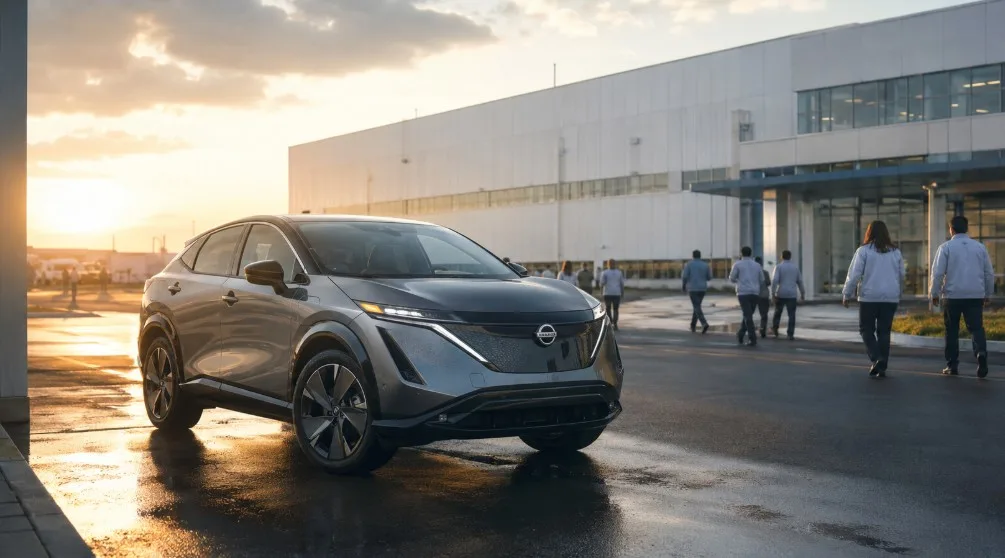
No, Nissan is not going out of business in 2026. However, the company is facing serious financial pressure and undergoing a major global restructuring to improve profitability and secure its long-term future.
Rising competition in the electric vehicle market, declining profits, and changing consumer demand have forced Nissan to reduce costs, cut jobs, and streamline manufacturing operations worldwide.
Despite these challenges, the automaker continues investing in new hybrid and electric vehicles while maintaining key production facilities, including its Sunderland plant in the UK.
Key Takeaways:
- Nissan is restructuring, not shutting down
- The company plans to cut 20,000 jobs globally
- Manufacturing plants will reduce from 17 to 10 by 2027
- Nissan continues investing in EV and hybrid vehicles
- The Sunderland plant remains important for UK operations
- Analysts believe Nissan still has recovery potential
Why Are People Asking if Nissan Is Going Out of Business?
Concerns about Nissan’s future have grown rapidly over the last few years. Reports about falling profits, layoffs, reduced production, and global restructuring have caused many consumers and investors to question whether the company is in serious financial danger.
The automotive industry itself is changing at an extremely fast pace. Traditional car manufacturers are under pressure to compete with electric vehicle companies such as Tesla and BYD while also managing stricter environmental regulations and rising manufacturing costs.
Several factors have contributed to the rumours surrounding Nissan:
- Declining global vehicle sales in certain markets
- Increased competition in the EV sector
- Announcements of job cuts and plant reductions
- Slower recovery compared to competitors like Toyota and Hyundai
- Ongoing supply chain and inflation pressures
While these developments are serious, they do not necessarily mean Nissan is shutting down.
| Common Concern | Reality |
| Nissan is going bankrupt | No official bankruptcy filings exist |
| Nissan is shutting all factories | Only selected facilities are being consolidated |
| Nissan will stop making cars | Nissan continues investing in new models |
| Nissan is leaving the UK | Sunderland operations remain important |
What Financial Problems Is Nissan Facing in 2026?

Nissan’s financial difficulties are mainly linked to declining profitability, global competition, and the expensive transition towards electrification.
Declining Profitability and Cost Pressures
The company has struggled to maintain strong profit margins in recent years. Inflation, higher raw material costs, and weaker sales in some international markets have all reduced profitability.
Manufacturing vehicles has become significantly more expensive due to:
- Semiconductor shortages
- Battery production costs
- Increased shipping expenses
- Higher labour costs globally
At the same time, consumers are demanding more affordable electric vehicles, putting additional pressure on manufacturers.
Struggles in the Global Automotive Industry
The entire automotive sector is undergoing a transformation. Nearly every major manufacturer is investing billions into electric vehicle development, software systems, and battery technology.
Nissan was once considered an early EV leader because of the Nissan Leaf. However, competition has intensified rapidly.
| Automaker | Key Strength in 2026 |
| Tesla | Advanced EV ecosystem |
| BYD | Affordable EV production |
| Toyota | Hybrid leadership |
| Hyundai | Rapid EV expansion |
| Nissan | Restructuring and EV recovery |
A UK automotive analyst described the situation this way:
“I’ve worked with manufacturers during difficult transitions before, and Nissan’s situation looks more like an aggressive reset than a collapse. The company still has global infrastructure, brand recognition, and technology investments that many struggling businesses simply do not have.”
Nissan’s Falling Market Share
Nissan has also experienced declining market share in some regions. Consumer preferences are shifting towards newer EV-focused brands, while competitors continue launching updated hybrid and electric models at a faster pace.
This has forced Nissan to rethink its pricing, product lineup, and manufacturing strategy.
What Is Nissan Doing to Avoid Going Out of Business?
Nissan has introduced a major turnaround strategy designed to improve long-term profitability and operational efficiency.
The company’s recovery plan focuses on:
- Reducing fixed and variable costs
- Improving free cash flow
- Streamlining manufacturing
- Expanding electric and hybrid offerings
- Increasing operational efficiency globally
| Nissan Recovery Strategy | Purpose |
| Workforce reduction | Lower operational costs |
| Factory consolidation | Improve manufacturing efficiency |
| EV investments | Compete in future markets |
| Hybrid expansion | Meet changing customer demand |
| Strategic partnerships | Share development costs |
The company’s leadership believes these measures will create a leaner and more sustainable business model over the next several years. Industry experts generally agree that restructuring is becoming common among legacy automakers adapting to the electric vehicle era.
Why Is Nissan Cutting 20,000 Jobs Worldwide?
One of the biggest headlines surrounding Nissan’s restructuring plan is its decision to reduce its workforce globally by approximately 20,000 employees. This move is primarily aimed at reducing operational expenses and improving productivity.
The reductions are expected to affect:
- Manufacturing operations
- Administrative departments
- Regional business divisions
- Supply chain operations
Although the decision has created concern among workers and communities, workforce reductions are increasingly common across the automotive industry as companies automate production and shift towards EV manufacturing.
A senior automotive consultant explained the concern from an industry perspective:
“I’ve seen many people assume that large layoffs automatically mean a company is failing. In reality, manufacturers often reduce staffing levels during major transitions because EV production requires different systems, fewer components, and new operational structures.”
Nissan has stated that these changes are intended to strengthen the business rather than prepare for closure.
What Does Nissan’s Factory Consolidation Mean for Its Future?
Nissan plans to reduce its manufacturing plants globally from 17 facilities to 10 by 2027. This is one of the company’s largest operational restructuring efforts in decades.
Reducing Manufacturing Plants from 17 to 10
The purpose of factory consolidation is to improve production efficiency while reducing costs.
By operating fewer facilities, Nissan aims to:
- Increase production efficiency
- Reduce maintenance costs
- Simplify logistics
- Improve profitability per vehicle
Many automakers are making similar adjustments as global demand changes.
Impact on the UK Sunderland Plant
The Nissan Sunderland plant remains one of the company’s most important manufacturing sites in Europe. The facility plays a major role in Nissan’s UK strategy and future EV production plans.
The Sunderland operation is expected to remain central to:
- Electric vehicle manufacturing
- Battery production investments
- UK automotive employment
- European market supply
This is positive news for the UK automotive sector, especially as Britain continues transitioning towards electric mobility.
Is Nissan Still Investing in New Cars and Electric Vehicles?
Despite reducing costs elsewhere, Nissan continues investing heavily in future vehicle development.
The company is focusing on:
- Electric vehicles
- Hybrid technology
- Battery improvements
- Refreshed ICE vehicle lineups
Models such as the Nissan Ariya represent the company’s push towards modern EV competition.
Nissan also plans to release new hybrid and electric vehicles across several major markets, including:
- United Kingdom
- Europe
- Japan
- United States
| Nissan Focus Area | Future Goal |
| Electric vehicles | Expand EV market share |
| Hybrid models | Improve fuel efficiency |
| Battery technology | Lower EV costs |
| ICE refreshes | Maintain current customer base |
The company believes balancing traditional petrol vehicles with newer electric options will help stabilise sales during the transition period.
Could Nissan Actually Go Bankrupt in the Future?
Although Nissan is facing significant financial pressure, there is currently no evidence suggesting an immediate bankruptcy risk. There is an important difference between restructuring and insolvency.
A restructuring strategy usually means a company is attempting to improve efficiency, reduce costs, and strengthen long-term sustainability. Bankruptcy, on the other hand, occurs when a company can no longer meet its financial obligations.
At present, Nissan still has:
- Global operations
- Manufacturing infrastructure
- Brand recognition
- Active product development
- International partnerships
However, risks still remain.
Potential future concerns include:
- Slower EV adoption
- Continued market share losses
- Global economic instability
- Intense EV competition
- Rising battery costs
Even so, many analysts believe Nissan still has the ability to recover if its restructuring strategy succeeds over the next few years.
How Does Nissan Compare With Other Car Manufacturers in 2026?

Nissan’s challenges are not unique. Many traditional automakers are struggling to adapt to rapid industry changes.
Toyota continues leading the hybrid market, while Tesla and BYD dominate global EV growth. Hyundai and Kia have also expanded aggressively into electric mobility.
Compared with competitors, Nissan still benefits from:
- Established global presence
- Strong UK manufacturing operations
- Experience with EV technology
- Recognisable vehicle lineup
However, the company must improve product competitiveness and profitability to regain stronger market positioning.
What Does Nissan’s Future Look Like Beyond 2026?
Nissan’s long-term future will largely depend on how effectively the company executes its restructuring plans.
If successful, the company could emerge as:
- A leaner global automaker
- A stronger EV competitor
- A more profitable business
- A major player in hybrid technology
The company’s investments in battery technology and sustainable mobility suggest Nissan is focused on long-term survival rather than short-term decline.
Consumer confidence will also play a major role in shaping Nissan’s recovery.
Final Verdict
Nissan is not going out of business in 2026. The company is going through a major restructuring process designed to improve profitability and secure its long-term future in a rapidly changing automotive industry.
While job cuts, factory consolidation, and declining profits have raised concerns, Nissan continues investing in electric vehicles, hybrid technology, and updated vehicle lineups across major global markets.
The company still maintains significant manufacturing operations, international partnerships, and strong brand recognition worldwide. Although challenges remain, most industry experts view Nissan’s current situation as a strategic transformation rather than a sign of collapse.
For customers, investors, and automotive observers, the next few years will likely determine how successfully Nissan can adapt to the future of mobility.
FAQs About Is Nissan Going Out of Business in 2026?
Is Nissan financially stable in 2026?
Nissan is financially challenged but still operational. The company is restructuring its business to improve profitability and long-term sustainability.
Is Nissan closing factories in the UK?
No major closure of the Sunderland plant has been announced. The facility remains important for Nissan’s UK and European EV production plans.
Why is Nissan reducing its workforce?
Nissan is cutting jobs to reduce operational costs and improve efficiency during its global restructuring programme.
Is Nissan investing in electric vehicles?
Yes. Nissan continues investing heavily in electric and hybrid vehicle technology, including future EV launches in several major markets.
Could Nissan recover from its financial losses?
Many analysts believe Nissan can recover if its restructuring strategy and EV expansion plans are successfully implemented.
Is Nissan losing market share globally?
Nissan has lost market share in some regions due to stronger competition and changing consumer preferences.
What is Nissan’s biggest challenge in 2026?
Its biggest challenge is balancing profitability while transitioning quickly into the competitive electric vehicle market.
Related Articles: