
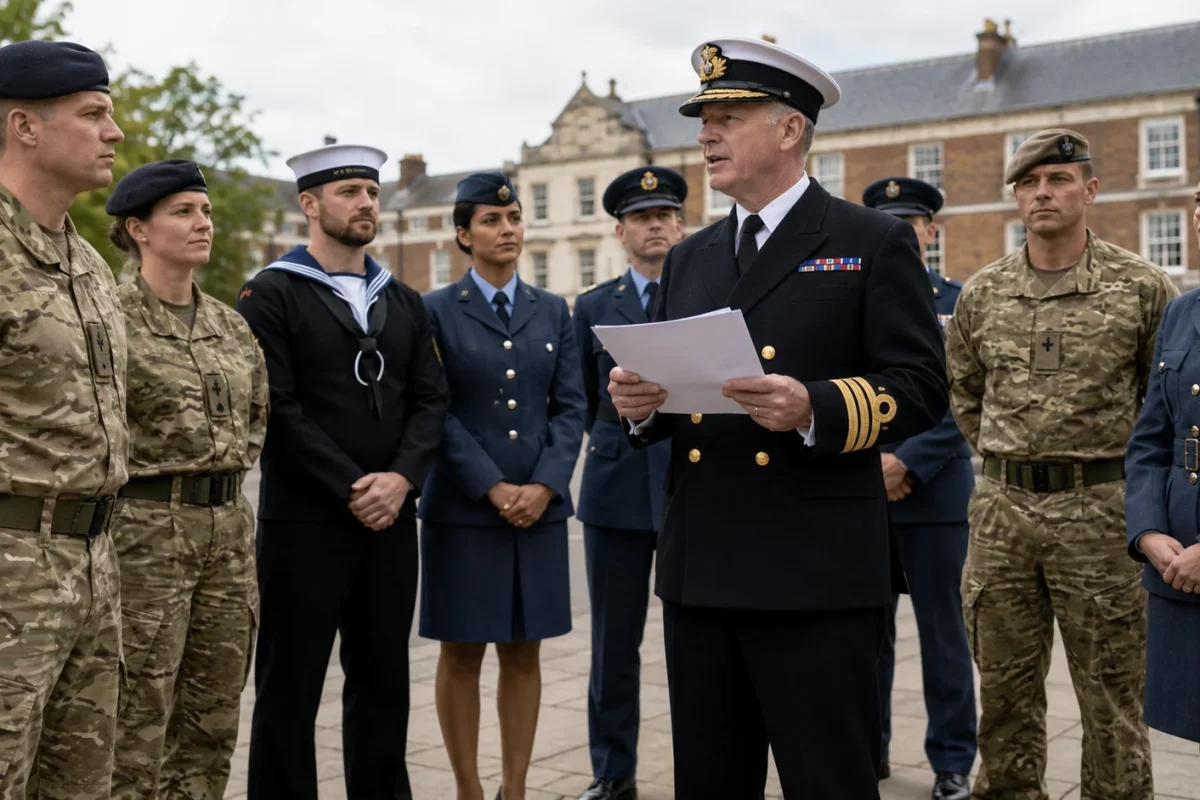
The military pay rise 2026 has been officially confirmed, with the UK Government accepting the Armed Forces’ Pay Review Body (AFPRB) recommendations in full.
As a result, eligible members of the UK Armed Forces will receive a 3.6% increase in base pay, backdated to 1 April 2026.
The award also covers several allowances, recruitment and retention payments, skills payments, and the Volunteer Reserves Training Bounty.
The decision comes as the Armed Forces continue to face recruitment and retention pressures while balancing the impact of inflation and wider economic conditions.
Key Takeaways:
- UK Armed Forces personnel will receive a 3.6% pay increase from 1 April 2026.
- The Government accepted the AFPRB recommendations in full on 9 June 2026.
- The pay award will be backdated, with eligible personnel receiving arrears.
- Recruitment and retention payments will increase by 3.6%.
- Skills payments and compensatory allowances will also rise by 3.6%.
- The Volunteer Reserves Training Bounty will receive a 3.6% uplift.
- The Nurses’ Golden Hello has increased to £50,000.
- Service Family Accommodation charges for CAAS Bands A–F will increase by 3.8%.
What Is the Military Pay Rise for 2026?

The Armed Forces’ Pay Review Body has recommended a 3.6% increase in base pay for all personnel within its remit group from 1 April 2026. The UK Government accepted these recommendations in full on 9 June 2026.
The pay award covers:
- Regular Armed Forces personnel
- Senior officers included within the AFPRB remit
- Eligible Reservists receiving training-related payments
- Personnel receiving recruitment and retention payments
- Service members receiving skills-based payments
The increase applies not only to basic salary but also to several allowances and incentive payments designed to support specialist roles and operational capability.
Current Position as of June 2026
| Item | Status |
| Pay rise recommended | 3.6% |
| Effective date | 1 April 2026 |
| Government decision | Accepted in full |
| Announcement date | 9 June 2026 |
| Backdated pay | Yes |
| Covered personnel | AFPRB remit group |
As the award is backdated, eligible personnel can expect arrears payments covering the period between April and the implementation date.
Why Has the UK Government Approved a 3.6% Military Pay Increase?
The AFPRB considers several factors before making recommendations each year. These include economic conditions, recruitment trends, retention challenges, operational requirements, and comparisons with civilian employment.
The Role of the Armed Forces’ Pay Review Body
The AFPRB is an independent body responsible for reviewing military pay and making recommendations to the Government. Its goal is to ensure service personnel receive fair compensation while supporting operational readiness across the Armed Forces.
Recruitment and Retention Challenges
The report highlighted continuing concerns regarding trained strength across all three services. Maintaining sufficient numbers of skilled personnel remains a significant challenge.
Key issues identified include:
- Competition from civilian employers
- Specialist skill shortages
- Retention of experienced personnel
- Increased demand for technical expertise
- Long-term workforce planning requirements
A defence workforce consultant described the situation clearly:
“In my experience advising organisations on workforce retention, pay alone does not solve recruitment challenges, but it remains one of the strongest signals that an employer values its people. For the Armed Forces, maintaining competitive pay is essential if they want to retain skilled personnel and attract new recruits.”
The Impact of Inflation on Military Pay
Economic conditions also influenced the recommendation. The AFPRB noted that:
| Economic Indicator | Rate |
| CPI Inflation | 3.0% |
| CPIH Inflation | 3.2% |
| Recommended Pay Increase | 3.6% |
The recommended increase exceeds both inflation measures considered during the review period, helping to protect the purchasing power of service personnel.
Who Will Benefit from the Military Pay Rise 2026?

The pay award applies broadly across the Armed Forces and covers a range of payments beyond basic salary.
Those expected to benefit include:
- Army personnel
- Royal Navy personnel
- Royal Marines
- Royal Air Force personnel
- Senior officers covered by AFPRB recommendations
- Volunteer Reservists receiving training bounty payments
- Personnel receiving specialist skills payments
- Staff receiving recruitment and retention incentives
The broad application of the award ensures that different ranks and specialisms receive support under the updated remuneration package.
How Much Will Military Salaries Increase From 1 April 2026?
The headline announcement is the 3.6% increase in base pay. However, several additional payments and allowances will also rise.
Base Pay Increase
All eligible personnel will receive a 3.6% increase to their base salary from 1 April 2026.
Although individual salary increases will vary depending on rank and pay band, the percentage uplift remains consistent across the remit group.
Additional Payments and Allowances
The AFPRB also recommended increases to a number of supplementary payments.
| Payment Type | 2026 Recommendation |
| Base military pay | 3.6% increase |
| Volunteer Reserves Training Bounty | 3.6% increase |
| Recruitment and Retention Payments | 3.6% increase |
| Skills Payments | 3.6% increase |
| Compensatory Allowances | 3.6% increase |
Service Family Accommodation Changes
Accommodation costs were also reviewed as part of the wider package.
| Accommodation Element | Change |
| CAAS Bands A–F | 3.8% increase |
While accommodation charges are rising, the review body considered broader affordability factors when making its recommendations.
What Are the Key AFPRB Recommendations for 2026?
The 2026 report includes several measures designed to strengthen the overall compensation package available to Armed Forces personnel.
Summary of Recommendations
| Area | Recommendation |
| Base pay | 3.6% increase |
| Training bounty | 3.6% increase |
| Skills payments | 3.6% increase |
| Retention payments | 3.6% increase |
| Compensatory allowances | 3.6% increase |
| Nurses’ Golden Hello | Increase to £50,000 |
| Family accommodation charges | 3.8% increase |
The enhanced Nurses’ Golden Hello is particularly notable as healthcare recruitment remains a challenge in both military and civilian sectors.
Will Military Personnel Receive Backdated Pay in 2026?

Yes. Because the award takes effect from 1 April 2026 and was formally accepted on 9 June 2026, eligible personnel will receive backdated payments.
This means service members should receive:
- The updated salary rate going forward
- Arrears covering the period from April onwards
- Adjustments to qualifying allowances and payments
A former military pay adviser explained the importance of backdating:
“When pay awards are approved after the effective date, backdating ensures personnel receive the full value of the increase they were entitled to from the start. In my experience, this approach helps maintain confidence in the pay review process and prevents service members from losing out financially.”
The exact timing of arrears payments may vary depending on payroll implementation schedules.
How Does the 2026 Military Pay Award Compare With the 2025 Increase?
The previous pay award delivered a larger increase than the 2026 settlement.
Comparison of Recent Pay Awards
| Year | Pay Award |
| 2025 | 4.5% |
| 2026 | 3.6% |
Although the latest increase is lower, it still exceeds inflation measures considered during the review.
The difference reflects changing economic conditions and the balancing act between public spending considerations and workforce requirements.
What Does the Military Pay Rise 2026 Mean for Recruitment and Retention?
Recruitment and retention continue to be major priorities across the Armed Forces.
The AFPRB report indicates that all three services remain below desired trained strength levels. Pay is therefore viewed as one component of a broader strategy to improve workforce stability.
Potential benefits of the award include:
- Improved competitiveness with civilian employers
- Greater financial support for serving personnel
- Enhanced retention of experienced staff
- Increased attractiveness of specialist military careers
- Stronger morale among service members
However, many experts agree that pay works most effectively when combined with career development opportunities, accommodation improvements, family support initiatives, and operational stability.
How Could the Pay Rise Affect Armed Forces Morale and Workforce Stability?
Financial recognition can play an important role in morale, particularly during periods of economic uncertainty.
Many service personnel face challenges associated with relocation, deployments, family commitments, and demanding operational responsibilities. Regular pay reviews help demonstrate recognition of those commitments.
The latest award may contribute positively by:
- Supporting household finances
- Improving confidence in future earnings
- Strengthening perceptions of fairness
- Reinforcing retention efforts
- Supporting long-term workforce planning
While salary increases alone cannot solve every workforce challenge, they remain an important factor in maintaining a motivated and capable force.
What Should Service Personnel Know About the 2026 Pay Changes?

Personnel should be aware of several important points regarding the latest award.
- The pay increase is 3.6%
- It takes effect from 1 April 2026
- The Government has accepted the recommendations in full
- Backdated payments will apply
- Several allowances and incentive payments will also increase
- Volunteer Reservists are included in specific elements of the package
- Family accommodation charges are increasing by 3.8% for applicable bands
Understanding these changes can help personnel assess how the award may affect their individual financial circumstances during the year ahead.
Conclusion
The latest military pay award provides a 3.6% increase in base pay alongside improvements to several allowances, recruitment incentives, and specialist payments. With the Government accepting the AFPRB recommendations in full, eligible personnel will receive backdated payments from 1 April 2026.
Although the increase is smaller than the previous year’s award, it remains above inflation measures considered during the review and reflects ongoing efforts to support recruitment, retention, and workforce stability.
For many service members, the package represents a meaningful financial boost while reinforcing the Armed Forces’ commitment to maintaining a competitive and sustainable pay structure.
Frequently Asked Questions
When will the 2026 military pay rise be paid?
The increase is effective from 1 April 2026. Payments will be implemented following Government approval, with arrears paid for the backdated period.
Is the 3.6% pay rise pensionable?
In most cases, increases to pensionable pay will be reflected in future pension amount calculations, subject to applicable scheme rules.
Does the pay rise apply to all branches of the UK Armed Forces?
Yes, eligible personnel across the Army, Royal Navy, Royal Marines, and Royal Air Force are covered by the AFPRB recommendations.
What is the Armed Forces’ Pay Review Body?
The AFPRB is an independent body that reviews military pay and makes annual recommendations to the UK Government.
Will Reservists benefit from the 2026 pay award?
Eligible Volunteer Reservists will benefit through increases to the Volunteer Reserves Training Bounty and related payments.
How does the 2026 pay rise compare with inflation?
The 3.6% increase is above the inflation measures considered by the AFPRB, including CPI at 3.0% and CPIH at 3.2%.
Will there be another military pay review in 2027?
Yes. The AFPRB conducts regular annual reviews and is expected to make further recommendations for future pay awards.