
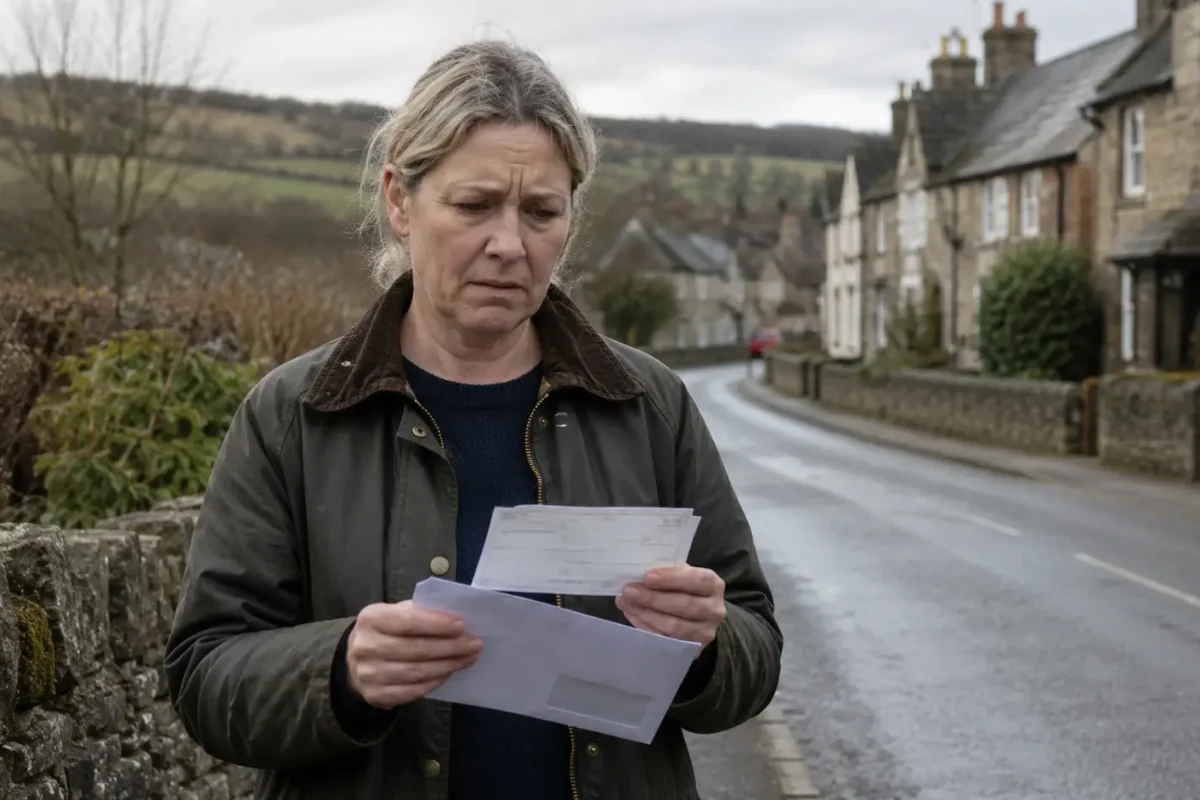
A £900 HMRC cheque became the focus of a rural banking access dispute after Annabel Yates, from Crackington Haven in Cornwall, reportedly could not deposit the cheque through her Lloyds banking app or at her local Post Office.
The cheque was reported to have smooth rather than perforated edges, which prevented the mobile app from recognising it.
Lloyds had also stopped accepting cheque deposits through Post Office branches and Banking Hubs from 31 December 2025, leaving Ms Yates facing a reported 94-mile round trip to reach a suitable branch.
Following complaints from rural customers and political pressure, Lloyds said in June 2026 that it had asked the Post Office to restore cheque deposits for Lloyds customers until the end of 2030.
However, the proposal remained subject to acceptable commercial terms, and the Post Office’s current Lloyds service page still lists cheque deposits as unavailable.
£900 HMRC Cheque Case at a Glance
| Detail | Confirmed or reported position |
| Cheque value | £900 |
| Issuer | HM Revenue and Customs |
| Recipient | Annabel Yates |
| Location | Crackington Haven, Cornwall |
| Reported journey | Approximately 94 miles |
| Mobile deposit issue | The banking app reportedly failed to recognise the smooth-edged cheque |
| Lloyds Post Office policy | Cheque deposits stopped from 31 December 2025 |
| Lloyds announcement | Restoration requested until the end of 2030 |
| Current limitation | Restoration was subject to an agreement with the Post Office |
| Lloyds mobile cheque limit | Up to £10,000 per cheque and £10,000 per day |
| Typical online P800 refund time | Within five working days |
| Requested P800 cheque time | Up to six weeks |
The case figures and policy dates are based on reporting about Ms Yates, parliamentary material, Lloyds guidance and HMRC’s official repayment information.
What Happened With the £900 HMRC Cheque?
Annabel Yates received a £900 tax repayment cheque from HMRC. She reportedly attempted to deposit it through the Lloyds mobile banking app, which allows eligible customers to photograph and submit cheques digitally.
The app did not accept the cheque. Reports attributed the problem to the cheque’s smooth edges, which made it difficult for the image-recognition system to identify the document correctly.
Ms Yates then attempted to use her local Post Office. However, Lloyds Banking Group had withdrawn cheque-deposit services from Post Office branches and Banking Hubs at the end of 2025.
With no suitable local option, she reportedly faced a journey of almost 100 miles to deposit the £900 repayment at a Lloyds branch.
The dispute attracted attention because it demonstrated how an apparently simple banking problem can become significantly more difficult for customers living in remote areas.
Why Did the Lloyds App Reject the HMRC Cheque?
Lloyds allows customers to pay eligible cheques into an account by photographing the front and back through its mobile app.
Its guidance recommends placing the cheque on a flat surface with a dark background and holding the camera directly above it.
However, mobile cheque imaging is not guaranteed to accept every document. Lloyds states that some cheque types cannot be deposited through the app and that customers will be notified when a cheque is not supported.
A cheque may fail to scan because of:
- An unusual size, shape or paper finish
- Poor lighting or insufficient contrast
- Folded, torn or damaged sections
- Incorrect or unclear printed information
- A non-standard cheque format
- Problems with the phone camera or banking app
A failed scan does not automatically mean that the cheque is invalid. It may simply mean that the document cannot be processed through that particular digital channel.
Customers should not cut, tear, perforate or otherwise modify a cheque to make it easier to scan. Altering it could cause further processing problems or lead the bank to reject it.
Why Could the Cheque Not Be Paid in at the Post Office?

Lloyds Banking Group stopped allowing its customers to deposit cheques through Post Office branches and Banking Hubs from 31 December 2025. The restriction affected Lloyds Bank and other brands within the group.
The decision became controversial because Post Offices and Banking Hubs often provide the only accessible face-to-face banking facilities in communities where traditional bank branches have closed.
The current Post Office service listing confirms that Lloyds customers can use participating branches for cash withdrawals, balance enquiries and cash deposits. However, it lists cheque deposits as unavailable for both personal and business Lloyds customers.
Customers should therefore check their bank’s current service listing before travelling. A Post Office may provide cheque deposit facilities for one banking provider but not for another.
Has Lloyds Restored Post Office Cheque Deposits?
Lloyds announced a change of direction on 25 June 2026 after receiving feedback from customers and MPs.
According to Graham Stuart MP, Lloyds asked the Post Office to accept cheque deposits into Lloyds accounts at Post Office branches and Banking Hubs until the end of 2030. The campaign included a cross-party letter signed by 121 MPs.
However, the announcement did not mean that the service became available immediately.
The proposed restoration was:
- Subject to the Post Office agreeing acceptable commercial terms
- Described as a transition arrangement running until the end of 2030
- Dependent on operational implementation across participating locations
As of the article’s review date, the Post Office’s Lloyds service page continued to show “No” beside cheque deposits. Customers should not assume that the planned service has started without checking directly with Lloyds or the relevant Post Office branch.
How Do HMRC Tax Refund Cheques Work?

HMRC may issue a tax refund when a person or business has paid more tax than was due. The correct repayment method depends on the tax involved, the information HMRC holds and the instructions shown on the calculation or repayment notice.
For an Income Tax overpayment shown on a P800 calculation, HMRC may allow the taxpayer to claim through an online bank transfer or request a cheque. A refund can also be claimed through a Personal Tax Account or the HMRC app when the customer has an eligible UK bank account.
HMRC states that:
- An online refund is normally sent within five working days.
- A cheque requested online can take up to six weeks.
- Where a P800 says HMRC will automatically issue a cheque, it should normally arrive within 14 days of the date on the letter.
- Where more than one tax year is involved, HMRC may issue one cheque covering the full repayment.
Customers can review the current GOV.UK guidance on claiming a P800 tax refund.
A £900 HMRC cheque is therefore not a new flat-rate payment, bonus or universal entitlement. In this case, £900 was the individual recipient’s tax repayment amount.
What Can Someone Do If an HMRC Cheque Will Not Scan?

The correct next step depends on the customer’s bank, the cheque’s condition and the type of HMRC repayment.
Try the Banking App Again Carefully
The cheque should be placed flat on a dark, plain background in good lighting. The phone should be held level and directly above the document.
For Lloyds customers, each cheque must be no more than £10,000, with a total daily mobile-deposit limit of £10,000. Lloyds also says the cheque should be less than six months old and made out to the correct recipient.
The original cheque should be retained until the money has cleared.
Use a Bank Branch
A customer may be able to deposit the cheque at a branch operated by their bank. Branch opening hours and counter services should be checked before travelling, particularly where a long journey is involved.
Some branches have self-service deposit machines, but the available facilities differ by location.
Send the Cheque to the Bank by Post
Lloyds allows personal customers to post eligible cheques. Its published instructions say customers can write their sort code and account number on the back and send the cheque using “Freepost LBG” without a stamp.
A standard postal address is also available for customers who prefer tracked or stamped post.
Anyone using a postal option should follow the bank’s instructions exactly and consider keeping a photograph or record of the cheque before sending it.
Check Post Office Eligibility
The Post Office offers cheque deposits for customers of participating banks, usually using a paying-in slip and bank-specific envelope. Availability depends on the bank rather than the Post Office branch alone.
Customers should check the Post Office’s bank-specific service page or contact their bank before visiting.
Contact HMRC When No Deposit Method Is Available
Where an HMRC cheque cannot be deposited, has expired, contains an incorrect name or has been lost or damaged, the customer should contact the HMRC team responsible for the repayment.
HMRC may need to cancel and replace the cheque. Whether it can change the repayment to a bank transfer will depend on the tax involved and the stage reached in the repayment process.
It should not be assumed that an already-issued cheque can automatically be converted into a Bacs payment. For future P800 repayments, an online bank transfer may be selected where HMRC offers that option.
Why Does the Case Matter to Rural Customers and Small Businesses?

The dispute was about more than one £900 cheque. It highlighted the difference between having theoretical access to banking and having a practical way to complete a specific transaction.
A village may have a Post Office or Banking Hub, but individual services still depend on the customer’s bank. Access to cash deposits and withdrawals does not necessarily guarantee access to cheque deposits.
This distinction matters to:
- Older or digitally excluded customers
- People with disabilities or limited mobility
- Rural households without reliable transport
- Small businesses receiving cheque payments
- Charities, clubs and community organisations
- Customers with poor broadband or mobile coverage
The Financial Conduct Authority’s access-to-cash rules require designated banks and building societies to assess whether changes to local services create significant gaps in cash deposits or withdrawals. Communities, businesses and local groups can also request a cash-access assessment.
However, those protections primarily concern access to cash. They do not automatically guarantee that every bank must provide every cheque service at every Post Office or Banking Hub.
Cash Access UK reported in July 2026 that 237 Banking Hubs and more than 140 deposit services were operating across the country. Banking Hub cheque facilities still depend on the individual bank’s participation.
Final Takeaway
The £900 HMRC cheque dispute demonstrated how the loss of one local banking service can create disproportionate difficulties for rural customers.
Although mobile cheque deposits are convenient when they work, they are not a complete replacement for branches, Post Offices, Banking Hubs and postal deposit options.
Unusual cheque formats, limited transport and bank-specific restrictions can turn a routine tax repayment into a lengthy and costly process.
Lloyds’ decision to seek the restoration of Post Office and Banking Hub cheque deposits until the end of 2030 was an important response to customer and parliamentary pressure.
Nevertheless, the proposal was conditional, and current service listings should always be checked before a journey is made.
Anyone expecting an HMRC repayment should follow the instructions on the official calculation notice, select a direct bank transfer where it is legitimately available and contact the relevant bank or HMRC department promptly if a cheque cannot be deposited.
Frequently Asked Questions
What Was the £900 HMRC Cheque?
It was a tax repayment cheque reportedly issued by HMRC to Annabel Yates in Cornwall. It became newsworthy because she experienced significant difficulties depositing it through Lloyds.
Why Did the HMRC Cheque Not Scan?
Reports said the cheque had smooth rather than perforated edges, which prevented the Lloyds app from recognising it properly. Mobile apps may also reject non-standard or damaged cheques.
How Far Did the Customer Have to Travel?
Ms Yates reportedly faced a round trip of approximately 94 miles to reach a suitable bank branch.
Can an HMRC Cheque Be Paid in Through a Mobile App?
Usually, yes, where the customer’s bank supports mobile cheque imaging and the cheque meets its requirements. Acceptance is not guaranteed for every cheque format.
Can Lloyds Customers Deposit Cheques at the Post Office?
The Post Office’s current Lloyds service listing says cheque deposits are unavailable. Lloyds has requested that the service be restored until the end of 2030, but customers should confirm that the arrangement is operational before travelling.
Can an HMRC Cheque Be Sent to Lloyds by Post?
Lloyds states that customers who do not use the app can send eligible cheques by post, including through its Freepost LBG service. The bank’s current instructions should be followed carefully.
How Long Is an HMRC Cheque Valid?
Banks commonly require cheques to be deposited within six months. Lloyds specifically instructs customers to ensure a cheque is less than six months old. An older cheque may need to be replaced by HMRC.
Can HMRC Replace an Expired Cheque?
HMRC may be able to cancel and replace an expired, lost or damaged cheque. The customer should contact the HMRC department named on the repayment correspondence and provide the relevant reference details.
Can HMRC Pay the Refund by Bacs Instead?
For some repayments, including eligible P800 refunds, HMRC offers an online bank-transfer option before a cheque is requested. Once a cheque has already been issued, changing the repayment method is not automatic and must be discussed with HMRC.
Note: This article has been reviewed against official HM Revenue and Customs, Lloyds Bank, Post Office, Financial Conduct Authority and Cash Access UK guidance.