
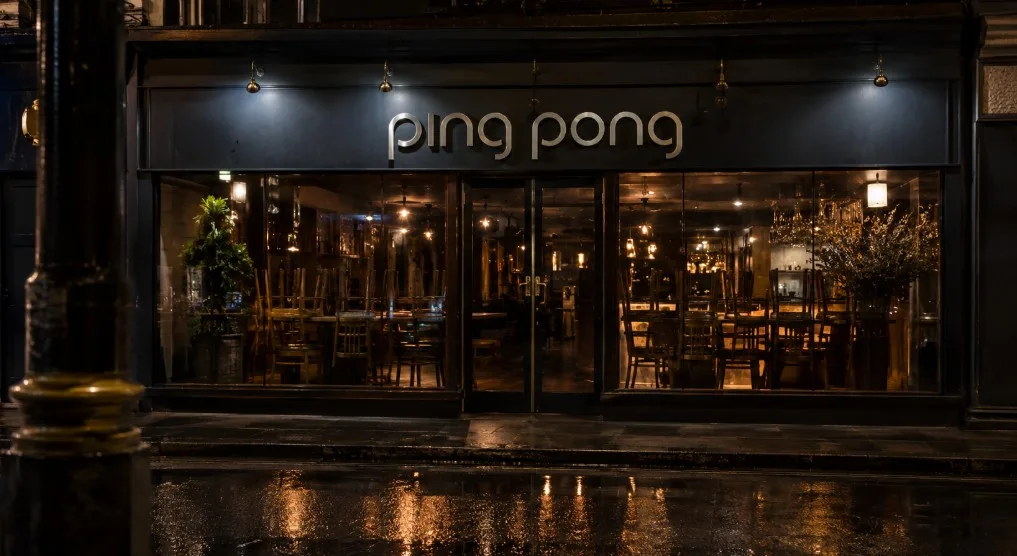
Ping Pong restaurants in the UK permanently closed in July 2025 after the dim sum chain faced years of financial pressure caused by rising operational costs, pandemic-related debt, inflation, and wider challenges within the hospitality industry.
The company shut its remaining London branches in Soho, Southbank, Bow Bells House, and St Christopher’s Place, bringing an end to its 20-year journey in the UK dining market.
Key Takeaways:
- Ping Pong permanently closed all remaining UK restaurants in 2025
- The chain struggled with Covid debt, inflation, and rising operating costs
- Its final four London branches shut down suddenly
- The controversial 15% “brand charge” attracted public criticism
- Ping Pong previously entered administration in 2022
- The closure reflects wider challenges facing the UK hospitality industry
- The brand left a lasting impact on London’s casual dim sum dining scene
Why Did Ping Pong Restaurants Close in the UK?
Ping Pong’s closure was not caused by one single issue. Instead, the business faced a combination of financial and operational challenges that gradually weakened its position in the competitive UK dining market.
Rising Operational Costs and Inflation Pressures
Like many UK restaurant chains, Ping Pong struggled with increasing operational expenses. Inflation significantly affected food supply costs, energy bills, commercial rent, and staff wages. London-based hospitality businesses were particularly exposed to these pressures due to high overhead costs.
Restaurants operating in central London often rely on strong customer footfall to maintain profitability. However, reduced consumer spending and increased living costs meant many customers began cutting back on dining out.
A hospitality consultant explained the issue clearly:
“I’ve worked with several casual dining brands over the past few years, and the biggest challenge has been balancing customer affordability with rising operating costs. Many restaurants simply reached a point where maintaining quality and profitability at the same time became impossible.”
Pandemic Debt and Declining Profitability
The Covid-19 pandemic had a major impact on Ping Pong’s finances. Temporary lockdowns, reduced customer capacity, and changing dining habits caused significant revenue losses across the hospitality industry.
Ping Pong reported trading losses of £1.4 million in the year ending March 2020, followed by a further loss of £1.86 million the following year. Although the business later returned to a small profit in 2022, the recovery was not enough to stabilise long-term operations.
Challenges Within the UK Hospitality Sector
The wider UK hospitality industry has faced difficult trading conditions since the pandemic. Labour shortages, increased taxation, and changing consumer behaviour have all affected restaurant profitability.
Casual dining chains have been particularly vulnerable because they operate within a highly competitive market where customers now have more takeaway, delivery, and independent dining options than ever before.
What Happened During Ping Pong’s Final Closure in 2025?
Ping Pong officially ceased trading in July 2025, permanently closing its final four London restaurants. The announcement came as a surprise to many customers, especially because the closures happened suddenly.
The group confirmed the news through an Instagram statement that read:
“It’s a wrap. After 20 unforgettable years, all Ping Pong locations are now permanently closed. We’re incredibly proud of what we built, an independent hospitality brand full of creativity, flavour and soul.”
The final closures affected the following locations:
| Location | Status |
| Soho | Permanently Closed |
| Southbank | Permanently Closed |
| Bow Bells House | Permanently Closed |
| St Christopher’s Place | Permanently Closed |
The announcement marked the end of one of London’s most recognisable dim sum chains. Customers shared memories online about birthday meals, bottomless brunches, and social gatherings that had become associated with the brand over the years.
Employees were also affected by the abrupt shutdown, with many staff members reportedly informed shortly before operations ceased completely.
How Did Ping Pong Become One of London’s Most Popular Dim Sum Chains?

Ping Pong was founded in 2005 by restaurateur Kurt Zdesar with backing from investor Igor Sagiryan. The business entered the London dining scene at a time when modern Asian casual dining concepts were becoming increasingly popular.
The Founding of Ping Pong in 2005
The restaurant introduced a fresh approach to dim sum dining by creating stylish interiors and an accessible menu designed for mainstream London consumers. Instead of offering only traditional Chinese dining experiences, Ping Pong positioned itself as a modern social dining venue.
Rapid Expansion Across London
Within four years of launching, Ping Pong expanded to 13 restaurants across London. Its rapid growth reflected strong customer demand and growing interest in Asian-inspired casual dining.
The chain became particularly popular among office workers, tourists, and younger diners looking for affordable sharing plates and cocktails in central London locations.
Signature Dim Sum Menu and Dining Experience
Ping Pong became known for offering more than 40 varieties of dim sum, including:
- Steamed dumplings
- Fried dim sum
- Vegetarian options
- Seafood dishes
- Cocktails and teas
The restaurant’s affordable lunch menus also helped attract repeat customers. In 2006, diners could purchase a set lunch for around £11, which was considered good value for central London dining.
Why Was the 15% ‘Brand Charge’ So Controversial?
One of the final controversies surrounding Ping Pong involved its decision to introduce a 15% discretionary “brand charge” instead of a traditional service charge.
The move received widespread criticism across UK media and social platforms.
Customers questioned why an additional charge was being applied directly to support the business rather than staff tips. The timing also increased scrutiny because the UK government was introducing new legislation regarding tipping transparency and worker protections.
A restaurant operations manager described the reaction this way:
“From a customer perspective, people generally accept service charges when they know the money supports hospitality staff. Replacing that with a brand charge created confusion and damaged trust at a time when restaurants needed customer loyalty more than ever.”
The controversy may not have caused the closure directly, but it contributed to negative publicity during an already difficult financial period for the company.
How Did Financial Problems Affect Ping Pong Over the Years?
Financial instability had affected Ping Pong for several years before its final closure.
Trading Losses Before and After Covid-19
The company experienced repeated financial losses due to declining profitability and operational challenges. Even before the pandemic, some locations struggled to maintain consistent performance.
Following Covid-19 restrictions, debt repayments and reduced customer traffic placed additional pressure on the business.
Rent Repayments and Operational Debt
Commercial property costs in London remained one of the company’s largest expenses. Restaurants operating in prime locations often face substantial rent commitments, which became increasingly difficult to manage during periods of reduced income. The business also relied on financial support to continue operating during difficult periods.
Administration and Pre-Pack Sale in 2022
In November 2022, Ping Pong appointed administrators Begbies Traynor. A pre-pack administration sale later transferred the business to three company directors for £3.21 million.
According to reports, the pandemic caused “significant disruption” to the business, while a £500,000 loan from investor Igor Sagiryan helped temporarily support operations.
Despite restructuring efforts, the business was unable to recover fully in the years that followed.
What Does the Ping Pong Closure Say About the UK Restaurant Industry?
Ping Pong’s closure reflects wider problems affecting the UK hospitality and restaurant sector.
Restaurants across Britain continue facing several major challenges:
- Increased energy bills
- Rising food inflation
- Higher staff wages
- Reduced consumer spending
- Growing competition from delivery platforms
Many casual dining chains have reduced their restaurant portfolios or entered administration over recent years. The hospitality industry has also experienced significant staffing shortages since Brexit and the pandemic, making recruitment and retention more expensive for employers.
At the same time, consumers have become more cautious about discretionary spending due to the rising cost of living across the UK. These factors have created an extremely difficult environment for mid-market restaurant brands trying to maintain profitability.
Could Ping Pong Have Survived the Hospitality Crisis?

Some industry observers believe Ping Pong may have survived with a different long-term business strategy, while others argue that the wider economic climate made closure unavoidable.
The restaurant industry has changed significantly over the past decade. Delivery apps, independent food concepts, and changing customer expectations have reshaped how consumers spend money on dining experiences.
Reducing operational costs earlier, focusing more heavily on delivery services, or limiting expansion may have improved sustainability. However, these changes may still not have been enough to offset the financial pressure created by inflation and pandemic debt.
Ping Pong’s experience highlights how difficult it has become for casual dining chains to maintain large city-centre operations in the current economic environment.
What Is the Lasting Legacy of Ping Pong Restaurants in London?
Although the business has closed, Ping Pong left a lasting impression on London’s dining culture. The chain helped popularise modern dim sum dining among mainstream UK audiences and introduced many customers to accessible Asian sharing dishes.
For two decades, the brand became associated with:
- Casual social dining
- Affordable dim sum experiences
- Stylish restaurant interiors
- Group lunches and brunches
- London hospitality culture
Many former customers continue to remember the restaurant as an important part of London’s casual dining scene during the 2000s and 2010s.
Its closure also symbolises the end of an era for several well-known mid-market restaurant chains that once dominated the capital’s dining landscape.
Conclusion
The Ping Pong restaurant closures in the UK highlight the growing pressures facing hospitality businesses across Britain. Rising inflation, operational costs, pandemic debt, and changing customer behaviour all contributed to the downfall of a restaurant chain that once appeared highly successful.
While Ping Pong managed to build a strong brand and loyal customer base over 20 years, long-term financial pressures eventually became too difficult to overcome.
The closure also serves as a wider warning for the UK restaurant industry. Businesses operating in competitive urban markets must now adapt quickly to economic uncertainty, evolving customer expectations, and rising operational costs if they hope to remain sustainable in the years ahead.
FAQ
When did Ping Pong permanently close its UK restaurants?
Ping Pong permanently closed all remaining UK restaurants in July 2025 after ceasing trading operations.
Which Ping Pong branches closed in London?
The final closures included Soho, Southbank, Bow Bells House, and St Christopher’s Place.
Who founded Ping Pong restaurants?
Ping Pong was founded in 2005 by restaurateur Kurt Zdesar with backing from investor Igor Sagiryan.
What was the Ping Pong brand charge controversy?
The company introduced a 15% discretionary brand charge instead of a standard service charge, which caused customer confusion and media criticism.
Did Covid-19 contribute to Ping Pong’s closure?
Yes, the pandemic significantly affected Ping Pong’s finances through lockdowns, reduced customer traffic, and debt accumulation.
How many Ping Pong restaurants were there at their peak?
Ping Pong operated 13 restaurants within four years of launching.
What happened after Ping Pong entered administration?
The company entered administration in 2022 and completed a pre-pack sale to three company directors for £3.21 million.