

A lorry driver from West Sussex is challenging the Department for Work and Pensions (DWP) after the government began recovering a disputed disability benefit debt of nearly £10,000 directly from his wages.
Barry Hawker, who lives in Littlehampton with his wife Gemma, says the DWP has been deducting 20% of his earnings, sometimes amounting to £700 a month, despite his repeated requests for evidence that he actually received the alleged overpayment.
The debt reportedly relates to disability benefits paid between 2005 and 2011. The couple maintain that they have not received satisfactory documentation establishing the payments or explaining why the money is recoverable.
The case, reported by the BBC on 15 November 2026, has raised wider questions about government debt collection, historical benefit records, financial hardship and the rights of people who dispute repayment demands.
Our analysis of the DWP’s published debt-recovery framework highlights an important distinction: the department has statutory powers to recover established benefit debts, but disagreements about the original overpayment decision and concerns about affordability require separate consideration.
What Happened in the Barry Hawker DWP Debt Recovery Case?
Barry Hawker is a working lorry driver who lives with a rare autoimmune condition called systemic sclerosis. According to the BBC report, he receives Disability Living Allowance (DLA), which helps with expenses associated with his health condition.
His wife says the benefit contributes towards medical-related travel, essential items and periods when his condition affects his ability to work.
However, the family’s financial position has been affected by DWP deductions relating to an alleged overpayment made many years ago.
| Key information | Reported details |
| Person involved | Barry Hawker |
| Location | Littlehampton, West Sussex |
| Department | Department for Work and Pensions |
| Type of debt | Alleged disability benefit overpayment |
| Approximate debt | Nearly £10,000 |
| Period of alleged overpayment | 2005–2011 |
| Wage deduction | 20% |
| Reported monthly deductions | Up to £700 |
| Main dispute | Whether the alleged payments were actually received |
| Case status, 16 November 2026 | Publicly reported as unresolved |
The Hawkers have questioned the origin of the debt and requested details of the bank account into which the DWP says the original benefit payments were deposited.
According to the reporting, they have not been provided with the evidence they consider necessary to establish their liability.
Gemma Hawker told the BBC:
“It is not about the money. It is the principle.”
She explained that the couple would be prepared to repay a genuine debt if the department could demonstrate that the money was received and explain why it should be repaid.
The DWP, meanwhile, said it examines available records and evidence when recovering overpayments and indicated that it would contact Barry with further information.
There has been no independently verified final determination establishing that the alleged debt is invalid or that the deductions were unlawful.
Why Is the DWP Deducting 20% of Barry Hawker’s Wages?
The DWP has legal mechanisms for recovering benefit overpayments, including deductions from a person’s wages when they are employed.
One such mechanism is known as a Direct Earnings Attachment (DEA).
Under the Welfare Reform Act 2012 and associated regulations, DWP Debt Management can instruct an employer to deduct money from an employee’s earnings without first obtaining a conventional civil court attachment order.
The official Direct Earnings Attachment guidance explains the responsibilities of employers and the rules governing these deductions.
The BBC’s description of Hawker’s deductions is consistent with the standard DEA maximum rate, although the reporting does not establish every detail of the recovery notice issued in his case.
How Much Can the DWP Deduct From Wages?
Deductions depend on net earnings, payment frequency and whether the standard or higher deduction rate applies.
For employees paid monthly, the standard-rate structure includes the following bands:
| Monthly net earnings | Standard deduction rate |
| Up to £430 | 0% |
| £430.01–£690 | 3% |
| £690.01–£950 | 5% |
| £950.01–£1,160 | 7% |
| £1,160.01–£1,615 | 11% |
| £1,615.01–£2,240 | 15% |
| £2,240.01 or more | 20% |
The higher-rate system can permit larger deductions, potentially reaching 40%, subject to its own rules.
Employers must also respect protected-earnings requirements. A DEA, combined with other relevant orders, must generally leave the employee with at least 60% of their net earnings, although an employer’s separate permitted administration charge can affect the final amount.
These protections concern net pay. They do not guarantee that the remaining money will cover an individual’s rent, household bills, food and medical expenses.
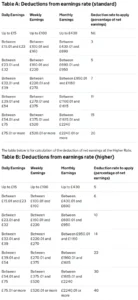
Official GOV.UK Direct Earnings Attachment guidance showing the standard deduction percentages, higher rates and protected-earnings requirements.
Why Does Barry Hawker Dispute the Alleged £10,000 Debt?
The central disagreement is whether the DWP has adequately established the origin and recoverability of the alleged overpayment.
According to the BBC report, the debt relates to payments allegedly made between 2005 and 2011. The Hawkers say they have repeatedly asked for evidence showing where the money went.
Their concerns raise several important questions:
- What benefit payments does the DWP say were overpaid?
- What was the original entitlement decision?
- Which bank account received the payments?
- How was the alleged overpayment calculated?
- What evidence establishes that the amount is legally recoverable?
- When and how was the original decision communicated?
These questions matter because identifying an apparent overpayment is not the same as proving every element of a legally recoverable debt.
The DWP’s internal guidance distinguishes between overpayments arising from claimant errors, deliberate misrepresentation, official mistakes and other circumstances.
In particular, the legal treatment of some older DLA overpayments can differ from that of Universal Credit overpayments.
The benefit involved, the circumstances of the original decision and the legislation applicable at the time can all affect recoverability.
The family’s position remains that they need a satisfactory explanation before accepting the department’s demand.
Can the DWP Recover a Benefit Debt From More Than 15 Years Ago?
Yes, in some circumstances, the DWP can pursue an older benefit debt.
A common misunderstanding is that every benefit overpayment automatically becomes unenforceable once six years have passed.
The legal position is more complicated.
In England and Wales, time limits affecting ordinary civil debt proceedings do not necessarily prevent the DWP from using statutory benefit-recovery powers.
However, the department must still have a legally recoverable debt, and questions about the original decision, evidence and subsequent recovery action remain relevant.
The age of Barry Hawker’s alleged debt is therefore significant, but its age alone does not determine whether repayment can lawfully continue.
What Happens When Historical DWP Records Are Missing?
Older cases can present difficulties because the alleged payments may predate current benefit systems, banking arrangements and electronic recordkeeping.
When reviewing a historical debt, the key information may include:
| Evidence | Why it matters |
| Original benefit award | Establishes the entitlement and payment basis |
| Overpayment decision | Identifies the amount deemed recoverable |
| Payment history | Shows the dates and amounts recorded as paid |
| Bank payment details | May help establish where payments were directed |
| Claimant correspondence | Shows reported changes and previous disputes |
| Recovery history | Identifies previous deductions and outstanding balances |
| Reconsideration or appeal records | Shows whether the original decision was challenged |
A missing historical bank record does not automatically invalidate a debt. Equally, a person disputing the alleged payments should be able to seek an explanation of the basis for the recovery decision.
That distinction is particularly important where the alleged liability dates back many years.
What Have Debt Professionals Said About the Barry Hawker Case?
Peter Tutton, Director of Policy, Research and Public Affairs at StepChange Debt Charity, commented to the BBC on the wider problem of historical government overpayment demands.
He explained that people can unexpectedly face demands for money connected with benefits received years earlier.
Tutton highlighted the risk that deductions taken directly from earnings can push households into financial hardship, particularly when repayments are not aligned with what people can reasonably afford.
His position was that the government has a legitimate interest in recovering money that is genuinely owed, but affected households should receive appropriate notice and manageable repayment arrangements.
The concern is consistent with StepChange’s broader research into government debt deductions, which has repeatedly identified affordability problems among people already struggling to meet essential expenditure.
For the Hawker household, the reported financial pressure is substantial.
Gemma has suggested that after rent and other bills, the deductions could leave Barry with only around £300 per month for remaining expenses.
This illustrates why the percentage deducted from earnings does not necessarily provide a complete measure of affordability.
A household can satisfy a statutory deduction formula while still struggling to maintain an adequate budget.
Can Someone Challenge DWP Debt Recovery If They Never Received the Money?
A person who believes a DWP overpayment decision is incorrect can normally seek reconsideration of that decision, subject to the applicable rules and deadlines.
The first priority is identifying the original decision and its legal basis.
The DWP’s published Benefit Overpayment Recovery Guide explains its approach to disputes, reconsiderations, appeals, hardship and discretionary waivers.
Step 1: Request a Written Explanation
Ask the relevant DWP office for a written explanation of the debt.
The request should cover the amount, benefit type, calculation period, legal basis for recovery and information used to establish the overpayment.
A person who disputes receiving the alleged payment should explicitly request the available payment-history and bank-destination records.
Step 2: Request the Records Held by the DWP
Individuals can submit a Subject Access Request (SAR) asking for personal information held by the department.
Potentially relevant information includes benefit payment records, historical correspondence, decision-making records and evidence used in the dispute.
A SAR is a means of requesting records that are still held. It does not guarantee that historical information remains available or automatically suspend recovery.
Step 3: Consider Mandatory Reconsideration
Where a recoverable overpayment decision is disputed, mandatory reconsideration is generally the first stage of the formal challenge process.
A request is normally expected within one month of notification of the decision. Late requests have additional restrictions, so someone dealing with a much older decision should obtain specialist welfare-rights advice promptly.
If the case proceeds to an independent tribunal, the applicable appeal procedure and deadlines must be followed.
A request for reconsideration does not guarantee that deductions will stop. DWP policy provides for suspension in certain circumstances, but the treatment varies by benefit and procedural stage.
Step 4: Request an Affordability Review
Even where a debt is valid, a person may be able to ask for a reduction or temporary suspension of repayments because of financial hardship.
The DWP can consider household income, unavoidable expenditure, health circumstances and other relevant evidence.
This is separate from the legal question of whether the original debt exists.
Step 5: Make a Complaint Where Appropriate
Where the problem concerns delays, poor communication or failure to provide explanations, the person can use the DWP complaints procedure.
Following the department’s final complaint response, unresolved service complaints may be referred to the Independent Case Examiner within the applicable deadline.
Importantly, complaints about service quality do not replace the formal process for challenging the underlying benefit decision.
Can the DWP Stop or Reduce Debt Recovery Because of Financial Hardship?
The DWP’s own debt-recovery guidance recognises that repayments should not cause undue financial hardship.
The department can consider reducing, suspending or, in exceptional circumstances, waiving recovery.
The decision depends on individual facts and the evidence provided.
Relevant considerations may include:
- Essential household expenditure compared with available income.
- Serious health problems affecting the individual or their family.
- Dependants and caring responsibilities.
- Whether recovery is causing significant financial or welfare problems.
- Circumstances surrounding the original overpayment.
- The individual’s conduct and the department’s previous actions.
A waiver is discretionary rather than automatic.
The DWP’s policy also recognises circumstances in which an individual did not benefit from money allegedly overpaid as a factor potentially relevant to a waiver assessment.
For someone in Barry Hawker’s position, the question of whether the alleged payments were received is therefore relevant both to understanding the original liability and to considering how recovery should be handled.
How Do the New DWP Debt Recovery Powers Affect Cases Like This?

The Barry Hawker case has emerged during a period of expanded government debt-recovery activity.
The Public Authorities (Fraud, Error and Recovery) Act 2025 introduced additional mechanisms to pursue certain outstanding debts, particularly where individuals are no longer receiving benefits and existing recovery methods are unavailable.
Some of these powers came into force in June 2026, with enforcement implementation progressing later in the year.
They include additional arrangements for recovering qualifying debts through financial institutions and, in limited cases, seeking court-approved driving disqualification.
However, these powers should not be confused with an ordinary Direct Earnings Attachment.
| Recovery mechanism | How it operates |
| Benefit deductions | Repayments taken from ongoing benefit awards |
| Direct Earnings Attachment | Employer deducts money from wages |
| Voluntary repayment plan | Debtor agrees an affordable arrangement |
| Direct Deduction Order | Qualifying recovery through a financial institution |
| Court enforcement | Judicial recovery procedures where applicable |
The government’s broader DWP benefit fraud crackdown includes stronger investigation and debt-recovery measures.
Nevertheless, an overpayment dispute is not automatically an allegation of fraud.
Someone may dispute a benefit debt because of an administrative error, incorrect calculation, mistaken identity, missing historical records or disagreement over their legal liability.
Separately, the rules governing DWP checks on bank accounts involve different legal powers and safeguards.
Does Receiving Disability Benefits While Working Mean Someone Has Broken the Rules?
No. Receiving disability-related benefits while working does not automatically mean an individual has broken benefit rules.
Disability Living Allowance is not generally means-tested against earnings in the same way as Universal Credit.
Eligibility is primarily linked to qualifying care and mobility needs rather than simply whether the person has a job.
This distinction is important in Barry Hawker’s case because his employment as a lorry driver and his receipt of DLA are not inherently contradictory.
Any overpayment must be assessed according to the relevant benefit conditions and circumstances.
Changes in disability-related benefit administration are also important for other households. The wider DWP disability benefit reassessment programme illustrates why claimants should distinguish between an entitlement review, a benefit transition and an overpayment recovery decision.
These are different procedures, with different consequences.
What Does the Barry Hawker Case Reveal About DWP Debt Collection?
The case highlights three competing considerations within the benefit-recovery system.
First, the government has a responsibility to recover public money where a legally recoverable overpayment has occurred.
Second, claimants need a meaningful opportunity to understand and challenge decisions that affect their finances.
Third, repayment arrangements should take account of affordability and vulnerability rather than focusing solely on the amount of outstanding debt.
For an older dispute, those considerations can become difficult to balance.
The original benefit payments may date back decades, while the financial consequences are experienced at today’s living costs.
According to the BBC’s report, the Hawkers are not simply arguing that the repayments are unaffordable. They are questioning the factual basis of the debt itself.
That is an important difference.
An affordability review may reduce the immediate financial pressure, but it does not necessarily resolve a disagreement about whether the overpayment occurred.
Equally, challenging the original debt may take time, and recovery may continue unless the department suspends it or the relevant decision changes.
The government’s published recovery guidance contains provisions for reconsideration, hardship reviews and discretionary action, making it important that affected individuals understand which route addresses their particular problem.
Has the DWP Cancelled Barry Hawker’s Debt?
As of 16 November 2026, there has been no verified public announcement confirming that the DWP has cancelled the alleged debt or permanently stopped the deductions.
The BBC reported that the department had said it would contact Barry Hawker to provide additional information.
The family’s dispute therefore remains unresolved on the information publicly available.
It would be premature to conclude either that the debt is legally established beyond challenge or that the DWP has unlawfully recovered the money.
The outcome depends on the historical evidence, the original overpayment decision and any subsequent review or legal proceedings.
Frequently Asked Questions
Who Is Barry Hawker?
Barry Hawker is a lorry driver from Littlehampton, West Sussex, who is disputing a DWP disability benefit debt of nearly £10,000. His case attracted national attention following BBC reporting in November 2026.
Why Is the DWP Taking 20% of Barry Hawker’s Wages?
The deductions are reportedly being made to recover an alleged historical disability benefit overpayment. The DWP has legal mechanisms for recovering certain benefit debts directly from employment earnings.
How Much Does Barry Hawker Allegedly Owe the DWP?
The reported debt is nearly £10,000 and relates to alleged disability benefit overpayments dating from 2005 to 2011.
Can the DWP Recover a Debt After 15 Years?
Potentially, yes. In England and Wales, certain statutory benefit-debt recovery powers are not automatically extinguished by the passage of six years. The legal recoverability of the individual debt must still be established.
Can You Refuse to Pay a DWP Debt Without Evidence?
You can dispute an alleged overpayment and request evidence and an explanation. However, merely disputing a debt does not automatically prevent statutory recovery. Promptly using the appropriate reconsideration, appeal or hardship procedures is important.
Can the DWP Take 40% of Someone’s Wages?
The higher-rate Direct Earnings Attachment structure can permit deductions of up to 40% of net earnings. Protected-earnings rules and other relevant restrictions apply.