

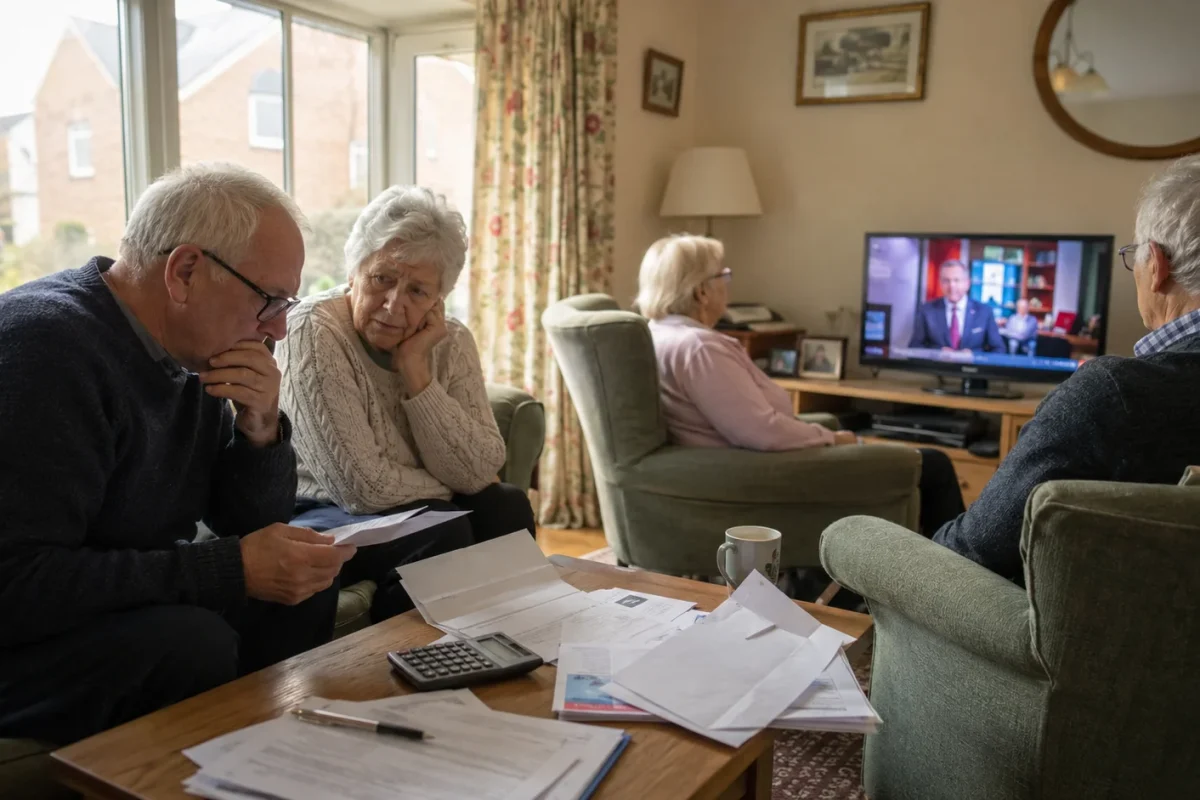
The BBC TV licence pensioner petition calls for the UK Government to fund free TV licences for all existing pensioners and people reaching official retirement age.
The petition argues that retirees should not have to pay the £180 annual licence fee, especially when many older people are facing rising food, energy and household costs.
Key takeaways:
- The petition asks for free TV licences for all pensioners, not only over-75s on Pension Credit.
- Current rules mean most pensioners still need to pay the TV licence fee.
- Campaigners say television is vital for companionship, news and daily routine.
- A petition with 10,000 signatures gets a Government response.
- At 100,000 signatures, it may be considered for parliamentary debate.
What Is the BBC TV Licence Pensioner Petition About?

The BBC TV licence pensioner petition is a public campaign calling for free TV licences to be made available to all pensioners in the UK. The petition was launched on the UK Government’s official petitions website and asks ministers to fund free licences for existing pensioners and those who reach the official retirement age.
At present, the system does not provide an automatic free TV Licence when someone retires. A person may have reached state pension age, stopped working and begun relying mainly on pension income, but they are still expected to pay the TV licence fee unless they meet the current eligibility rules.
The petition argues that this approach is too limited. Campaigners believe retirement itself should be enough to qualify someone for a free licence, especially because many older people have already spent decades working, paying taxes and contributing to society.
Direct Aim of the Petition
The central aim is to make the TV Licence free for pensioners through Government funding. This would move the concession away from a narrow means-tested model and towards wider support for retirees.
The petition specifically calls for help for:
- Existing pensioners who currently pay the TV Licence
- People reaching official state pension age
- Retirees who do not qualify for Pension Credit
- Older people affected by food, heating and household bill increases
This is why the campaign has attracted attention from people who feel the current system leaves too many pensioners unsupported.
Why the Campaign Has Been Launched Now?
The campaign has been launched at a time when the cost of living remains a serious concern for older households. Many pensioners live on fixed incomes, which means their weekly or monthly budget may not increase at the same pace as everyday costs.
The timing is also linked to the licence fee rise. The annual TV licence fee increased from £174.50 to £180 on 1 April, making the cost more noticeable for retirees who already have to plan carefully around essentials.
The petition therefore sits within a wider debate about pensioner welfare, the BBC licence fee and whether support should be based only on means-tested benefits.
| Petition Detail | Explanation |
| Main request | Government-funded free TV licences for all pensioners |
| Current concern | Many retirees still pay the full licence fee |
| Main campaign reason | Pensioners face rising food and utility costs |
| Existing free licence rule | Mainly available to people aged 75 and over receiving Pension Credit |
| Possible petition outcome | Government response at 10,000 signatures and debate consideration at 100,000 signatures |
Why Are Pensioners Calling for Free TV Licences?
Pensioners are calling for free TV licences because many believe the current system does not reflect the financial reality of retirement. A person may be retired, living carefully and struggling with daily costs, yet still be ineligible for support if they do not receive Pension Credit.
Supporters of the BBC TV licence pensioner petition say the issue is not only about the amount of the licence fee. It is about fairness, dignity and recognising the role television plays in the lives of older people.
For many pensioners, TV is not a luxury. It can be one of the most reliable and affordable ways to stay informed, entertained and connected to the wider world.
Rising Food and Utility Costs
The petition refers directly to the pressure caused by soaring food costs and high utility bills. These are not optional expenses. Pensioners need to heat their homes, buy groceries, pay council tax, manage transport costs and cover personal care needs.
When these costs rise, the TV licence fee can become another difficult payment. For pensioners with savings or private pensions, it may be manageable. For those close to the edge of their budget, it may feel like one more financial burden.
A retirement finance adviser explained this concern clearly:
“I often speak to older people who are not asking for luxuries. They are trying to protect small parts of daily life that help them feel connected. For some, television is one of the few affordable comforts left, so the licence fee can feel like another pressure rather than a simple bill.”
This professional view reflects the wider argument behind the petition. Campaigners believe that if television is part of daily wellbeing for older people, the Government should recognise this through a universal pensioner concession.
Television as Companionship for Older People
Television can be especially important for pensioners who live alone. It provides background sound, routine, news, weather updates, entertainment and a sense of connection.
For older people with limited mobility, poor health or reduced social contact, TV may form a large part of their day. It can help reduce isolation and provide comfort during long periods at home.
The petition describes many pensioners as living on the breadline with only the TV for company. This statement has become central to the campaign because it presents television as a social and emotional support, not just a paid media service.
Who Currently Gets a Free TV Licence in the UK?

The current rules do not give all pensioners a free TV Licence. The main free licence concession applies to people aged 75 or over who receive Pension Credit.
This means that someone reaching state pension age does not automatically qualify. A person aged 66 or 67 may be retired and living on pension income, but they are still normally required to pay the full licence fee.
It also means that a pensioner aged over 75 may still have to pay if they do not receive Pension Credit. This is one of the main reasons the petition has been launched.
Free TV Licence Rules for Over-75s
Under the current rules, the free TV Licence is linked to both age and Pension Credit. Being over 75 alone is not usually enough. The person must also be receiving Pension Credit, or live with a partner who receives it.
This creates a system where some older people receive the concession while others in similar circumstances do not. Campaigners argue that the rules can feel confusing and unfair, especially for those who narrowly miss out on Pension Credit.
Pension Credit and Eligibility
Pension Credit is a means-tested benefit for people over state pension age who are on a low income. It can provide extra weekly income and can also unlock other forms of help, including the free TV Licence for eligible over-75s.
However, the link between Pension Credit and the TV Licence creates challenges. Some pensioners do not apply for Pension Credit because they do not realise they may qualify. Others may feel the process is complicated or may assume they are not entitled to help.
A welfare rights specialist described the issue this way:
“I have seen pensioners miss out because they do not understand how Pension Credit connects to other support. I always tell people to check eligibility rather than assume they are not entitled, because one successful claim can open the door to more help.”
| Pensioner Group | Current Position | Main Concern |
| Pensioners under 75 | Usually need to pay the TV Licence | Retirement age does not bring automatic support |
| People aged 75 and over on Pension Credit | Can qualify for a free TV Licence | Support exists but depends on means-tested benefit status |
| People aged 75 and over not on Pension Credit | Usually need to pay | Some may still face financial pressure |
| Pensioners living alone | Must qualify under the same rules | TV may be a major source of companionship |
| Future retirees | No automatic free licence at state pension age | Petition wants support from retirement age |
How Much Is the BBC TV Licence Fee Now?
The annual TV licence fee has increased from £174.50 to £180. This increase has added to public discussion about whether pensioners should be expected to pay the charge after retirement.
The licence fee is required for watching or recording live television on any channel or TV service. It is also required for using BBC iPlayer. This applies whether the content is watched on a television, laptop, tablet, mobile phone or another device.
For households with regular income from work, the fee may be treated as a standard annual cost. For pensioners, it may be a more sensitive issue because their income is often fixed and planned carefully.
The petition argues that the Government should remove this cost from pensioners entirely. Supporters say this would give retirees one less bill to worry about each year.
| Licence Fee Point | Detail |
| Previous annual cost | £174.50 |
| New annual cost | £180 |
| Increase date | 1 April |
| Applies to | Watching or recording live TV and using BBC iPlayer |
| Petition response | Calls for Government-funded free licences for pensioners |
What Changes Does the Petition Want the Government to Make?
The petition wants the Government to fund free TV licences for all pensioners. This would be a significant change because the current concession is limited and tied to Pension Credit eligibility for over-75s.
Campaigners want the system to be simpler. Their view is that once a person reaches official retirement age, they should receive a free TV Licence automatically or through a straightforward process.
Free Licences for Existing Pensioners
The petition calls for free licences for people who are already pensioners. This would include those who are under 75, those over 75 who do not receive Pension Credit and those who currently pay despite limited incomes.
Supporters argue that existing pensioners should not be overlooked simply because they do not fit the current eligibility rules. They believe retirement status should be the main condition.
Support for People Reaching State Pension Age
The petition also calls for free licences for people who reach the official retirement age. This matters because the state pension age is rising from 66 to 67.
If the proposal were accepted, the concession would follow retirement age rather than being delayed until age 75. Campaigners believe this would better reflect the point at which many people leave full-time work and begin relying on pension income.
How Could the BBC TV Licence Pensioner Petition Affect Retirees?
If the BBC TV licence pensioner petition were accepted and became Government policy, it could directly reduce annual costs for retirees. The saving would be the cost of the TV Licence, which pensioners could instead use for essentials such as food, heating, transport or household bills.
The impact would not be the same for every pensioner. Some retirees may see the saving as helpful but not essential. Others may feel a much greater benefit because every recurring bill affects their budget.
The petition could also reduce confusion around eligibility. Instead of pensioners needing to understand the link between age, Pension Credit and TV Licensing rules, a universal retirement-age concession would be easier to explain.
Potential effects could include:
- A direct annual saving for pensioner households
- Simpler rules around free TV Licence eligibility
- More support for people living on fixed retirement income
- Less pressure on older people who rely heavily on television
- A wider public debate about how pensioner concessions should work
There would also be questions for Government. A universal scheme would need funding, administration and clear eligibility rules. Ministers would need to decide whether the concession should apply from state pension age, whether it should include all pensioners regardless of income and how it would be paid for.
| Possible Effect | How It Could Help Pensioners |
| Lower yearly costs | Pensioners would not need to pay the annual licence fee |
| Easier eligibility | Retirement age could become the main qualifying point |
| Reduced isolation pressure | TV access would feel more secure for older people living alone |
| Better public awareness | More people may understand the debate around Pension Credit and support |
| Policy debate | MPs and ministers may face pressure to review pensioner concessions |
What Happens If the Petition Reaches 10,000 or 100,000 Signatures?
UK Government petitions follow a recognised process. If a petition reaches 10,000 signatures, the Government must provide a formal written response. If it reaches 100,000 signatures, the Petitions Committee considers it for a parliamentary debate.
This process gives the public a way to raise issues directly with Government. It does not guarantee that the requested change will happen, but it can create political attention.
Government Response at 10,000 Signatures
At 10,000 signatures, the Government response would likely explain the current TV Licence rules and set out whether ministers support or reject the proposal.
For a petition about the BBC licence fee, the response would most likely involve the Department for Culture, Media and Sport, as it is responsible for policy relating to broadcasting and the BBC.
A written response may include the Government’s view on:
- Existing support for over-75s on Pension Credit
- The cost of expanding free TV licences
- The future of BBC funding
- Whether wider pensioner support is under review
Parliamentary Debate Consideration at 100,000 Signatures
At 100,000 signatures, the petition becomes eligible for consideration by the Petitions Committee. If selected, MPs may debate the issue in Parliament.
A debate would allow MPs to raise concerns on behalf of constituents, question the fairness of the current system and ask ministers to explain the Government’s position.
However, a debate is not the same as a policy change. It can increase pressure, but the final decision would still depend on Government priorities, available funding and political support.
Why Is the Current TV Licence System Being Criticised?
The current system is being criticised because many pensioners believe it is unfair to restrict free TV licences to a narrow group. The requirement to receive Pension Credit means that some older people who are struggling may still be excluded.
Campaigners also argue that the system does not properly recognise the contribution pensioners have made throughout their lives. Many retirees have paid taxes, worked for decades, raised families and supported their communities.
The petition suggests that charging them for a TV Licence in retirement feels unfair, especially when television may be one of their main sources of companionship.
Another criticism relates to complexity. The current rules require people to understand benefit eligibility, age thresholds and TV Licensing processes. Some older people may not know they can apply for Pension Credit or may not understand that Pension Credit can lead to a free TV Licence after age 75.
There is also frustration about public service broadcasting costs and media salaries. The petition refers to concern that pensioners must pay the licence fee while some media figures earn large salaries.
This argument has emotional force because it compares the financial pressure on older households with high earnings in the media industry.
The criticism can be summarised as a mixture of fairness, affordability and accessibility. Supporters of reform believe the system should be simpler and more generous to pensioners.
How Can Eligible Pensioners Apply for a Free TV Licence?
Eligible pensioners can apply for a free TV Licence through TV Licensing if they are aged 75 or over and receive Pension Credit. Those already receiving Pension Credit can apply from age 74, with payments adjusted until they reach 75.
The application usually requires personal details and proof of eligibility. Pensioners may need to provide information linked to their Pension Credit claim and current TV Licence.
People who are unsure about eligibility should check whether they can claim Pension Credit. This is important because Pension Credit can provide extra income and may unlock other support.
A practical route for pensioners is:
- Check whether Pension Credit may be available
- Confirm whether the household already has a TV Licence
- Apply for the free licence if aged 75 or approaching 75
- Keep records of Pension Credit and TV Licensing correspondence
The petition argues that this process should not be necessary for all retirees. Campaigners want free licences to apply more broadly so that pensioners do not need to rely on a means-tested benefit to qualify.
What Are the Key Arguments For and Against Free TV Licences for All Pensioners?
The debate around free TV licences for pensioners has arguments on both sides. Supporters focus on fairness, wellbeing and financial relief. Opponents may focus on cost, targeting support and the future of BBC funding.
Those in favour say pensioners deserve support after a lifetime of contribution. They also argue that television is particularly important for older people who live alone or have limited social contact.
Those against a universal concession may argue that not all pensioners are financially struggling. They may say public money should be targeted towards those most in need through Pension Credit or other benefits.
| Arguments For Free Licences | Arguments Against Free Licences |
| Helps pensioners with rising living costs | Could be expensive for the Government |
| Recognises years of tax and public contribution | Some wealthier pensioners would also benefit |
| Supports older people who rely on TV for company | Targeted support may be seen as more efficient |
| Makes the system simpler to understand | Funding would need to be found elsewhere |
| Reduces pressure on fixed incomes | Could form part of a wider BBC funding debate |
The challenge for policymakers is deciding whether universal support is fairer than means-tested support. A universal scheme is simpler and may prevent people from missing out. A means-tested scheme costs less and focuses money on lower-income households.
The petition clearly supports the universal approach. It argues that all pensioners should receive the concession once they reach retirement age.
Could Free TV Licences for Retirees Become Government Policy?
Free TV licences for all retirees could become Government policy, but only if ministers choose to support the proposal and provide funding. A petition can raise attention, but it does not automatically change the rules.
For the idea to become policy, the Government would need to consider the cost of covering licences for all pensioners. It would also need to decide whether the free licence should start at state pension age, at 75 or at another age.
The Government would also need to consider how the policy fits with the BBC’s funding model. The licence fee is part of how the BBC is funded, so any major concession could raise questions about who covers the lost revenue.
Important policy questions include:
- Should free TV licences begin at state pension age?
- Should every pensioner qualify regardless of income?
- Should the Government or BBC pay for the concession?
- How would pensioners apply or be automatically registered?
- Would the policy be permanent or reviewed over time?
The petition may increase public pressure, especially if it gains enough signatures to receive a Government response or parliamentary debate. However, the final outcome would depend on political priorities and public spending decisions.
What Does the BBC TV Licence Pensioner Petition Mean for UK Households?
The BBC TV licence pensioner petition matters to UK households because it raises a wider question about how older people should be supported in retirement. The TV Licence is only one annual bill, but for pensioners on fixed incomes, removing it could make a practical difference.
For older households, the petition represents a call for recognition. It suggests that pensioners should not have to continue paying for access to live television and BBC iPlayer after reaching retirement age.
For families, the issue may also be important because many adult children help parents or grandparents manage bills. A free TV Licence could reduce one recurring cost and make household budgeting easier.
The campaign also draws attention to loneliness among older people. Television may not replace family, friends or community, but it can provide comfort and routine. For some pensioners, it is part of everyday life.
The petition therefore connects several issues at once: pensioner poverty, the cost of living, public broadcasting, Government support and social isolation. Whether or not the proposal becomes policy, it has already helped bring these concerns into public discussion.
Conclusion
The BBC TV licence pensioner petition calls for free TV licences to be extended to all retirees through Government funding. It argues that pensioners should not have to rely on a means-tested Pension Credit rule to receive help with a service that many use daily for companionship, information and routine.
The campaign comes at a time when the annual TV licence fee has risen to £180 and many older people are managing higher food, energy and household costs. Supporters believe a free licence for all pensioners would be fairer, simpler and more respectful of the contribution retirees have made throughout their lives.
The petition may lead to a Government response if it reaches 10,000 signatures, and it may be considered for parliamentary debate if it reaches 100,000 signatures. Whether it becomes policy will depend on Government decisions, funding priorities and the strength of public support.
FAQs About the BBC TV Licence Pensioner Petition
Can all pensioners currently get a free TV Licence?
No, all pensioners cannot currently get a free TV Licence. The current rules mainly support people aged 75 or over who receive Pension Credit. Pensioners who do not meet these conditions usually need to pay the licence fee.
What age does someone need to be for a free TV Licence?
A person generally needs to be aged 75 or over and receiving Pension Credit to qualify for a free TV Licence. The petition wants the rules changed so that people can receive a free licence when they reach official retirement age.
Does Pension Credit affect free TV Licence eligibility?
Yes, Pension Credit is central to current eligibility. A person aged 75 or over usually needs to receive Pension Credit to qualify for a free TV Licence. This is one of the main reasons campaigners believe the system should be changed.
What happens when a petition reaches 10,000 signatures?
When a UK Government petition reaches 10,000 signatures, the Government must provide a written response. This response explains the Government’s position on the issue raised by the petition.
Could Parliament debate free TV Licences for pensioners?
Yes, if the petition reaches 100,000 signatures, the Petitions Committee can consider it for a parliamentary debate. A debate would allow MPs to discuss the issue, although it would not automatically change the law.
Why do campaigners say TV is important for pensioners?
Campaigners say television is important because many pensioners use it for news, entertainment, routine and companionship. For older people living alone, TV can help reduce feelings of isolation.
Can someone apply before turning 75?
Yes, someone receiving Pension Credit can apply for a free TV Licence when they are 74. Their payments can be adjusted until they turn 75, when the free licence can apply.
Would free TV Licences for all retirees be funded by the BBC?
The petition calls for the Government to fund free TV licences for pensioners. This means the proposal is for a state-financed concession rather than support limited only to the current eligibility rules.