

Many people search for conditions that automatically qualify you for LCWRA because they want a clear medical list. However, in the UK, there is no fixed list of illnesses or disabilities that automatically qualifies someone for LCWRA simply by diagnosis.
LCWRA means Limited Capability for Work and Work-Related Activity. It is part of Universal Credit and applies when a person’s health condition or disability means they should not be expected to work or prepare for work.
The Department for Work and Pensions usually looks at how a condition affects daily life, safety, reliability, and ability to complete work-related tasks. Still, there are some situations where a claimant can be treated as having LCWRA without needing to score points in the usual Work Capability Assessment.
What Does LCWRA Mean in Universal Credit?

LCWRA is a Universal Credit category for people whose health condition or disability severely limits their ability to work and take part in work-related activity. If someone is placed in the LCWRA group, they are usually not expected to search for work, attend work preparation activities, or meet work-related requirements.
They may also receive an additional LCWRA element in their Universal Credit award, depending on their claim and assessment dates.
Limited Capability for Work and Work-Related Activity Explained
Limited Capability for Work and Work-Related Activity means the DWP accepts that a person’s health problems are serious enough to remove work-related expectations.
The assessment does not only consider whether someone has a medical condition. It considers whether the person can do certain activities safely, repeatedly, reliably, and within a reasonable time.
Why LCWRA Is Not Based on Diagnosis Alone?
Two people may have the same diagnosis but very different levels of difficulty. For example, one person with arthritis may still work with adjustments, while another may struggle to walk, stand, sit, dress, or use their hands.
That is why LCWRA is usually based on functional impact rather than the condition name alone.
Are There Any Conditions That Automatically Qualify You for LCWRA?
There are no specific medical conditions that automatically qualify someone for LCWRA in every case. Conditions such as depression, anxiety, arthritis, autism, fibromyalgia, epilepsy, heart disease, chronic pain, or respiratory illness can support a claim, but only if the impact meets LCWRA rules.
A welfare benefits adviser explained this clearly:
“I always tell claimants that the diagnosis is only the starting point. What matters most is how the condition affects daily life, safety, reliability, and whether work-related activity would be reasonable.”
This means evidence should explain symptoms, risks, treatment, support needs, and how often difficulties happen.
Why There Is No Fixed DWP Medical Conditions List?
The DWP does not rely on a fixed conditions list because health problems affect people differently. A diagnosis alone may not prove that someone cannot work or prepare for work.
Instead, the Work Capability Assessment looks at descriptors, evidence, and special circumstances.
How Functional Limitations Affect LCWRA Decisions?
Functional limitations may include problems with:
- Walking or moving around safely
- Sitting or standing for a reasonable time
- Communicating with others
- Understanding information
- Coping with change
- Managing social contact
- Completing tasks safely
- Avoiding danger without support
The stronger the evidence of serious daily limitation, the clearer the LCWRA claim may be.
When Can Someone Be Treated as Having LCWRA Without Scoring Points?

Some claimants can be treated as having LCWRA without scoring points in the usual assessment. This does not mean all conditions automatically qualify. It means certain legal circumstances can place someone in the LCWRA group.
| Situation | What It Means | Usual Evidence |
| Terminal illness | Progressive disease where death can reasonably be expected within 12 months | GP, consultant, or specialist nurse evidence |
| Cancer treatment | Receiving, recovering from, or due to receive certain treatment | Oncology letter or treatment plan |
| Pregnancy risk | Work-related activity creates serious risk to mother or unborn child | Midwife, GP, or consultant evidence |
| Severe treatment | Regular haemodialysis, plasmapheresis, or total parenteral nutrition | Hospital or clinic records |
| Substantial risk | Work-related activity could seriously harm mental or physical health | Medical reports or care plans |
Terminal Illness
A person may be treated as having LCWRA if they have a progressive disease and death can reasonably be expected within 12 months. This rule is designed to reduce stress and avoid unnecessary assessment barriers.
Certain Cancer Treatments
Cancer treatment may lead to LCWRA if the person is receiving, recovering from, or about to receive chemotherapy or radiotherapy. The focus is on treatment effects, recovery, and medical risk.
Pregnancy-Related Serious Risk
Pregnancy alone does not automatically qualify someone for LCWRA. However, LCWRA may apply if work or work-related activity would create a serious risk to the claimant or unborn child.
Severe Regular Treatment or Hospital Stay
Certain regular treatments can lead to automatic LCWRA treatment. This includes weekly haemodialysis, plasmapheresis, or total parenteral nutrition. A medically advised hospital stay or similar treatment stay may also be relevant.
Substantial Risk to Health Under Regulation 35
Substantial risk can apply when work-related activity would create a serious risk to a person’s physical or mental health. This may be important where someone does not meet the usual descriptors but would be harmed by work-related expectations.
How Does Terminal Illness Qualify Someone for LCWRA?
Terminal illness is one of the clearest ways someone may be treated as having LCWRA. If a person has a progressive disease and death can reasonably be expected within 12 months, they should not usually need to complete the normal points-based process.
Medical evidence is still important. This may come from a GP, consultant, specialist nurse, or hospital team. The evidence should confirm the diagnosis, prognosis, and why the terminal illness rules apply.
The aim is to make the benefit process less stressful for people facing serious illness.
Can Cancer Treatment Automatically Lead to LCWRA?

Cancer treatment can lead to automatic LCWRA treatment in certain cases. This may apply if a claimant is receiving, recovering from, or due to receive chemotherapy or radiotherapy.
However, a cancer diagnosis alone does not always mean automatic LCWRA. The DWP will consider the treatment plan, side effects, infection risk, fatigue, pain, travel difficulties, and recovery period.
An oncology support worker described this confusion clearly:
“I often speak to people who think the diagnosis alone decides everything. I explain that the treatment plan, fatigue, infection risk, recovery period, and medical restrictions are usually what make the LCWRA position clearer.”
| Cancer-Related Factor | Why It Matters for LCWRA |
| Treatment type | Chemotherapy or radiotherapy may meet special rules |
| Recovery period | Side effects can continue after treatment |
| Infection risk | Work-related activity may increase health risks |
| Fatigue and pain | May affect reliability and daily functioning |
| Medical restrictions | Can show why activity is unsafe or unsuitable |
Evidence from an oncology team can be especially useful because it explains the real impact of treatment.
How Can Pregnancy Risk Lead to LCWRA?
Pregnancy does not automatically qualify someone for LCWRA. The rule applies where work or work-related activity would create a serious risk to the claimant’s health or the health of the unborn child.
This may apply where there are pregnancy complications, medical restrictions, or clear clinical advice that certain activity would be unsafe.
Useful evidence may include midwife notes, GP letters, consultant reports, hospital records, or written medical advice. The evidence should explain the risk and why work-related requirements would not be suitable.
What Severe Treatments or Hospital Stays May Lead to LCWRA?
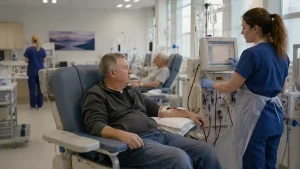
Some severe treatments can lead to a claimant being treated as having LCWRA. These include regular weekly haemodialysis, plasmapheresis, or total parenteral nutrition.
A hospital stay may also be relevant if the person is medically advised to stay in hospital or a similar institution for treatment for at least 24 hours.
| Treatment or Stay | How It May Support LCWRA |
| Weekly haemodialysis | Regular intensive treatment may prevent work-related activity |
| Plasmapheresis | Treatment schedule and side effects may be significant |
| Total parenteral nutrition | Feeding through a vein can involve serious medical need |
| Hospital stay | Medical advice to remain for treatment may meet rules |
| Residential treatment setting | May apply where treatment is medically required |
The key issue is whether the treatment makes work-related activity unreasonable or unsafe.
What Does Substantial Risk to Health Mean for LCWRA?
Substantial risk is an important LCWRA rule. It can apply when someone does not meet the usual descriptors but requiring work-related activity would create a serious risk to their health.
This is often linked to Regulation 35. It may apply to mental health, physical health, or both.
Mental Health Risk
For mental health, substantial risk may apply where work-related pressure could cause serious deterioration, crisis, self-harm risk, hospital admission, or inability to cope safely.
This may be relevant for severe depression, psychosis, PTSD, severe anxiety, or other serious mental health conditions.
Physical Health Risk
For physical health, substantial risk may apply where work-related activity could make a condition significantly worse. This may include severe immune problems, serious heart conditions, respiratory illness, or other medical risks.
Why evidence matters
A general statement that someone is unwell may not be enough. Evidence should explain the risk, why it is substantial, and how work-related activity could trigger harm.
What Evidence Helps Prove LCWRA Eligibility?

Good evidence can help the DWP understand why someone should be placed in the LCWRA group. The evidence should show how the condition affects daily life and why work-related activity is not appropriate.
Helpful evidence may include:
- GP letters
- Consultant reports
- Hospital records
- Prescription lists
- Mental health care plans
- Crisis team records
- Occupational therapy reports
- Social care assessments
- Support worker statements
- Carer statements
The UC50 form should include real examples. A claimant should explain what happens on bad days, how often symptoms occur, what help they need, and what risks they face.
How Does the Work Capability Assessment Decide LCWRA?
The Work Capability Assessment looks at whether the claimant meets LCWRA descriptors or should be treated as having LCWRA under special rules.
The process may include a UC50 form, medical evidence, and sometimes an assessment with a healthcare professional. A DWP decision maker then makes the final decision.
The assessment is not about whether the person wants to work. It is about whether they can safely and reliably manage work-related expectations.
What Is the Difference Between LCW and LCWRA?

LCW and LCWRA are different Universal Credit outcomes. LCW means the claimant has limited capability for work but may still be expected to complete work-related activities. LCWRA means they are not expected to work or prepare for work.
| Area | LCW | LCWRA |
| Full meaning | Limited Capability for Work | Limited Capability for Work and Work-Related Activity |
| Work search | Usually not required | Not required |
| Work-related activity | May still be required | Not required |
| Extra Universal Credit element | Usually no extra amount for newer claims | LCWRA element may be added |
| Assessment focus | Ability to work | Ability to work and prepare for work |
Understanding this difference helps claimants check whether the DWP decision reflects their actual health situation.
What Can Someone Do If LCWRA Is Refused?
If LCWRA is refused, the claimant may be able to challenge the decision. The first step is usually a mandatory reconsideration. If the DWP does not change the decision, the claimant may be able to appeal to an independent tribunal.
The challenge should explain why the decision is wrong. It may refer to LCWRA descriptors, special circumstances, or substantial risk.
Updated medical evidence can help. This may include recent treatment letters, crisis records, care plans, or support statements.
Conclusion
The answer to conditions that automatically qualify you for LCWRA is not a simple list of illnesses. In the UK, LCWRA is usually based on how a condition affects a person’s ability to work and take part in work-related activity.
However, some people can be treated as having LCWRA without scoring points. This may apply to terminal illness, certain cancer treatments, serious pregnancy risks, severe regular treatment or hospital stays, and substantial risk to health.
A strong claim should explain the diagnosis, symptoms, treatment, risks, and everyday impact. Clear evidence can help the DWP understand why work-related activity is not suitable.
FAQs
Do anxiety and depression automatically qualify someone for LCWRA?
Anxiety and depression do not automatically qualify someone for LCWRA. They may qualify if symptoms are severe enough to meet LCWRA rules or if work-related activity would create a substantial mental health risk.
Does PIP automatically mean someone will get LCWRA?
PIP does not automatically lead to LCWRA. PIP looks at daily living and mobility needs, while LCWRA looks at work and work-related activity.
Can arthritis qualify someone for LCWRA?
Arthritis can qualify someone for LCWRA if it causes serious functional problems, such as difficulty walking, standing, sitting, using hands, or completing tasks safely.
Can autism qualify someone for LCWRA?
Autism can support an LCWRA claim if it causes serious difficulties with communication, change, social interaction, distress, safety, or completing work-related tasks.
Does a fit note prove LCWRA?
A fit note does not prove LCWRA by itself. It supports the claim, but the DWP still needs to assess whether the person meets LCWRA rules.
Can someone get LCWRA without a face-to-face assessment?
Yes, some people may get LCWRA without a face-to-face assessment if the DWP has enough evidence to make a decision on the papers.
Can LCWRA be backdated?
LCWRA may be backdated depending on when the health condition was reported, when fit notes were provided, and how Universal Credit assessment periods apply.
How can someone challenge an LCWRA refusal?
A claimant can usually ask for a mandatory reconsideration. If the decision is not changed, they may be able to appeal to an independent tribunal.