
Last Reviewed: 10 July 2026.
HMRC has admitted that a State Pension tax calculation error dates back to the 2010/11 tax year. The error affected some PAYE calculations from 2010/11, Self Assessment pre-populated figures from 2015/16 and Simple Assessment calculations from 2016/17.
For 2024/25, HMRC confirmed that approximately 1.4 million PAYE pensioners paid too much tax. Up to another 1.715 million people using Self Assessment or Simple Assessment may have been affected, although HMRC stressed that the actual number who overpaid will be lower.
The amounts involved were generally small. HMRC estimated that, between 2021/22 and 2024/25, the average annual loss for a basic-rate taxpayer was:
- £1.76 for someone receiving the full basic State Pension;
- £2.30 for someone receiving the full new State Pension.
HMRC has said it is developing a solution for summer 2026, but its official letter did not promise that every affected person would receive an automatic refund.
HMRC confirmed the scale, history and technical cause of the error in the HMRC chief executive’s letter to the Public Accounts Committee, published on 1 July 2026. The letter explains how incorrect State Pension figures were used in PAYE, Self Assessment and Simple Assessment calculations and outlines HMRC’s proposed corrective action.
HMRC State Pension tax error:
| Key point | Confirmed position |
| When did the error begin? | PAYE calculations may have been affected from 2010/11 |
| What caused it? | A 2010 PAYE systems change did not fully implement the correct State Pension calculation |
| Correct calculation for most pensioners | One week at the previous year’s rate plus 51 weeks at the current rate |
| Incorrect calculation | 52 weeks at the current year’s higher rate |
| Confirmed PAYE overpayments in 2024/25 | Approximately 1.409 million pensioners |
| Potential Self Assessment cases in 2024/25 | Up to 955,000 |
| Potential Simple Assessment cases in 2024/25 | Approximately 757,000 to 760,000 |
| Average annual loss since 2021/22 | £1.76 for the full basic pension and £2.30 for the full new pension at the basic tax rate |
| Proposed correction | HMRC said a solution would be delivered during summer 2026 |
| Automatic refunds confirmed? | No blanket repayment programme was confirmed in the official letter |
Figures are based on HMRC’s 1 July 2026 correspondence and remain estimates where stated.
What Did HMRC Admit About Pensioner Overtaxing?
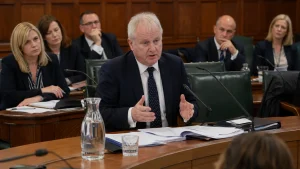
John-Paul Marks, HMRC’s chief executive and first permanent secretary, wrote to the House of Commons Public Accounts Committee on 1 July 2026 to disclose an historical error in taxable State Pension figures.
The letter confirmed that an incorrect figure had been used in some:
- PAYE end-of-year reconciliations;
- Self Assessment pre-populated returns;
- Simple Assessment calculations.
Mr Marks apologised to affected pensioners, acknowledging that even a small shortfall could matter to people living on fixed or limited incomes.
HMRC also commissioned an internal audit to establish the full history and causes of the problem.
The department said the findings would be shared with the Comptroller and Auditor General and the parliamentary committee later in 2026.
The admission was subsequently reported by publications including The Telegraph.
How Did the State Pension Tax Calculation Go Wrong?
The State Pension is Taxable but Normally Paid Without Deductions
State Pension payments are taxable income, but the Department for Work and Pensions generally pays them without deducting tax.
Where a pensioner has a workplace or private pension, HMRC may collect the tax attributable to State Pension income by adjusting the tax code applied to that other pension.
Someone whose State Pension is their only income may instead receive a Simple Assessment bill if their income exceeds their available tax-free allowance.
Annual Pension Increases Created Two Weekly Rates Within One Tax Year
The basic and new State Pensions normally increase in April. In 2026, for example, both increased by 4.8% under the triple-lock policy.
However, the income-tax year and the date on which the uprated State Pension becomes payable do not align perfectly. HMRC explained that, for most pensioners, taxable State Pension income should therefore be calculated using:
One week at the previous tax year’s weekly rate + 51 weeks at the current tax year’s weekly rate.
Some HMRC systems instead used:
52 weeks at the current tax year’s higher weekly rate.
That overstated taxable pension income by the difference between one week at the previous rate and one week at the new rate. Income tax was then potentially charged on that difference.
When Did Each System Become Affected?

According to HMRC:
- PAYE end-of-year reconciliations may have been affected from 2010/11;
- pre-populated State Pension figures in HMRC’s online Self Assessment service may have been affected from 2015/16;
- Simple Assessment calculations may have been affected from 2016/17.
The impact varies between individuals and tax years. Not every pensioner was affected for every year, and not every incorrect underlying figure resulted in tax being overpaid.
How Many State Pension Recipients Were Overtaxed?
The most reliable confirmed number is the PAYE figure for 2024/25.
HMRC estimated that 1.409 million PAYE pensioners paid too much tax because of the calculation error that year. The number had increased from:
| Tax year | PAYE pensioners confirmed as affected |
| 2021/22 | 720,000 |
| 2022/23 | 762,000 |
| 2023/24 | 1,167,000 |
| 2024/25 | 1,409,000 |
The rising number does not necessarily indicate that each individual’s loss increased substantially. It partly reflects the number of pensioners whose income and tax calculations brought them within the scope of the error.
For 2024/25, HMRC also identified:
- up to 955,000 Self Assessment pensioners who may have received an incorrect pre-populated State Pension figure;
- approximately 757,000 Simple Assessment pensioners who may have received an incorrect calculation.
HMRC specifically described both figures as upper limits. Some Self Assessment taxpayers may have replaced the pre-populated amount with the correct figure, while some Simple Assessment balances may not ultimately have been collected.
This is why the widely reported figure of approximately 3.1 million pensioners should be interpreted carefully. Around 1.4 million PAYE overpayments were confirmed for 2024/25, while the remaining numbers represent people who may have been affected.
How Much Tax Did Pensioners Overpay?
The error usually involved a small amount for an individual tax year because tax was charged only on the difference between one week at the old State Pension rate and one week at the new rate.
HMRC estimated that, for basic-rate taxpayers, the average annual overpayment between 2021/22 and 2024/25 was £1.76 for the full basic State Pension and £2.30 for the full new State Pension. Actual amounts could be higher or lower where someone received a partial pension, an enhanced pension or paid tax at another marginal rate.
Practical Example for the 2024/25 Tax Year
HMRC’s table shows that the weekly new State Pension increased by £17.35 between the relevant annual rates for 2024/25.
If an HMRC calculation included one extra week at the higher rate:
- taxable pension income could have been overstated by £17.35;
- at a 20% tax rate, the resulting difference would be £3.47;
- at a 40% rate, it would be £6.94;
- at a 45% rate, it would be £7.81.
For the basic State Pension, the equivalent 2024/25 tax differences shown by HMRC were £2.66 at 20%, £5.32 at 40% and £5.99 at 45%.
These examples illustrate the calculation only. They do not establish what any particular person is owed, because the final position depends on the pension received, total taxable income, tax rate, tax code and any other adjustments.
Did HMRC Collect £18 Million Because of the Mistake?

Some media reports have cited an HMRC estimate suggesting that the error may have produced approximately £18 million since 2021.
However, the official letter published on 1 July 2026 does not state an aggregate £18 million total. It provides estimated numbers of affected pensioners and average individual losses instead. The £18 million figure should therefore be described as a reported estimate rather than a confirmed total published in the parliamentary letter.
Claims that HMRC had known about the problem since a particular earlier year should be treated with similar caution unless HMRC’s internal audit confirms the timeline. The official letter acknowledges that developing a solution took time but does not identify a precise date on which the department first became aware of the issue.
Why Did an Incorrect Calculation Not Always Create a Refund?
HMRC said many differences fell within its administrative tolerances. These tolerances mean that very small PAYE overpayments are not automatically refunded, while certain small underpayments are not pursued.
For 2024/25, HMRC said it did not:
- collect underpayments of less than £49.99 from approximately 4.65 million pensioners;
- automatically issue repayments of less than £9.99 to approximately 118,000 pensioners.
Consequently, an incorrect pension figure in a calculation does not automatically mean that the taxpayer’s final position changed or that a repayment will be issued without a review.
This is an important distinction. The underlying calculation may have contained an error, but another adjustment or administrative tolerance may have affected whether money was ultimately collected or repaid.
Will HMRC Automatically Refund Affected Pensioners?
HMRC’s official letter did not announce a blanket automatic refund scheme for all historical cases.
It said customers who believed they had paid too much could contact HMRC through its usual PAYE or Self Assessment channels, write to the department or amend an eligible Self Assessment return. HMRC said cases would be considered under established processes, with additional support available for vulnerable or digitally excluded customers.
HMRC also said it was exploring what further support could be provided, taking account of the legal framework, operational feasibility and value for money.
Therefore, pensioners should not assume that:
- every historical year will be automatically reviewed;
- every affected person will receive a letter;
- all discrepancies will produce a cash repayment;
- a refund will be made without the taxpayer contacting HMRC.
What is HMRC Doing to Correct the State Pension Error?
HMRC said it intended to deliver a solution during summer 2026. The proposed work is intended to:
- prevent the error from recurring in future calculations;
- correct 2025/26 PAYE and Simple Assessment calculations;
- allow HMRC to correct relevant 2025/26 Self Assessment returns that had already been filed.
The letter did not provide a precise implementation date. It also said an internal audit would investigate the history, causes and handling of the problem, with further information expected later in 2026.
How Can a Pensioner Check Whether Too Much Tax Was Paid?

A pensioner concerned about the error can begin by identifying how their State Pension tax was calculated.
1. Check Which Tax Process Applied
Relevant documents may include:
- a P800 end-of-year tax calculation;
- a Simple Assessment letter;
- a Self Assessment return and tax calculation;
- tax-code notices for a workplace or private pension;
- annual State Pension uprating or entitlement letters from DWP.
HMRC’s Personal Tax Account can be used to review Income Tax records and certain tax calculations.
2. Check the State Pension Figure Used
The figure should generally reflect the amount to which the person was entitled during the tax year. For most established claims, HMRC says this involves one week at the previous year’s weekly rate and 51 weeks at the current rate.
However, the calculation may differ where the pension:
- began part-way through the year;
- was deferred;
- included inherited or additional amounts;
- was paid at less than the full rate;
- changed because of the pensioner’s individual circumstances.
A pensioner should not amend a tax return based solely on a simple 52-week multiplication without checking the actual entitlement.
3. Follow the Correct Correction Process
For a P800 or PAYE calculation, HMRC’s official guidance explains how overpayments and underpayments are handled. A corrected calculation should be issued if HMRC accepts that the original amount was wrong.
For Simple Assessment, a person who believes the figures are wrong should normally call or write to HMRC within 60 days, explaining which amount is incorrect and what the correct amount should be.
For Self Assessment, a return can generally be corrected within 12 months of the normal filing deadline. For example, the usual amendment deadline for a 2024/25 return is 31 January 2027. Older returns generally require a written claim or correspondence with HMRC.
4. Keep Supporting Records
Useful evidence may include the DWP pension award or uprating notice, bank payment records, the relevant tax calculation and copies of correspondence sent to HMRC.
Because this was a system-wide issue, the pensioner should state clearly that the query concerns the historical State Pension taxable-income calculation disclosed by HMRC in July 2026.
Final Takeaway
HMRC’s admission confirms a genuine and long-running State Pension tax calculation failure. The underlying systems error began with a PAYE change in 2010 and later affected information used for Self Assessment and Simple Assessment.
The most important distinction is that 1.4 million PAYE pensioners were confirmed as having overpaid in 2024/25, while the additional Self Assessment and Simple Assessment numbers are upper-limit estimates of people who may have been affected.
Individual losses were usually small, but pensioners are entitled to expect accurate tax calculations. Anyone concerned should check the State Pension figure used in their P800, tax return or Simple Assessment and contact HMRC through an official GOV.UK channel where it appears incorrect.
FAQs
Has HMRC admitted overtaxing State Pension recipients since 2010?
Yes. HMRC confirmed that an error linked to a 2010 PAYE systems change caused incorrect State Pension figures to be used in some calculations from 2010/11 onwards.
How many pensioners were definitely overtaxed?
HMRC confirmed that approximately 1.409 million PAYE pensioners paid too much tax in 2024/25. Up to 955,000 Self Assessment pensioners and around 760,000 Simple Assessment pensioners may also have been affected.
How much could an affected pensioner receive?
There is no standard refund. HMRC estimated average annual losses of £1.76 for the full basic State Pension and £2.30 for the full new State Pension among basic-rate taxpayers between 2021/22 and 2024/25.
Does the error affect people receiving only the State Pension?
It may affect different groups depending on how their tax was calculated. Someone whose taxable income exceeds their allowance but has no PAYE income may receive a Simple Assessment bill.
Can a Self Assessment return be amended?
A return can normally be amended within 12 months of the filing deadline. Earlier tax years may require the taxpayer to write to HMRC. The person should confirm the correct pension figure before making a change.
How long is available to dispute a Simple Assessment?
GOV.UK guidance says a taxpayer should contact HMRC within 60 days if the amounts in a Simple Assessment calculation appear to be wrong.
Will HMRC contact every affected pensioner?
HMRC has not confirmed that every potentially affected person will be contacted individually. Its July 2026 letter advised concerned customers to use the usual HMRC contact and correction processes.
Has HMRC fixed the problem?
HMRC said it would deliver a solution during summer 2026. The letter stated that the fix would cover future calculations and enable corrections relating to 2025/26, but it did not specify an exact completion date.
Does receiving an incorrect figure guarantee a repayment?
No. Some differences may have fallen within administrative tolerances or may not have changed the final tax collected. HMRC must consider the taxpayer’s complete calculation.
Can a relative contact HMRC for an elderly pensioner?
HMRC has processes for authorised representatives and people who need extra support. Appropriate authority may be required before HMRC discusses an individual’s tax affairs.
Important Note:
Editorial Note: This article has been reviewed against official HMRC, GOV.UK and UK Parliament guidance.
Disclaimer:
This article provides general information based on publicly available HMRC and government material. It does not constitute personalised tax, financial or legal advice. Tax outcomes depend on individual income, pension entitlement, residence and filing circumstances. Pensioners should obtain guidance from HMRC or a suitably qualified tax adviser before changing a return or making a repayment claim.