

For the 2026/27 tax year, a couple in the UK can receive a combined £482.60 per week in State Pension if both partners qualify for the full new State Pension of £241.30 each. That is equivalent to £1,930.40 every four weeks or £25,095.20 over 52 weeks.
However, the UK does not have a single combined State Pension rate for married couples. Each partner normally receives a separate pension based on their own National Insurance contributions and qualifying years.
Couples receiving the full old basic State Pension would get £369.80 per week between them, before any Additional State Pension.
Where one partner receives the full new pension and the other receives the full old basic pension, their combined standard amount would be £426.20 per week.
Understanding these differences is important because marriage does not automatically guarantee either partner the full pension.
Your combined retirement income depends on when each person reached State Pension age, their National Insurance history and any additional entitlements.
How Much State Pension Does a Couple Receive in 2026/27?
The Department for Work and Pensions applies separate rates to the new State Pension and the old basic State Pension.
The current standard rates are:
| Pension system | Individual weekly rate | Combined weekly amount | Combined annual amount |
| Both receive full new State Pension | £241.30 | £482.60 | £25,095.20 |
| Both receive full old basic State Pension | £184.90 | £369.80 | £19,229.60 |
| One receives full new and one receives full old basic pension | £241.30 + £184.90 | £426.20 | £22,162.40 |
These calculations use the pension rates applicable from 6 April 2026 to 5 April 2027. They are standard-rate illustrations, not absolute maximum household entitlements.
Some pensioners can receive additional amounts through the old Additional State Pension, protected payments or deferral.
The government confirms the current rates through its guidance on the new State Pension and basic State Pension.
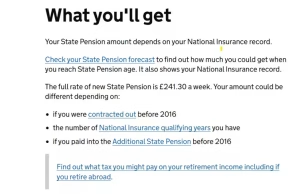
GOV.UK confirms the full new State Pension rate of £241.30 per week for 2026/27.
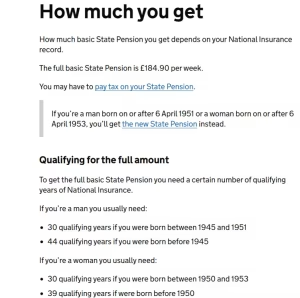
The full old basic State Pension is £184.90 per week in the 2026/27 tax year.
How Much Is State Pension for a Married Couple Per Month?
Although the State Pension is expressed as a weekly amount, payments are normally made every four weeks rather than on the same date each calendar month.
For budgeting, we calculated both the four-weekly payment and the equivalent average calendar-month income.
| Couple’s pension arrangement | Every four weeks | Average per calendar month | Annual equivalent |
| Both receive full new State Pension | £1,930.40 | £2,091.27 | £25,095.20 |
| Both receive full old basic State Pension | £1,479.20 | £1,602.47 | £19,229.60 |
| One full new and one full old basic pension | £1,704.80 | £1,846.87 | £22,162.40 |
The monthly figures are calculated by multiplying the weekly amount by 52 and dividing by 12.
For example, where both partners receive the full new State Pension:
- Combined weekly income: £241.30 × 2 = £482.60
- Four-weekly income: £482.60 × 4 = £1,930.40
- Annual income: £482.60 × 52 = £25,095.20
- Average monthly income: £25,095.20 ÷ 12 = £2,091.27
The distinction matters when arranging standing orders, household bills and retirement savings withdrawals.
Each partner’s pension can also arrive on a different day because State Pension payment dates are generally linked to National Insurance numbers.
Is There a Special State Pension Rate for Married Couples?
No. Marriage does not automatically increase the State Pension amount under the new system.
Before April 2016, certain pension rules allowed married people to increase their basic State Pension using their spouse’s National Insurance contributions.
The introduction of the new State Pension changed this arrangement for people reaching State Pension age on or after 6 April 2016.
Today, each person’s pension is generally determined by their own qualifying record.
For example, consider a couple where:
- Partner A receives the full new State Pension of £241.30 per week.
- Partner B receives a reduced new State Pension of £150 per week.
Their combined weekly pension would be £391.30, equivalent to £20,347.60 annually.
The government would not automatically increase Partner B’s pension to £241.30 simply because they are married.
However, certain transitional rules and inherited pension entitlements can still apply, particularly where National Insurance contributions were made before April 2016.
What Happens if Only One Partner Qualifies for the State Pension?
A common retirement planning issue arises when one partner reaches State Pension age before the other.
For example, one partner might be aged 67 while their spouse is aged 62.
If the older partner qualifies for the full new State Pension, they could receive £241.30 weekly. The younger partner would not ordinarily receive a State Pension until reaching their own State Pension age.
In this situation, the couple would initially have only one State Pension payment.
The household would receive the equivalent of £12,547.60 annually from that pension, assuming 52 weeks at the full 2026/27 rate.
Once the younger partner reaches State Pension age and claims their entitlement, the household’s combined State Pension income could increase.
This creates a potential income gap during the years between the two retirement dates.
Couples approaching retirement should therefore consider whether workplace pensions, personal pensions or savings can provide additional income during this period.
How Does National Insurance Affect State Pension for Couples?
National Insurance contributions are one of the most important factors affecting State Pension entitlement.
Under the new State Pension system, individuals usually need at least 10 qualifying years to receive a payment.
People whose National Insurance records began after April 2016 generally need 35 qualifying years to qualify for the full new State Pension.
However, this calculation can be more complicated for people who contributed before April 2016.
Their entitlement may depend on transitional calculations, contracted-out pension arrangements and previous Additional State Pension contributions.
What Counts as a Qualifying Year?
A qualifying year can come from employment, self-employment, voluntary National Insurance contributions or certain National Insurance credits.
Credits are particularly important for couples where one partner has spent several years outside paid employment.
For example, someone who stopped working to raise children or care for a family member may have qualifying years through National Insurance credits.
This means that having fewer years in paid employment does not necessarily mean someone has fewer qualifying years.
Can One Partner Use the Other’s National Insurance Contributions?
Generally, individuals receiving the new State Pension cannot simply combine their National Insurance contributions with those of their husband, wife or civil partner.
However, exceptions exist.
People receiving the old basic State Pension may qualify for an increase based on their spouse’s or civil partner’s contributions.
For 2026/27, the relevant lower Category B basic pension rate is £110.75 per week, subject to the applicable eligibility rules.
For example, if one partner receives the full old basic State Pension of £184.90 and the other qualifies for £110.75 through spouse-related provisions, the combined basic amount would be £295.65 per week.
That is equivalent to £15,373.80 over 52 weeks, excluding any Additional State Pension.
Special rules can also apply to certain people who paid reduced-rate National Insurance contributions under the former married women’s arrangements.
These entitlements should not be confused with the standard rules for people reaching State Pension age today.
How Can Couples Check Their State Pension Entitlement?
The most reliable way to estimate a couple’s pension income is for each partner to check their entitlement individually.
The government’s State Pension forecast service can show how much someone is expected to receive and whether additional qualifying years could increase their pension.
A practical approach involves five steps:
- Each partner accesses the State Pension forecast service through GOV.UK.
- Both individuals check their estimated weekly pension amounts.
- They review their National Insurance records for missing or incomplete qualifying years.
- They check whether voluntary contributions would genuinely improve their future pension.
- They add both forecast figures together to estimate the household’s State Pension income.
Couples should be careful about paying voluntary National Insurance contributions without checking the potential benefit first.
Not every missing year will increase someone’s State Pension, particularly where transitional or contracted-out calculations apply.
Can Couples Get More Than £482.60 a Week in State Pension?
Yes. Although £482.60 represents two full standard new State Pensions in 2026/27, it is not an absolute limit on the total State Pension income a couple might receive.
Some individuals can receive additional amounts through historical pension arrangements.
Additional State Pension
The old system included earnings-related pension components, including the State Earnings-Related Pension Scheme (SERPS) and State Second Pension.
Some people receiving the basic State Pension may therefore receive Additional State Pension payments on top of the standard £184.90 weekly amount.
Consequently, two people receiving the old system’s full basic pension could have a combined pension exceeding £369.80.
Protected Payments
Under the new State Pension, people with higher entitlements established before April 2016 may receive protected payments.
These amounts can take an individual’s total State Pension above the standard £241.30 weekly rate.
Deferring the State Pension
People may also increase their eventual weekly State Pension by delaying their claim.
The effect depends on which pension system applies, how long the claim is deferred and whether the person receives certain benefits.
Deferring is not automatically the most profitable choice. The decision should consider the pension payments forgone, expected future income, health circumstances and potential tax implications.
Are Married Couples Eligible for Pension Credit?
Some couples with limited retirement income may qualify for Pension Credit.
For 2026/27, the standard Pension Credit Guarantee Credit minimum for a qualifying couple is £363.25 per week.
This is different from the £482.60 combined full new State Pension amount.
Pension Credit is a means-tested benefit designed to provide additional support to eligible people on low incomes.
| Financial support | 2026/27 weekly amount | How it works |
| Two full new State Pensions | £482.60 | Individual pensions added together |
| Two full old basic State Pensions | £369.80 | Excludes Additional State Pension |
| Pension Credit standard minimum guarantee for a couple | £363.25 | Means-tested joint-income threshold |
For example, if an eligible pension-age couple has an assessed joint weekly income of £300, Pension Credit may increase their income towards £363.25.
The illustrative difference would be £63.25 per week.
However, eligibility depends on the couple’s wider circumstances, including pension income, savings and potentially additional amounts for disability, caring responsibilities or housing costs.
In most cases, both partners must have reached State Pension age to qualify as a couple, although certain existing Housing Benefit arrangements provide an exception.
It is important to distinguish Pension Credit from State Pension because Pension Credit considers household finances, whereas State Pension entitlement is normally calculated individually.
Qualifying for Pension Credit can also provide access to other financial support. For example, pensioners aged 75 or over may qualify for a free television licence when the applicable Pension Credit conditions are met.
Do Married Couples Pay Tax on Their State Pension?
State Pension is treated as taxable income, but married couples do not automatically pay Income Tax on their combined household pension.
Each partner’s taxable income is assessed separately.
For the 2026/27 tax year, the standard Personal Allowance is £12,570 per person.
A full new State Pension of £241.30 per week is equivalent to £12,547.60 over 52 weeks.
This is £22.40 below the standard annual Personal Allowance.
Therefore, someone receiving only the standard full new State Pension would generally not have Income Tax to pay on that income, assuming they have the full Personal Allowance and no other taxable income.
Consider a couple where both partners receive £12,547.60 annually from their State Pensions.
Their combined annual State Pension income is £25,095.20. However, that combined amount does not mean the couple must pay tax simply because it exceeds one person’s Personal Allowance.
Each individual’s tax position is considered separately.
The situation changes where one or both partners receive additional taxable income from workplace pensions, private pensions, employment or other sources.
For example, someone receiving the full new State Pension plus £6,000 annually from a private pension could have total taxable income of £18,547.60.
They may consequently have an Income Tax liability, depending on their circumstances and applicable allowances.
State Pension payments themselves are generally made without Income Tax being deducted. HMRC may collect tax through another income source or other arrangements.
What Happens to the State Pension When One Partner Dies?
The death of a husband, wife or civil partner can significantly change household retirement income.
In general, the deceased person’s regular State Pension payments stop.
The surviving partner continues receiving their own entitlement, but may qualify for inherited pension components depending on the circumstances.
Under the old State Pension system, certain Additional State Pension amounts and deferred pension increases may be inherited.
The new State Pension system has more limited inheritance provisions, although transitional entitlements can still apply.
This is why couples should avoid assuming that their combined pension income will continue unchanged after one partner dies.
For example, a household receiving £482.60 weekly from two standard full new State Pensions would ordinarily lose one £241.30 weekly pension after a partner’s death, unless additional entitlements apply.
A surviving partner may also need to reassess Pension Credit eligibility, household costs and private pension arrangements.
How Much Does a Couple Need to Retire Comfortably in the UK?
Receiving two full State Pensions provides an important retirement income foundation, but whether £25,095.20 annually is enough depends on personal circumstances.
A mortgage-free couple may have very different financial needs from renters paying substantial monthly housing costs.
Other expenses include household energy bills, food, transport, insurance, healthcare, home maintenance and occasional travel.
For some couples, the State Pension may cover a significant proportion of essential household costs.
Others may require workplace pensions, private savings or additional investments to achieve their desired retirement lifestyle.
The relevant financial question is not only how much State Pension a couple will receive, but also how that income compares with their expected living expenses.
Frequently Asked Questions
How much is the State Pension for a husband and wife in 2026?
If both receive the full new State Pension, their combined amount is £482.60 per week, equivalent to £25,095.20 over 52 weeks.
Do married couples receive £482.60 automatically?
No. Both partners must qualify individually for the full new State Pension. One or both could receive less depending on their National Insurance record.
How much is the old State Pension for a married couple?
Two full basic State Pensions total £369.80 weekly in 2026/27. Some couples may also receive Additional State Pension payments.
Can a wife receive a State Pension based on her husband’s contributions?
Under certain older pension rules, a wife may be eligible to increase her pension using her husband’s National Insurance record. People receiving the new State Pension are generally assessed on their own contributions, subject to specific exceptions.
Can a couple receive State Pension if they have never worked?
Potentially. National Insurance credits and certain spouse-related or transitional provisions may establish an entitlement even where someone has not personally paid contributions through employment.
What happens if one partner has not reached State Pension age?
The younger partner generally cannot receive their own State Pension until reaching the applicable age. The older partner can still receive their individual entitlement.
Is the State Pension higher for married couples than unmarried couples?
No. Under the new system, being married does not automatically increase individual State Pension amounts. Qualifying cohabiting couples may have the same combined standard entitlement.
Can both partners receive Pension Credit?
An eligible couple makes a joint Pension Credit application, rather than receiving two separate single-person awards. The standard minimum guarantee is £363.25 per week in 2026/27, subject to the applicable rules.
Will the State Pension increase again in April 2027?
The new and basic State Pensions are normally reviewed annually under the triple lock. The precise April 2027 rates will depend on the official uprating decision and should not be treated as confirmed until announced.