
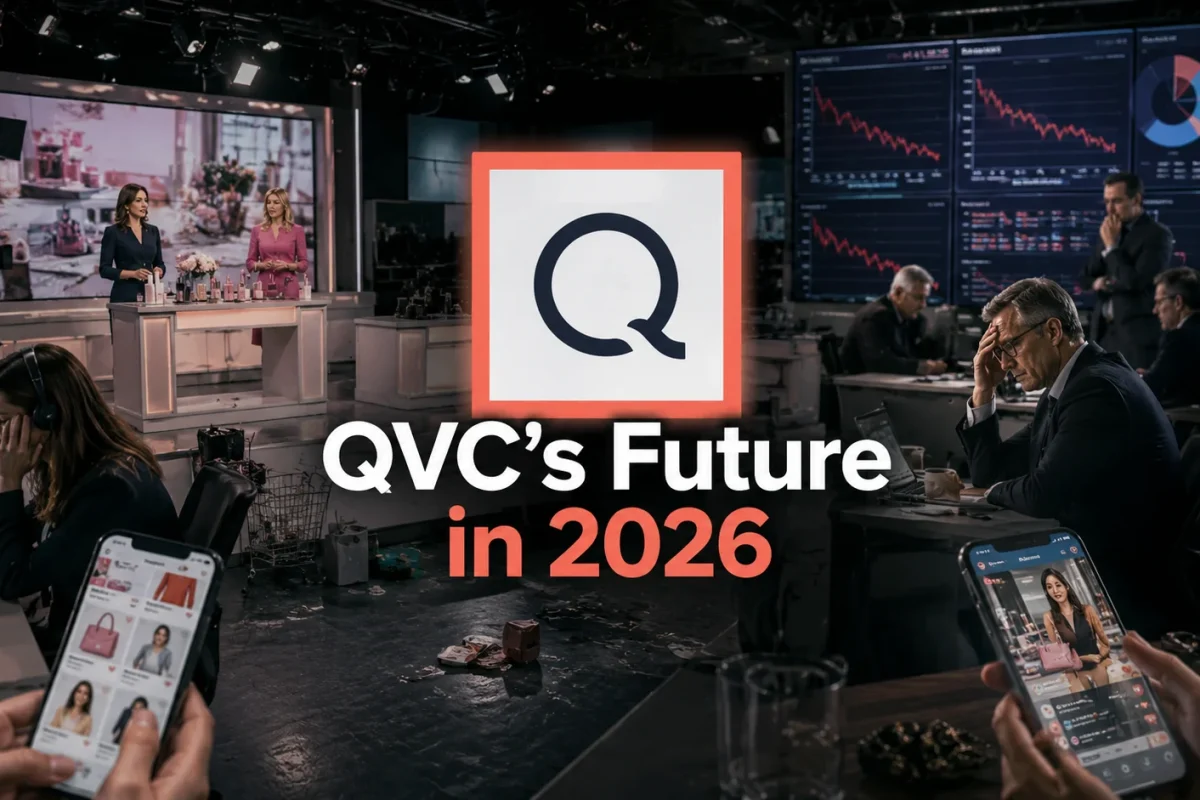
For many shoppers, the recent news surrounding QVC has raised an important question: is QVC going out of business in 2026? The short answer is no, QVC is not shutting down completely, but the company is going through a major financial restructuring after filing for Chapter 11 bankruptcy protection in the United States.
The move comes after years of declining television audiences, falling revenues and growing competition from digital shopping platforms such as Amazon, TikTok Shop and other social commerce brands.
However, QVC continues to operate normally while attempting to transform itself into a modern live shopping and streaming commerce business.
In this article, readers will learn why QVC filed for bankruptcy, what caused its financial struggles, how the company plans to recover and whether its future still looks sustainable in the rapidly changing retail industry.
What Led to QVC’s Chapter 11 Bankruptcy Filing?

QVC Group entered voluntary Chapter 11 proceedings as part of a prepackaged restructuring plan designed to reduce debt and stabilise the business.
The filing was made in the U.S. Bankruptcy Court for the Southern District of Texas and received support from a majority of the company’s debt holders.
Importantly, Chapter 11 bankruptcy does not mean the company is shutting down. Instead, it allows businesses to reorganise financially while continuing day-to-day operations.
QVC stated that the restructuring would reduce its debt from around $6.6 billion to approximately $1.3 billion. The company also confirmed that it still holds more than $1 billion in domestic cash reserves, helping maintain business operations during the process.
The company expects to complete the restructuring within roughly 90 days.
Key Reasons Behind the Bankruptcy Filing
- Declining television shopping audiences
- Rising competition from online retail giants
- Significant revenue losses
- Difficulty attracting younger shoppers
- Heavy debt obligations
- Changes in consumer shopping habits
The filing mainly affects the U.S. business structure, while international operations remain outside the proceedings.
| Financial Overview | Status |
| Debt Before Restructuring | $6.6 billion |
| Debt After Restructuring | $1.3 billion |
| Revenue in 2025 | $8.3 billion |
| Net Losses | Over $2.1 billion |
| Domestic Cash Reserves | More than $1 billion |
A retail restructuring consultant described the situation clearly:
“Many consumers assume bankruptcy means closure, but in retail, Chapter 11 is often used to buy time for transformation. QVC still has operational strength, but the challenge is whether it can modernise quickly enough.”
That insight reflects the wider retail industry view. QVC’s problem is not simply financial debt; it is the speed at which shopping behaviour has changed over the last decade.
How Did QVC’s Traditional Shopping Model Start Declining?
QVC became one of the most recognisable shopping channels during the 1980s and 1990s. Its television-based retail model combined entertainment with direct purchasing, attracting millions of loyal viewers.
At its peak, the company successfully built a highly engaged customer base, particularly among older and affluent consumers who regularly purchased products through televised presentations.
However, the retail landscape has changed significantly since then.
As cable television audiences declined, QVC’s core business model started weakening. Consumers gradually shifted towards mobile shopping, personalised recommendations and faster online purchasing experiences.
Today’s shoppers increasingly prefer:
- Short-form video content
- Influencer recommendations
- Instant online checkout
- Social media shopping
- Mobile-first experiences
Long-form television selling no longer dominates the way it once did.
| Traditional QVC Model | Modern Shopping Trends |
| Television shopping | Mobile shopping |
| Scheduled programming | On-demand content |
| Host-led product selling | Influencer marketing |
| Cable audience dependence | Social media engagement |
| Passive viewing | Interactive shopping |
The growth of platforms such as TikTok Shop, Instagram Shopping and Amazon Live has intensified competition in the live commerce market.
QVC’s format, originally designed for television viewers spending extended time watching hosts present products, now faces pressure from algorithm-driven platforms focused on short attention spans and rapid engagement.
Why Are QVC Revenues Falling in Recent Years?

QVC’s financial results reveal the scale of the company’s recent struggles. Revenue fell nearly 8% to $8.3 billion in 2025, while net losses more than doubled to over $2.1 billion.
One of the biggest problems has been the company’s aging customer base.
Younger shoppers generally prefer discovering products through social media feeds, creators and personalised recommendations rather than traditional shopping channels.
Rising Competition From eCommerce Platforms
Digital commerce has become increasingly competitive in recent years.
Major competitors now include:
- Amazon
- TikTok Shop
- Temu
- Shein
- Walmart Marketplace
- Influencer-led online stores
These platforms focus heavily on speed, convenience and social engagement.
QVC, by comparison, spent decades operating within a television-first environment. Adjusting to fast-moving digital retail trends has proven difficult.
A digital commerce analyst explained the challenge this way:
“QVC still has strong merchandising expertise, but digital audiences behave differently. Consumers now expect content, shopping and entertainment to happen instantly within the same platform.”
That shift in consumer expectations continues to reshape the retail sector.
Difficulty Attracting Younger Consumers
Another issue is demographic imbalance.
QVC’s traditional audience remains loyal, but much older than the customer bases targeted by modern social commerce platforms.
Younger audiences often prefer:
| Younger Consumer Preferences | Traditional QVC Experience |
| Fast product discovery | Long product demonstrations |
| Creator recommendations | TV hosts |
| Mobile shopping apps | Television channels |
| Short-form videos | Extended broadcasts |
| Interactive social engagement | Passive viewing |
This gap has made customer acquisition increasingly difficult for the company.
Is QVC Still Operating Normally in 2026?
Despite the bankruptcy filing, QVC continues operating normally in 2026.
Customers can still:
- Place orders
- Access customer support
- Watch live broadcasts
- Use online shopping services
- Return products
- Stream QVC+ and HSN+
The company has repeatedly stated that day-to-day operations remain unaffected during restructuring.
International divisions, including operations outside the United States, were also excluded from the bankruptcy proceedings.
This means UK customers should not expect immediate disruptions to services.
QVC’s management believes the restructuring will strengthen the company’s financial position while allowing it to continue investing in digital growth strategies.
How Is QVC Trying to Reinvent Its Business?
Recognising the decline of traditional television shopping, QVC launched its “WIN” growth strategy in late 2024.
The strategy focuses on transforming QVC into a cross-platform live shopping ecosystem combining television, streaming, eCommerce and social media.
Rather than depending entirely on cable television, the company is now investing heavily in digital retail experiences.
QVC’s WIN Growth Strategy Explained
The company’s transformation includes:
- Expansion into TikTok Shop
- Streaming-focused commerce
- Social media partnerships
- Operational consolidation
- Digital-first customer acquisition
- Enhanced mobile shopping experiences
CEO David Rawlinson stated that the company sees strong potential in live social shopping despite current financial pressures.
According to company reports, nearly one million new U.S. customers were acquired through TikTok Shop during 2025.
Growth Through TikTok and Streaming Platforms
QVC’s streaming platforms, QVC+ and HSN+, now reportedly attract around 1.5 million monthly active users.
Streaming-related sales also increased by approximately 19% last year.
| Digital Growth Area | Performance |
| New TikTok Shop Customers | Nearly 1 million |
| Monthly Streaming Users | 1.5 million |
| Streaming Sales Growth | 19% |
| Focus Areas | Social commerce and streaming |
The partnership with TikTok appears especially important for the company’s future strategy.
Instead of functioning solely as a television retailer, QVC now aims to become a content-driven shopping platform integrated into social media ecosystems.
However, competition remains extremely intense. Social platforms themselves increasingly control both audience reach and product transactions, leaving less room for traditional retailers to dominate the space.
What Challenges Could Affect QVC’s Future?
Although the restructuring offers financial relief, QVC still faces major challenges in 2026.
The company must successfully balance two difficult tasks:
- Maintaining its existing loyal audience
- Attracting younger digital shoppers
That transition is not easy.
Some of the biggest ongoing risks include:
- Continued decline in television audiences
- Intense social commerce competition
- Economic uncertainty affecting consumer spending
- Rising operational costs
- Dependence on successful digital transformation
The retail industry itself continues evolving rapidly. Consumer attention increasingly shifts between platforms, trends and influencers at a pace much faster than traditional retail cycles.
If QVC cannot adapt quickly enough, its traditional business model may continue shrinking faster than its digital growth expands.
Does QVC Still Have a Chance to Recover?

Despite its financial problems, QVC still possesses several advantages that many newer retail competitors lack.
The company has:
- Strong brand recognition
- Decades of merchandising experience
- Established supplier relationships
- Experienced on-air presenters
- Loyal long-term customers
- Existing infrastructure for live selling
These strengths may help support its transition into social commerce and streaming retail.
The future likely depends on whether QVC can successfully reposition itself for younger audiences without losing the customers who built the business over previous decades.
At the moment, the company appears focused on evolution rather than closure.
Final Verdict on QVC’s Future in 2026
QVC is not going out of business completely in 2026, but it is undergoing one of the most significant transformations in its history.
The Chapter 11 filing represents a financial restructuring process rather than a full shutdown. Operations continue normally, and the company is actively attempting to modernise its business through streaming, social commerce and digital retail partnerships.
However, the challenges remain serious.
Declining television audiences, changing consumer habits and aggressive online competition continue placing pressure on the company’s long-term future.
QVC’s survival may ultimately depend on how effectively it can transition from a traditional television shopping network into a modern social commerce platform.
For now, the business remains operational, but its long-term success will rely heavily on whether its digital transformation strategy can keep pace with the rapidly evolving retail market.
FAQs
Is QVC shutting down completely in 2026?
No, QVC is not shutting down completely. The company filed for Chapter 11 bankruptcy protection to restructure debt while continuing operations.
Why did QVC file for Chapter 11 bankruptcy?
QVC filed due to declining revenues, heavy debt obligations, changing consumer habits and increasing competition from digital shopping platforms.
Is QVC still available in the UK?
Yes, QVC’s international operations, including the UK, remain unaffected by the U.S. bankruptcy proceedings.
What is QVC’s WIN growth strategy?
The WIN strategy focuses on transforming QVC into a digital-first live shopping platform using streaming services, social media and eCommerce partnerships.
How is TikTok helping QVC grow?
TikTok Shop helped QVC acquire nearly one million new U.S. customers in 2025 through live social shopping experiences.
Can customers still order from QVC after bankruptcy?
Yes, customers can still place orders, access customer service and use QVC’s platforms as normal.
Who owns QVC and HSN?
QVC and HSN are owned by Qurate Retail Group.
Is QVC losing popularity among younger shoppers?
Yes, younger consumers increasingly prefer social commerce platforms, short-form content and influencer-led shopping experiences.