
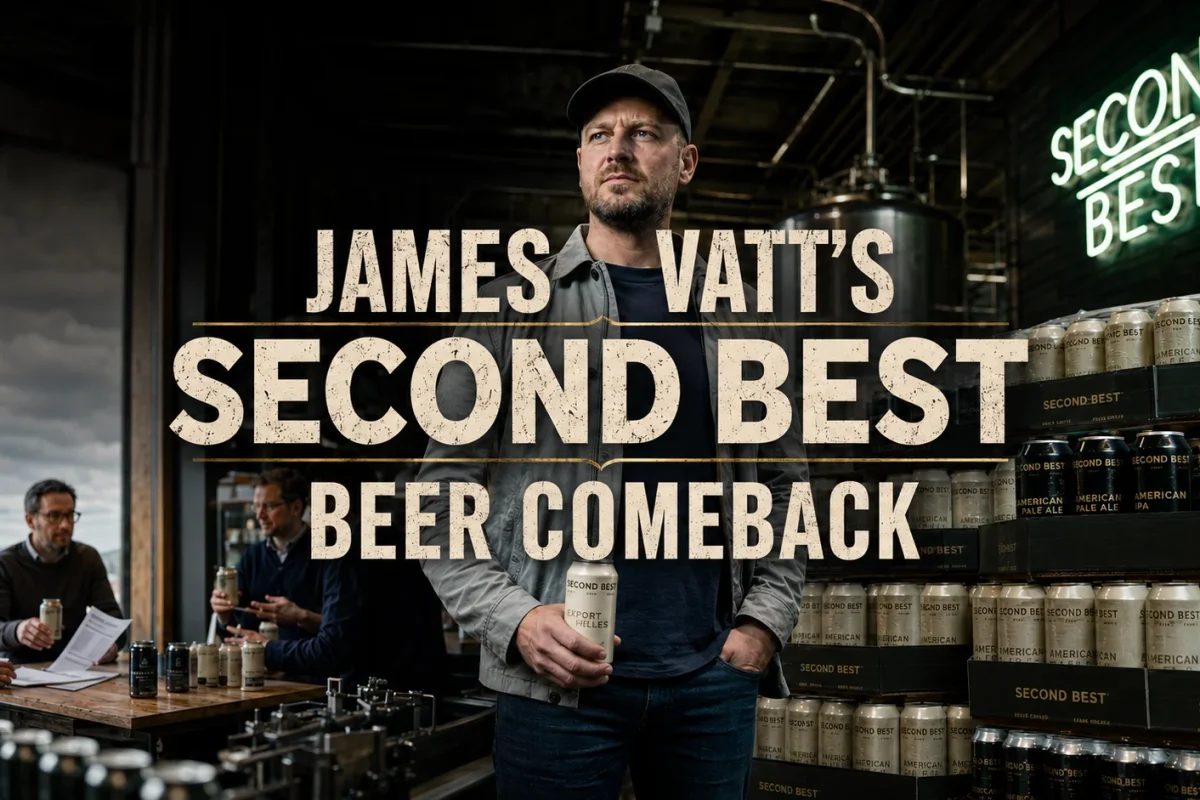
James Watt’s new beer brand, “Second Best”, is emerging only months after BrewDog entered administration and was sold to Tilray Brands in a £33 million rescue deal.
The former BrewDog co-founder is now planning a return to the UK craft beer market with a business focused primarily on canned beer while also exploring ways to involve former Equity Punk investors who lost money during BrewDog’s collapse.
Key Takeaways:
- James Watt is launching a new beer company called “Second Best”
- The venture comes shortly after BrewDog’s administration and sale
- Former Equity Punk investors could receive founding shares
- Second Best plans to focus mainly on canned beer rather than large pub expansion
- BrewDog’s financial struggles included rising losses, competition and reputational issues
- The new venture could reshape discussions around crowdfunding and investor trust in the craft beer industryb
Why Is James Watt Launching a New Beer Brand After BrewDog’s Collapse?
James Watt appears determined to remain active in the brewing industry despite BrewDog’s dramatic decline. His new venture comes shortly after BrewDog’s assets, breweries and selected pubs were acquired by Tilray Brands through a prepack administration deal.
The launch of Second Best suggests Watt still believes there is room for innovation in the UK beer market. Unlike BrewDog’s aggressive expansion strategy, however, the new company is expected to focus on a leaner and more controlled business model.
BrewDog’s Rise From Craft Beer Pioneer to Financial Struggles
BrewDog was founded in 2007 near Aberdeen and quickly became one of the UK’s most recognisable craft beer brands. Drinks such as Punk IPA and Elvis Juice helped the company build a strong identity among younger beer consumers.
Its rapid growth included:
- International expansion
- Large-scale brewery investments
- Dozens of pubs and bars
- Crowdfunding through the Equity for Punks scheme
At its peak, BrewDog was valued at around £1 billion. However, the company later struggled with rising operational costs, slowing sales growth and increased competition within the craft beer sector.
How the Administration Process Changed BrewDog Forever?
The administration process marked a major turning point for BrewDog. While parts of the business were rescued by Tilray Brands, dozens of pubs were immediately closed, leading to nearly 500 job losses.
| BrewDog Milestone | Details |
| Founded | 2007 |
| Peak Valuation | £1 billion |
| Buyer | Tilray Brands |
| Sale Value | £33 million |
| Jobs Lost | Nearly 500 |
Many industry observers viewed the sale as the end of BrewDog’s original independent identity.
A hospitality consultant described the industry reaction clearly: “I think many people in the beer sector expected restructuring, but few thought BrewDog would fall this quickly. The speed of the decline shocked suppliers, investors and even competitors.”
What Is the “Second Best” Beer Company?
Second Best is James Watt’s new beer company that will reportedly specialise in canned beer rather than building a large pub network.
This approach reflects lessons learned from BrewDog’s expensive expansion strategy. Maintaining pubs across multiple locations became increasingly difficult during periods of inflation, higher energy costs and reduced consumer spending.
Why Second Best Is Taking a Different Business Approach?
The new venture appears to prioritise:
- Lower operating costs
- Direct-to-consumer sales
- Stronger brand positioning
- Smaller physical footprint
- Scalable beer production
Watt has also confirmed that the company is currently self-financed and has not yet officially launched.
| Second Best Strategy | Expected Direction |
| Main Product Focus | Canned beer |
| Funding | Self-financed |
| Pub Expansion | Limited |
| Market Position | Premium craft beer |
| Investor Focus | Equity Punk involvement |
Potential Product and Branding Strategy
The UK beer market has changed significantly since BrewDog first entered the industry nearly two decades ago. Consumers are now more selective, competition is stronger and independent breweries face tighter profit margins.
Second Best may attempt to:
- Rebuild trust through transparency
- Focus on quality over rapid expansion
- Appeal to former BrewDog supporters
- Position itself as a modern independent brewer
The branding strategy will likely remain bold and unconventional, given Watt’s history of disruptive marketing campaigns.
How Will Equity Punk Investors Be Involved in the New Venture?
One of the most discussed aspects of the new beer brand is Watt’s proposal to involve former Equity Punk investors.
The original Equity for Punks scheme allowed retail investors to buy shares in BrewDog through crowdfunding campaigns between 2009 and 2021. More than £75 million was raised from tens of thousands of supporters.
However, many investors eventually lost their money after BrewDog’s sale.
Why Equity Punk Investors Felt Disappointed?
Several factors contributed to investor frustration:
- Share dilution following private equity investment
- Limited shareholder protections
- Declining company performance
- Administration wiping out retail holdings
Many supporters felt emotionally connected to BrewDog’s anti-establishment identity and believed they were helping build an independent brewery movement.
A former retail investor explained the situation openly: “We genuinely believed the company was building something long-term for ordinary investors. When the administration happened, many people felt personally disappointed rather than simply losing money.”
Can Second Best Restore Investor Confidence?
James Watt has suggested that former Equity Punk investors could receive founding shares in Second Best. If implemented, this could become one of the most unusual comeback strategies in the UK beverage sector.
Still, rebuilding trust may not be straightforward.
Potential challenges include:
- Public scepticism around crowdfunding
- Concerns over governance transparency
- Questions about long-term profitability
- Ongoing criticism of BrewDog’s past culture
At the same time, some investors may welcome the opportunity to participate in a fresh venture if the business model appears more sustainable.
What Led to BrewDog’s Administration and Sale?
BrewDog’s collapse was not caused by a single issue. Instead, several operational and financial pressures gradually weakened the company.
These included:
- Rising costs across hospitality
- Reduced pub footfall
- Increased competition in craft beer
- Slowing international growth
- Ongoing reputational controversies
The Covid-19 pandemic also had a significant impact. Like many hospitality businesses, BrewDog faced long periods of pub closures and changing consumer behaviour.
| Key Challenges Facing BrewDog | Impact |
| Covid Restrictions | Reduced pub revenue |
| Inflation | Higher operating costs |
| Competition | Slower sales growth |
| Public Controversies | Reputation damage |
| Expansion Costs | Financial strain |
The company reported a £36.7 million annual loss in 2024, marking its fifth consecutive yearly loss before administration.
Prior to the sale, BrewDog had already started reducing operations by:
- Selling assets
- Halting spirit production
- Scaling back investments
- Reviewing underperforming locations
Industry analysts viewed these actions as signs that the company was struggling to maintain its previous scale.
Why Did BrewDog’s Reputation Decline in Recent Years?

BrewDog’s public image changed significantly after allegations about workplace culture emerged in 2021.
Former employees accused the company of creating a “toxic” working environment, leading to widespread media coverage and criticism.
The Impact of Public Controversies on BrewDog
The controversy damaged BrewDog’s reputation at a time when consumers increasingly expected ethical leadership and workplace transparency.
At the same time:
- Consumer loyalty weakened
- Investor concerns increased
- Competitors gained market share
- Public trust declined
A brewery consultant working with independent drinks brands described the issue clearly: “I’ve seen many fast-growth companies struggle when internal culture fails to keep pace with expansion. Customers today care about values just as much as products.”
How Competition Changed the Craft Beer Industry?
When BrewDog launched, the UK craft beer market had relatively few major competitors. Today, the market is significantly more crowded.
Modern consumers now have access to:
- Local microbreweries
- International craft imports
- Alcohol-free alternatives
- Premium canned products
- Subscription beer services
This increased competition made it harder for BrewDog to maintain the same level of growth it experienced during its early years.
Could James Watt’s New Beer Brand Succeed in the UK Craft Beer Market?
Despite recent challenges across the sector, the UK craft beer market still offers opportunities for new brands.
Consumer demand remains strong for:
- Independent brewing companies
- Premium canned beer
- Sustainable production
- Unique flavour profiles
- Direct-to-consumer experiences
Second Best may benefit from:
- James Watt’s industry recognition
- Existing media attention
- Established supplier relationships
- Knowledge gained from BrewDog’s rise and fall
However, the business will also face substantial scrutiny.
Potential risks include:
- Public distrust
- Investor hesitation
- Competitive pricing pressures
- Difficult retail conditions
Success may ultimately depend on whether the company can maintain a disciplined and sustainable growth strategy.
What Does Second Best Mean for the Future of Craft Brewing?
The launch of Second Best highlights broader changes within the UK brewing industry.
Many companies are now shifting away from expensive hospitality expansion and focusing instead on:
- Smaller operational models
- Online sales
- Premium packaged products
- Lower-risk growth strategies
The situation also raises important questions about crowdfunding within private businesses. BrewDog’s Equity Punk programme was once considered groundbreaking, but the outcome has led many investors to reconsider the risks involved.
For James Watt, Second Best represents both a business opportunity and a reputational test. If the company succeeds, it could partially reshape public perceptions following BrewDog’s collapse.
If it fails, however, criticism surrounding BrewDog’s downfall may intensify further.
Conclusion
James Watt’s new beer brand, Second Best, has emerged during one of the most closely watched periods in the UK craft beer industry. Following BrewDog’s administration and sale, the new venture aims to rebuild momentum while offering a possible second chance to former Equity Punk investors.
The company’s focus on canned beer, leaner operations and investor involvement reflects a noticeable shift from BrewDog’s previous expansion-heavy strategy. However, significant challenges remain, particularly around rebuilding trust and operating in an increasingly competitive beer market.
Whether Second Best becomes a successful comeback story or another difficult chapter in UK craft brewing will depend on how effectively the company learns from BrewDog’s rise and fall.
Frequently Asked Questions
What is James Watt’s new beer brand called?
James Watt’s new beer company is expected to be called “Second Best”.
Why did BrewDog go into administration?
BrewDog faced financial difficulties caused by rising costs, slowing growth, increased competition and operational challenges following the pandemic.
What happened to BrewDog’s Equity Punk investors?
Many retail investors lost their holdings after BrewDog’s administration and sale process.
Who bought BrewDog after administration?
Tilray Brands purchased BrewDog’s brands, breweries and selected pubs through a rescue deal.
Will James Watt still be involved with BrewDog?
James Watt is now focusing on his new venture and is no longer leading BrewDog.
What makes Second Best different from BrewDog?
Second Best is expected to focus mainly on canned beer and smaller-scale operations rather than large pub expansion.
Is the UK craft beer industry still growing?
The industry remains active, although growth has slowed and competition has become much stronger in recent years.