

Marie Potter lost possession of her Croydon home after failing to pay damages and legal costs awarded to her neighbour following a dispute over access across a shared driveway.
The unpaid judgment was secured against the property before an order for sale and a warrant of possession led to Potter’s eviction in April 2023.
The Marie Potter lost house dispute was therefore not a case in which one parking incident immediately caused a homeowner to lose her property. It was a prolonged civil dispute involving a judgment debt, charging order, possession proceedings and a later High Court challenge.
In March 2026, Mr David Halpern KC, sitting as a High Court judge, ruled that the County Court had jurisdiction to make the order for sale. The judgment in McGowan v Potter [2026] EWHC 595 (Ch) left the enforcement order in place.
Key Highlights
| Key Point | Confirmed Position |
| Original dispute | Alleged obstruction of garage access across a shared driveway |
| Judgment debt | A £69,351.07 charging order followed unpaid damages and costs |
| Order for sale | Obtained through County Court proceedings |
| Eviction | Potter was evicted under a warrant of possession |
| High Court decision | The order for sale was ruled valid |
| Reported property status | The house remained unsold in March 2026 |
| £575,000 figure | A reported valuation, not a completed sale price |
The legal enforcement process, rather than the original parking complaint alone, explains why Potter lost possession of the home.
What Happened In The Marie Potter Lost House Dispute?
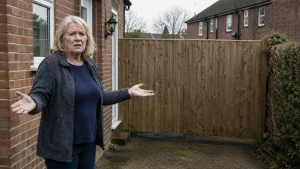
Marie Potter and Kirsten McGowan were neighbours in Bennett’s Avenue, Shirley, Croydon. Potter had moved into her home in 1998, while McGowan was already living next door.
Their families reportedly got on for many years before relations deteriorated over McGowan’s complaints that Potter’s Ford Focus obstructed access across a shared driveway to a garage behind McGowan’s property.
The disagreement eventually reached Bromley County Court. On 26 August 2020, an order required Potter to pay McGowan £30,452.95 in damages and £27,000 in costs. Potter did not pay those sums, and a charging order for £69,351.07 was made against her property on 30 December 2020.
The case then moved beyond the original access dispute. McGowan pursued enforcement against the property, resulting in an order for sale, a requirement for vacant possession and Potter’s eventual eviction.
Why Did A Shared-Driveway Row Become A Major Legal Battle?
A shared-driveway disagreement can involve more than inconvenient parking. The legal position may depend on rights of way, easements, property deeds and whether one owner is interfering with another owner’s recognised access rights.
In Potter’s case, McGowan alleged that the position of Potter’s car prevented or restricted access to the garage. The complaint developed into civil proceedings, in which McGowan obtained damages and costs.
The severity of the final outcome should not be interpreted as evidence that an ordinary parking disagreement automatically puts a person’s home at risk. The decisive development was the creation of a substantial judgment debt that remained unpaid.
Once that happened, the dispute changed from an argument about driveway access into a debt-enforcement case involving Potter’s most valuable asset. The original conflict explains why the parties went to court, but the unpaid judgment explains why the property became involved.
How Did Damages And Legal Costs Put Marie Potter’s Home At Risk?
The damages and legal costs put Marie Potter’s home at risk because the unpaid court judgment was secured against the property and later enforced through an order for sale and possession proceedings.
What Did Bromley County Court Order Potter To Pay?
The August 2020 order required Potter to pay £30,452.95 in damages and £27,000 in costs.
Interest and further enforcement costs could continue to increase the amount due, which helps explain why reports commonly described the liability as approximately £70,000.
This was a civil judgment debt, not a £70,000 parking fine. The distinction matters because the later property proceedings were intended to enforce the unpaid court order.
The Charging Order Secured The Debt Against The Property
A charging order places a charge over a debtor’s interest in an asset, commonly a house or land. The court’s official charging order guidance explains that a charge can be placed on property to secure money owed under a judgment.
A charging order does not automatically transfer the property to the creditor or immediately evict the homeowner. It connects the debt to the property and may support a later application for an order for sale.
How Did An Order For Sale And Possession Follow?

McGowan issued a County Court claim seeking an order for sale. The resulting order included provisions enabling the property to be sold and requiring vacant possession.
Why The Enforcement Escalated
- Potter did not pay the damages and costs ordered in August 2020.
- The debt was secured against her home in December 2020.
- An order for sale was obtained through later proceedings.
- Potter did not provide possession as required.
- A warrant of possession was used to enforce the order.
These were separate stages, and no single step alone explains the eventual eviction.
What Was The Timeline From The Driveway Dispute To Potter’s Eviction?
The timeline shows how the dispute progressed from disagreements over shared-driveway access to a court judgment, enforcement against the property and Potter’s eviction in April 2023.
Case Timeline
| Date | Reported Development | Why It Mattered |
| 1998 | Potter moved into Bennett’s Avenue | Established her long occupation of the property |
| Before 2020 | Relations deteriorated over driveway access | Created the underlying neighbour dispute |
| 26 August 2020 | Damages and costs were awarded | Created the judgment debt |
| 30 December 2020 | A £69,351.07 charging order was made | Secured the debt against the home |
| December 2021 | An order for sale was obtained | Enabled enforcement through a proposed sale |
| April 2023 | Potter was evicted | She lost possession of the property |
| October 2024 | Potter first challenged the order’s jurisdiction | Opened the later validity dispute |
| 16 March 2026 | The High Court delivered judgment | Confirmed that the order had been validly made |
The chronology shows that almost three years passed between the original damages order and Potter’s eviction.
It also shows why describing the outcome as an immediate consequence of poor parking leaves out the most important legal stages.
Why Did Marie Potter Challenge The County Court’s Authority?
Potter accepted that the charging order was valid but argued that the County Court lacked jurisdiction to make parts of the later order for sale.
Her case relied on provisions in sections 90 and 91 of the Law of Property Act 1925 referring to a £30,000 limit.
She argued that the County Court could not exercise the relevant powers because the charge or mortgage affecting the property exceeded that figure.
Potter maintained that the order should be treated as invalid and that the steps taken under it, including possession of the house, should not stand.
She also brought a counterclaim containing allegations connected with McGowan’s possession and handling of the property.
The High Court hearing was not a complete retrial of the original driveway dispute. It focused on preliminary legal questions about the County Court’s jurisdiction and the effect of an order if jurisdiction had been exceeded.
Why Did The High Court Reject Marie Potter’s Legal Challenge?

The High Court rejected Marie Potter’s legal challenge after finding that the County Court had acted within its jurisdiction when it made the order for sale.
The £30,000 Argument And The £350,000 Equity Limit
The High Court found that the relevant jurisdiction came from the County Court’s equitable power to enforce a charge by sale.
Sections 90 and 91 supplied supporting or ancillary powers but did not impose a separate £30,000 ceiling on that underlying jurisdiction.
The County Court jurisdiction order increased the County Court’s equity limit from £30,000 to £350,000 in 2014.
The judgment held that an order for sale could be made where the amount owing under the charge did not exceed that £350,000 limit.
The relevant amount was the debt secured by the charging order, recorded as £69,351.07, rather than the newspaper valuation of the entire house.
What Did Mr David Halpern KC Decide?
The judge concluded that the order had been validly made and that the County Court possessed the necessary jurisdiction.
What The Court Decided
- The power to order a sale arose within the court’s equitable jurisdiction.
- The applicable County Court limit was £350,000.
- The £30,000 figure did not restrict the ancillary powers in the way Potter argued.
- The order for sale remained valid and enforceable.
- Potter could not succeed on the preliminary jurisdiction issue.
The judge described the proceedings as “yet another cautionary tale about the financial consequences of neighbour disputes for those without deep pockets”.
The ruling did not hand McGowan the entire value of the property as a personal award. It preserved an enforcement process intended to recover the judgment debt, interest and applicable costs.
Was Marie Potter’s £575,000 House Actually Sold?
Reports published after the High Court decision said the property remained unsold, despite Potter having been evicted in April 2023.
Losing possession, obtaining an order for sale and completing a sale are legally and practically different events.
Potter lost physical occupation and control of the proposed sale process. However, the available March 2026 reporting did not establish that a purchaser had completed a £575,000 transaction.
The property figures also require careful attribution. Reports variously referred to estimated values of approximately £530,000 and £575,000, while earlier coverage said the property’s condition had allegedly caused its value to fall further.
The £575,000 figure should therefore be understood as a reported valuation associated with the case, not a verified sale price or the amount McGowan was awarded.
What Compensation Did Marie Potter Seek After Her Eviction?

Potter counterclaimed for more than £250,000, alleging that she had suffered losses after being removed from the property.
Reported elements included rent for alternative accommodation, storage expenses and a claimed reduction of more than £100,000 in the property’s value.
She also alleged wrongdoing connected with McGowan’s possession and management of the house.
Those figures represented Potter’s claims; they were not compensation awarded to her. Her counterclaim depended wholly or substantially on succeeding in her challenge to the validity of the order.
Because the High Court decided that the County Court had jurisdiction and that the order was validly made, the central foundation of her attempt to regain the property failed.
What Misleading Claims About The Marie Potter Case Should Readers Avoid?
Claims And Context
| Misleading Claim | More Accurate Explanation |
| Potter lost her house simply for parking badly | The outcome followed a judgment, non-payment and several enforcement stages |
| McGowan automatically became the homeowner | The property was reportedly still unsold |
| The house sold for £575,000 | £575,000 was a reported valuation |
| The debt was a parking fine | It comprised civil damages, costs and later liabilities |
| The High Court accepted the £30,000 limit | The judge applied the £350,000 equity limit |
| Potter was evicted immediately after trial | The eviction occurred in April 2023, years after the 2020 order |
These distinctions make the case easier to understand and prevent a dramatic headline from replacing the actual legal chronology.
What Does The Marie Potter Lost House Dispute Teach UK Homeowners?
The Marie Potter lost house dispute shows UK homeowners how an everyday neighbour disagreement can escalate into costly litigation, debt enforcement and the loss of possession of a property.
Why Does Early Legal Advice Matter In A Shared-Access Dispute?
Rights over driveways and access routes may be recorded in title documents, transfers, conveyances or easements. A title plan alone may not answer every question about the extent or manner of an access right.
Early advice can help identify the relevant documents, the strength of each party’s position and whether correspondence or negotiation could resolve the disagreement before legal costs become disproportionate.
Mediation, Evidence And Written Access Arrangements
The official neighbour mediation guidance recommends considering mediation when direct discussions have not resolved a dispute. Mediation allows an independent person to help neighbours seek an agreed outcome without requiring a judge to impose one.
Practical Steps For Homeowners
- Keep communication factual and focused on the access issue.
- Retain deeds, title documents and relevant correspondence.
- Record alleged obstructions with dates and photographs where appropriate.
- Avoid threats or accusations that could intensify the conflict.
- Consider mediation before positions become entrenched.
- Obtain advice before starting or responding to proceedings.
Early documentation and proportionate dispute resolution cannot guarantee agreement, but they may reduce uncertainty and unnecessary escalation.
What Should A Homeowner Do After Receiving A Court Judgment?
A judgment, payment deadline or enforcement notice should not be ignored. Delayed action may limit available options while interest and further costs continue to accumulate.
A person who cannot pay should promptly investigate appropriate steps, which may include seeking a payment arrangement, applying to vary payment terms or obtaining advice about appeal deadlines and enforcement risks.
The Potter case demonstrates that a charging order is not merely an administrative entry. When combined with an unpaid debt and a successful order-for-sale application, it can place continued possession of a home at risk.
Conclusion
The Marie Potter lost house dispute began with allegations about a parked Ford Focus and access to a shared garage, but its most serious consequences arose later.
The damages and costs order created a substantial debt. Non-payment led to a charging order, an order for sale and Potter’s eviction, while her subsequent attempt to challenge the County Court’s authority failed because the applicable equity-jurisdiction limit was £350,000.
The case illustrates how a neighbourhood disagreement can become a long and expensive enforcement dispute. Clear property records, early advice, careful communication and proportionate dispute resolution may help homeowners prevent similar conflicts from escalating.
Frequently Asked Questions
Who Is Kirsten McGowan In The Marie Potter Case?
Kirsten McGowan was Potter’s neighbour and the successful claimant in the original civil proceedings. She later pursued enforcement of the unpaid judgment against Potter’s property.
Where Is Bennett’s Avenue?
Bennett’s Avenue is in Shirley, within the London Borough of Croydon. The two properties involved in the dispute shared an access route leading towards garages.
How Much Was Marie Potter Ordered To Pay?
The August 2020 order required £30,452.95 in damages and £27,000 in costs. A later charging order recorded the secured sum as £69,351.07.
What Is A Warrant Of Possession?
A warrant of possession authorises court enforcement officers to recover possession under an existing possession order. Potter was evicted after she did not provide vacant possession as required.
What Is The Difference Between A Charging Order And An Order For Sale?
A charging order secures an unpaid judgment against an asset such as property. An order for sale permits a creditor to pursue the property’s sale to recover the secured debt.
What Did The 3,000-Year Legal Term Mean?
The order provided for a long legal term to be created to facilitate the property’s sale under statutory powers. It was an enforcement mechanism rather than a normal residential lease.
Can Legal Costs Become Larger Than The Original Dispute?
Yes, prolonged litigation can add solicitors’ fees, barristers’ fees, court costs, interest and enforcement expenses. These liabilities may eventually become much greater than the practical issue that first caused the disagreement.
Note: This article reflects the reported facts and the High Court judgment in McGowan v Potter [2026] EWHC 595 (Ch). Property valuations are identified as reported estimates, while allegations and compensation figures are attributed to the party who advanced them.