

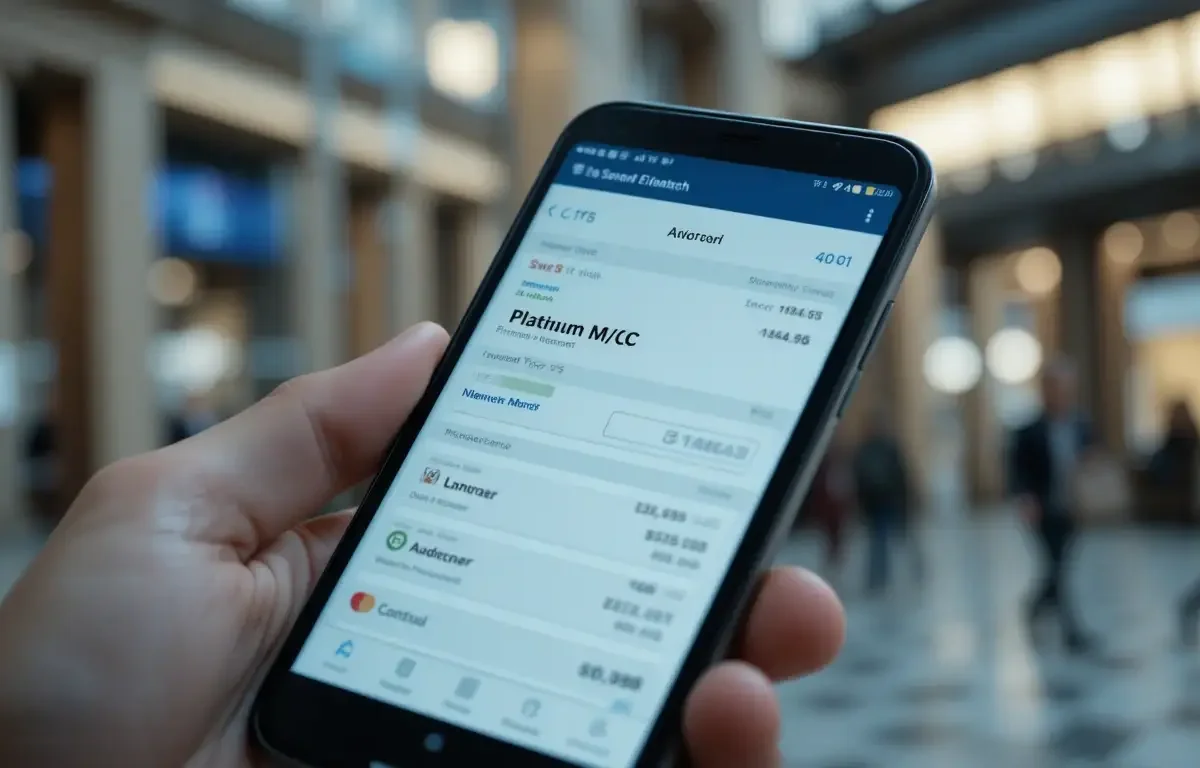
“Platinum M/C” on a bank statement simply means a transaction was made using a Platinum Mastercard.
It is not the name of a company or a separate fee. UK banks such as Lloyds, NatWest, Barclays, HSBC, and RBS commonly use this abbreviation to identify the type of card used for a payment.
In most cases, the transaction is legitimate, but customers should still review the merchant name, amount, and transaction date to confirm the purchase.
Key takeaways:
- “Platinum” refers to the premium card tier
- “M/C” stands for Mastercard
- The label identifies the payment method, not the retailer
- Both debit and credit cards can display Platinum M/C
- Online banking apps usually show fuller merchant details
- Unknown charges should be checked with the bank immediately
- UK banks may format these transaction labels differently
What Does “Platinum M/C” Mean on a Bank Statement?
The term “Platinum M/C” is a shortened banking description for “Platinum Mastercard”.
Here is a simple breakdown:
| Term | Meaning |
| Platinum | A premium-level debit or credit card |
| M/C | Mastercard payment network |
| Platinum M/C | A transaction made using a Platinum Mastercard |
Banks often use abbreviations because statement descriptions have character limits. Instead of displaying the full card type, they shorten it to terms such as:
- Platinum M/C
- Debit M/C
- Visa Debit
- Gold Mastercard
The wording does not represent a retailer or merchant. It only identifies the payment method used.
For example, if someone purchases train tickets online using a Platinum Mastercard, the statement may display:
- “Trainline Platinum M/C”
- “Platinum M/C Transaction”
- “POS Platinum M/C”
The merchant details usually appear nearby on the statement.
Why Does Platinum M/C Appear on a UK Bank Statement?

UK banks use payment network labels to help customers identify the card used for transactions. Since many people hold multiple cards, the statement includes information about the payment type.
Banks commonly include:
- Card network
- Card tier
- Transaction type
- Merchant category information
How Banks Format Card Transactions?
Most UK banking systems shorten transaction references automatically. Depending on the bank, a transaction may include:
- Retailer name
- Card type
- Date
- Authorisation code
- Country code
Here is how different statement descriptions may appear:
| Example Statement Entry | Meaning |
| Tesco Platinum M/C | Tesco purchase using a Platinum Mastercard |
| Amazon M/C | Amazon payment via Mastercard |
| POS Platinum M/C | Point-of-sale card payment |
| Card Purchase Platinum M/C | General card transaction |
Why the Retailer Name May Look Different?
Sometimes customers become concerned because the retailer name looks unfamiliar. This happens because:
- Businesses may trade under a parent company name
- Payment processors use shortened descriptions
- Subscription services use billing company names
- International retailers may display differently
A banking specialist explained this issue clearly:
“I regularly speak with customers who assume Platinum M/C is a separate company charging them money. In reality, it is almost always just the payment network label attached to the transaction. The important part is checking the merchant details beside it.”
This confusion is especially common with online subscriptions and digital purchases.
Is Platinum M/C a Legitimate Charge or a Scam?
In the vast majority of situations, Platinum M/C is legitimate. It simply identifies a transaction completed with a Platinum Mastercard.
However, that does not automatically mean every transaction linked to it is valid. Fraudulent purchases can still appear with this description if someone gains access to the card details.
The safest approach is to review:
- Transaction date
- Amount charged
- Merchant name
- Purchase location
- Recurring payment history
Here are some signs a transaction may need further investigation:
| Warning Sign | What It Could Mean |
| Unknown retailer | Forgotten or suspicious purchase |
| Multiple small payments | Possible fraud testing |
| International transaction | Overseas merchant or scam |
| Duplicate charge | Processing error |
| Unexpected subscription | Auto-renewal payment |
If a transaction still looks unfamiliar after checking receipts and banking apps, contacting the bank is recommended.
How Can Someone Identify a Platinum M/C Transaction?

The easiest way to identify a Platinum M/C transaction is by reviewing the surrounding payment details.
Customers should check:
- Date of purchase
- Payment amount
- Merchant name
- Card ending digits
- Location information
Most UK banking apps now provide expanded transaction information. Tapping the transaction usually reveals:
- Merchant address
- Payment category
- Transaction status
- Contact details
Checking Transactions Through Online Banking
Online banking portals often provide more detailed descriptions than printed statements.
For example:
- NatWest allows customers to review transaction histories for several years
- Lloyds Banking Group provides merchant dispute support
- Barclaycard displays digital receipts for some purchases
A financial adviser shared a common customer experience:
“I often tell clients not to panic when they see abbreviations like Platinum M/C. Once they open the transaction details in online banking, they usually recognise the purchase immediately.”
This is particularly useful for recurring digital payments such as:
- Netflix
- Spotify
- Amazon subscriptions
- App Store purchases
Reviewing Pending and Completed Payments
Pending transactions may look different from completed transactions.
| Transaction Type | Description |
| Pending Payment | Temporary authorisation |
| Completed Payment | Final processed charge |
| Reversed Payment | Cancelled transaction |
| Recurring Transaction | Subscription or repeated payment |
Restaurants, hotels, and petrol stations commonly place temporary authorisations before the final amount is confirmed.
Which UK Banks Show Platinum M/C on Statements?
Several UK banks use Mastercard abbreviations on statements. The formatting varies slightly depending on the institution.
Common examples include:
- Lloyds Bank
- NatWest
- Barclays
- Barclaycard
- HSBC
- RBS
- Halifax
Here is how statement formatting may differ:
| Bank | Possible Description Format |
| Lloyds | Platinum M/C Purchase |
| NatWest | Card Transaction M/C |
| Barclays | Mastercard Platinum |
| HSBC | POS Mastercard Payment |
| RBS | Platinum M/C Debit |
The wording itself does not change the meaning. It still refers to the card type used during the payment process.
What Should Someone Do If They Do Not Recognise a Platinum M/C Charge?

If someone does not recognise a Platinum M/C transaction, they should investigate it quickly but calmly.
Recommended steps include:
- Review recent purchases
- Check online subscriptions
- Ask family members about shared card use
- Search the merchant name online
- Review email confirmations
- Contact the retailer
- Speak with the bank if necessary
Many unrecognised transactions turn out to be:
- Free trial renewals
- Delayed retailer charges
- Shared household spending
- Alternative company trading names
However, if fraud is suspected, customers should:
- Freeze the card immediately
- Contact the bank’s fraud team
- Request a replacement card
- Monitor future statements
Most UK banks now provide instant fraud reporting through mobile apps.
Can Platinum M/C Appear on Debit and Credit Card Statements?
Yes, Platinum M/C can appear on both debit and credit card statements.
The “Platinum” label refers to the card tier rather than the payment type itself.
Here is the difference:
| Card Type | Description |
| Platinum Debit Card | Linked directly to a bank account |
| Platinum Credit Card | Borrowed credit with repayment terms |
Both card types can use the Mastercard network, which is why the abbreviation “M/C” appears.
Premium Platinum cards often include additional features such as:
- Travel insurance
- Cashback rewards
- Purchase protection
- Airport lounge access
- Fraud monitoring tools
The exact benefits depend on the card provider.
How Can Someone Track Platinum M/C Transactions More Easily?

Monitoring transactions regularly is one of the best ways to avoid confusion.
Banking apps now offer useful features such as:
- Instant spending alerts
- Merchant tracking
- Budget categorisation
- Subscription monitoring
- Transaction search tools
Customers can also improve transaction tracking by:
- Keeping digital receipts
- Naming transactions in banking apps
- Reviewing monthly statements
- Setting spending limits
Here are some practical tracking methods:
| Tracking Method | Benefit |
| Mobile banking alerts | Instant payment notifications |
| Digital receipts | Easier purchase verification |
| Monthly statement reviews | Detect unusual activity |
| Subscription trackers | Prevent forgotten renewals |
These tools help customers identify transactions before they become problematic.
What Are the Most Common Reasons Platinum M/C Appears on a Statement?
Platinum M/C appears for many everyday card payments.
| Reason | Explanation |
| Retail Purchase | Payment made using a Platinum Mastercard |
| Online Subscription | Recurring card payment |
| Travel Booking | Hotel, airline, or train purchase |
| Pending Transaction | Temporary card authorisation |
| Digital Wallet Payment | Apple Pay or Google Pay transaction |
| Restaurant Payment | Card machine transaction |
| Online Shopping | E-commerce purchase |
In most cases, the label itself is harmless and simply identifies the payment method used.
What Is the Difference Between Platinum M/C and Other Card Statement Labels?
Bank statements contain many abbreviations related to payment networks and card tiers.
Here is a comparison:
| Statement Label | Meaning |
| Platinum M/C | Platinum Mastercard |
| Debit M/C | Debit Mastercard |
| Visa Debit | Visa-linked debit card |
| Gold Mastercard | Mid-tier Mastercard |
| POS Transaction | Point-of-sale payment |
The wording changes depending on:
- Card issuer
- Banking software
- Payment processor
- Statement format
Customers should focus on the merchant information rather than the card label itself.
Conclusion: What Should Someone Remember About Platinum M/C on a Bank Statement?
Platinum M/C on a bank statement simply refers to a Platinum Mastercard transaction. It is not an unknown company or hidden fee. UK banks use this abbreviation to identify the type of card used for a payment.
Most of the time, the transaction is completely legitimate.
The key is to review:
- Merchant details
- Transaction amount
- Payment date
- Subscription activity
If a payment still looks unfamiliar after checking these details, customers should contact their bank promptly to investigate further.
Regular statement reviews and mobile banking alerts can help prevent confusion and improve transaction security.
FAQs About Platinum M/C on Bank Statements
Does Platinum M/C mean someone has been charged twice?
No. Platinum M/C only identifies the card type used during the payment. Duplicate charges would normally appear as separate transactions.
Can Platinum M/C appear for contactless payments?
Yes. Contactless card payments can still display the Platinum M/C abbreviation on statements.
Why does Platinum M/C show without a shop name?
Some banks shorten transaction descriptions due to statement formatting limits. The merchant details may appear elsewhere in the transaction information.
Is Platinum M/C linked to Mastercard only?
Yes. The “M/C” abbreviation stands for Mastercard and is connected to the Mastercard payment network.
Can a debit card show Platinum M/C on statements?
Yes. Some banks issue Platinum-tier debit cards, which may display Platinum M/C on statements.
How can someone dispute an unknown Platinum M/C transaction?
Customers should contact their bank immediately, review recent purchases, and report any suspected fraudulent activity through mobile banking or customer support.
Why do online banking apps shorten transaction descriptions?
Banks often use abbreviated descriptions to fit transaction data within statement formatting systems and payment processing limits.