

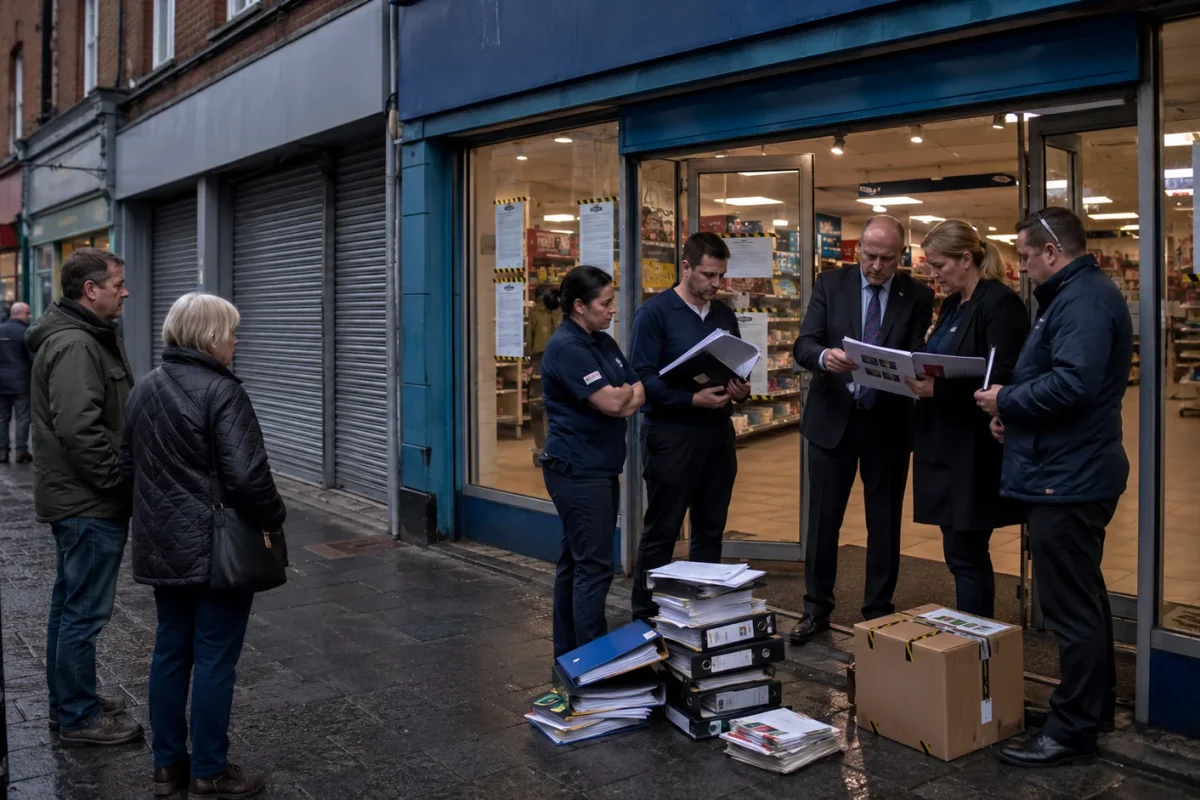
The TG Jones administration risk has grown because the retailer could enter administration before the end of July if creditors reject its proposed rescue plan.
The company, formerly linked to WHSmith’s high-street division, may close up to 150 stores as Modella Capital looks to stabilise the business with around £35 million in fresh funding.
The situation reflects wider pressure on UK retailers, including weak consumer spending, rising costs, lower footfall, and the impact of the TG Jones rebrand.
Key takeaways:
- TG Jones could face administration if creditors reject the rescue proposal.
- Up to 150 stores may close from its 480-store estate.
- Modella Capital has proposed around £35 million in fresh funding.
- Creditors and a High Court review will shape the outcome.
- Staff, landlords, suppliers, and local high streets face uncertainty.
Evri and GMB Union Pay Dispute Deepens as Thousands of Drivers Face Ballot
Why Is TG Jones Administration Risk Becoming A Major UK Retail Concern?
The TG Jones administration risk is becoming a major concern because it involves a recognised British high-street business with a large store estate, long trading history, and close links to everyday services.
Although TG Jones is a newer name, the business behind it is connected to the former WHSmith high-street division, which makes the possible administration process more significant for UK shoppers.
TG Jones is not a small independent retailer with only a few sites. It currently operates around 480 stores, and the proposed rescue plan may involve the closure of as many as 150 branches.
That level of restructuring could have a visible impact across town centres, shopping streets, retail parks, and smaller communities where branches may provide regular access to stationery, books, cards, gifts, toys, magazines, and Post Office services.
The situation is also important because it shows how quickly a familiar high-street operation can come under pressure.
A company may still have name recognition, store traffic, and commercial partners, but that does not always protect it from rising costs and falling margins. When a retailer has hundreds of stores, every increase in rent, wages, energy, tax, or supply chain costs is multiplied across the estate.
For many customers, the story may feel confusing because TG Jones was previously associated with WHSmith’s high-street presence. The rebrand has made customer awareness more complicated.
Some shoppers may not immediately connect TG Jones with the former WHSmith stores they previously used. That loss of instant recognition can be damaging at a time when the retailer needs every possible sale.
The concern also extends beyond TG Jones itself. If a long-established high-street chain is struggling to remain solvent, it raises questions about the health of the wider UK retail sector.
Physical retailers are still important to local communities, but many are finding it harder to compete with online rivals that often operate with lower property-related costs.
| Reason For Concern | Why It Matters For TG Jones | Wider UK Retail Impact |
| Large store estate | Around 480 branches create high fixed costs | Shows the burden carried by physical retailers |
| Up to 150 closures | A significant reduction in the company’s footprint | Could leave gaps in town-centre retail provision |
| Creditor approval needed | Future depends on support from lenders and other parties | Highlights the fragile nature of retail restructuring |
| Rebrand from WHSmith | Customer awareness may have weakened | Shows the risk of changing familiar high-street identities |
| Weak consumer spending | Lower sales can quickly affect profitability | Reflects pressure across discretionary retail |
The TG Jones administration risk is therefore not only about one company’s future. It is about the changing economics of the high street and the difficulty of keeping large retail estates profitable in a cautious consumer market.
What Has Pushed TG Jones Towards A Possible Administration Process?
TG Jones appears to have moved towards a possible administration process because several pressures have arrived at the same time. These include reduced consumer spending, rising operational costs, weaker footfall in parts of the high street, and the challenge of rebuilding customer recognition after moving away from the WHSmith name.
Pressure From Weak Consumer Spending
Weak consumer spending has been one of the central pressures on TG Jones. When households are dealing with higher food bills, energy costs, rent, mortgage payments, and transport expenses, they often reduce spending on non-essential products.
That affects retailers selling items that customers may delay, replace with cheaper alternatives, or buy online after comparing prices.
TG Jones operates in categories where impulse buying and regular footfall matter. A shopper might once have visited a store for a magazine, greeting card, stationery item, children’s toy, book, or small gift. In a tighter economy, those purchases may become less frequent. Even a small drop in average spend can become serious when it affects hundreds of stores at once.
The cost-of-living pressure has also changed shopping behaviour. Customers are more likely to plan purchases carefully, look for discounts, and avoid unnecessary town-centre trips. This can reduce the number of casual visits that physical retailers rely on.
A retail restructuring adviser described the pressure clearly:
“I often see retailers reach this stage because several problems build at the same time. A store may still have loyal customers, but if those customers are spending less and visiting less often, the numbers can deteriorate quickly.”
This type of spending pressure does not always create an immediate crisis. It can slowly weaken a business over months, especially when fixed costs remain high.
Rising Operating Costs Across The High Street
Rising operating costs have added another layer of difficulty. Store-based retailers face expenses that online competitors may not carry in the same way. These include rent, service charges, business rates, energy, store maintenance, security, and staff costs.
TG Jones has also referred to rising operational costs linked to policy changes, including employment-related costs. Higher wage bills and employer National Insurance contributions can create major pressure for a retailer with a large workforce. While higher pay can support workers, it can also increase the strain on businesses that are already trading at a loss.
| Cost Pressure | Effect On Physical Retailers | Possible Effect On TG Jones |
| Wages | Increases the cost of staffing stores | Reduces margins across the estate |
| Employer contributions | Adds to payroll-related costs | Raises the cost of maintaining branch operations |
| Business rates | Creates a fixed property cost | Makes weaker stores harder to justify |
| Energy bills | Affects lighting, heating, storage, and operations | Increases day-to-day running costs |
| Rent and leases | Can remain high even when sales fall | Makes loss-making stores difficult to sustain |
| Security and maintenance | Adds to the cost of physical retail | Further reduces store profitability |
These pressures can be especially difficult when sales are falling. If revenue drops while costs rise, the gap between income and expenditure can widen quickly. This is one of the reasons a rescue plan may include store closures. Closing weaker branches can reduce costs and allow the company to focus on locations with a better chance of survival.
Rebrand Impact After Moving Away From WHSmith
The rebrand from WHSmith to TG Jones is another important factor. Brand recognition is extremely valuable in retail because customers make quick decisions based on familiarity and trust. WHSmith was a name many shoppers recognised instantly. TG Jones, by contrast, needed to build awareness at a difficult time.
A Modella spokesman said the forced name change had “negatively impacted consumer awareness, despite the proposition improving”. This suggests that even if stores had improved their offer, customers may not have fully understood the change.
Rebranding can be expensive and risky. It involves new signage, marketing, store communication, customer education, and time. For a struggling business, that process can be particularly challenging. The retailer has to explain who it is while also trying to control costs and protect sales.
The rebrand may also have created uncertainty among customers. Some may have assumed stores had changed ownership, changed product range, or become a different type of retailer. Others may not have noticed the connection at all. In a competitive market, even small moments of confusion can cost sales.
How Many TG Jones Stores Could Close Under The Rescue Plan?

Up to 150 TG Jones stores could close under the proposed rescue plan. That figure is significant because it represents a large part of the company’s current estate of around 480 branches. Eight branches have already closed as part of the restructuring process, which shows that the store review has already started.
Store closures are often used in retail rescue plans when a company needs to reduce losses quickly. A large chain can have a mix of profitable, marginal, and loss-making branches. If too many stores are losing money, the profitable parts of the business may not be strong enough to support the weaker locations.
For TG Jones, the store closure threat may be based on a detailed review of branch performance. The company may need to consider rent levels, lease terms, local footfall, sales trends, staffing costs, nearby competition, and the role of partner services such as Post Office kiosks.
| Store Estate Detail | Reported Position | What It Could Mean |
| Current estate | Around 480 stores | TG Jones still has a wide UK presence |
| Stores at risk | Up to 150 stores | A major reduction in the store network |
| Already closed | 8 branches | Restructuring activity has begun |
| Remaining estate if all 150 close | Around 330 stores | Business may continue in a smaller form |
| Deadline pressure | July 31 | Decisions may need to move quickly |
Closures of this scale would affect more than company finances. They could reduce local retail choice and remove familiar shops from town centres. In some communities, a TG Jones branch may also support wider footfall because customers visit for Post Office services or other regular needs.
However, from a business perspective, closure decisions may be viewed as necessary. A rescue plan is usually designed to preserve the viable part of a company. If TG Jones can reduce losses and secure funding, it may have a better chance of continuing as a smaller retailer.
Key store estate concern:
The main concern is not only how many stores close, but whether the remaining business can trade profitably after the restructuring. A smaller estate will still need strong sales, clear branding, good supplier relationships, and customer confidence.
What Does The TG Jones Rescue Package Include?
The TG Jones rescue package appears to include fresh funding, creditor approval, court examination, and a significant review of the store estate. The goal is to prevent collapse and give the retailer a chance to continue trading in a more stable form.
Fresh Funding From Modella Capital
Modella Capital, which bought WHSmith’s high-street division last year for £40 million, has proposed injecting around £35 million in fresh funding. This funding is intended to support the business through its turnaround period.
Fresh funding can be crucial in a restructuring process. It can help a company cover urgent costs, reassure suppliers, support stock availability, and maintain day-to-day trading. Without enough working capital, a retailer can quickly face problems paying bills or keeping shelves stocked.
However, new money is not enough on its own. A retailer must also fix the reasons it became loss-making. If TG Jones continues to operate too many unprofitable stores, fresh funding could be used up without solving the long-term problem.
Creditor Approval And High Court Review
Creditors must approve the rescue proposal, and the plan is also expected to be examined at a High Court hearing on June 29. This makes the process more formal and more uncertain.
Creditors may include landlords, suppliers, lenders, service providers, and other parties owed money by the company. Their approval is important because a restructuring plan often asks them to accept changes to payment terms, leases, or other financial arrangements.
| Rescue Plan Element | Purpose | Why It Matters |
| £35 million funding proposal | Provides financial support | Helps stabilise short-term operations |
| Creditor approval | Secures backing from those owed money | Determines whether the plan can move forward |
| High Court review | Examines the restructuring proposal | Adds legal oversight to the process |
| Store closures | Reduces loss-making operations | Helps protect the remaining business |
| July 31 deadline | Creates a fixed timetable | Increases urgency around decisions |
If creditors believe the rescue plan offers a better outcome than administration, they may support it. If they believe administration would produce a better result, or if they are not convinced by the plan, they may reject it.
Store Estate Review And Loss-Making Branches
The store estate review is likely to be one of the most important parts of the rescue package. TG Jones needs to identify which branches can form part of a sustainable future and which branches are no longer viable.
This process is rarely simple. Some stores may be loss-making now but strategically important because they are in strong locations or offer valuable services. Others may have acceptable sales but high rents that make them hard to justify.
A store review may consider:
- Branch profitability and sales trends
- Rent levels and lease flexibility
- Local customer demand
- Footfall and nearby competition
- Staff costs and operating expenses
TG Jones must balance financial discipline with brand presence. If it closes too many stores, it may reduce customer access and weaken national visibility. If it closes too few, it may fail to reduce losses enough to survive.
What Could TG Jones Administration Risk Mean For Staff And Jobs?

The TG Jones administration risk could create significant uncertainty for staff across the business, especially those working in branches marked for possible closure. Employees at affected stores were expected to learn their fate on May 7, according to the information provided.
For staff, the risk is not only about whether a company enters administration. The closure of up to 150 stores could lead to redundancies, redeployment, changes in working hours, or consultation processes. Workers may face uncertainty about income, location, future employment, and redundancy rights.
A retail employment adviser explained the human side clearly:
“I always tell businesses that restructuring is not just a balance-sheet exercise. Behind every store closure there are people waiting to know whether they can pay rent, plan childcare, or stay in a job they have held for years.”
That insight is important because restructuring language can sound technical. Terms such as creditor approval, rescue plan, administration process, and estate review can make the situation seem distant. For employees, it is personal and immediate.
| Staff Issue | What It Could Mean | Why It Matters |
| Redundancy risk | Some roles may disappear if stores close | Direct impact on household income |
| Redeployment | Some staff may move to nearby branches | Depends on available roles and locations |
| Consultation | Staff may be formally informed and consulted | Helps workers understand their rights |
| Uncertainty | Employees may wait for decisions | Can affect morale and wellbeing |
| Store closure timetable | Decisions may move quickly | Staff need clear communication |
Clear communication is essential during this period. Staff need to know which stores are affected, what support is available, whether roles can be transferred, and what compensation or redundancy rights may apply.
The situation also affects managers, area teams, warehouse staff, support office workers, and commercial teams. A store closure programme can create pressure across every part of the business, not only in the branches that shut.
Why Are Creditors Important To The Future Of TG Jones?
Creditors are important because they may decide whether the TG Jones rescue package has a realistic chance of success. Without their support, the retailer could be pushed closer to administration.
In a restructuring process, creditors are asked to assess whether the proposed plan is better than the likely outcome if the business collapses. That decision can be difficult. Creditors may be owed money, but they also need to consider whether rejecting the plan could lead to a worse financial result.
Landlords may need to consider whether accepting revised lease terms is better than having empty units. Suppliers may need to decide whether continued trade with TG Jones is worth the risk. Lenders may need to assess whether fresh funding and store closures can create a more stable business.
Creditors are likely to focus on the strength of Modella Capital’s funding proposal, the realism of the store closure plan, the future profitability of the remaining estate, and the company’s ability to rebuild customer confidence after the rebrand.
A creditor-backed plan can give TG Jones breathing space. A rejected plan could leave the company with limited options. That is why creditor approval is central to the current risk.
How Does The TG Jones Store Closure Threat Reflect Wider High Street Problems?
The TG Jones store closure threat reflects wider problems across the UK high street. Many physical retailers are dealing with the same pressures, even if they are not all at the same stage of financial distress.
Cost-Of-Living Pressure On Shoppers
Cost-of-living pressure has changed customer behaviour. Shoppers are more selective, more price-conscious, and more likely to delay non-essential purchases. This affects retailers that rely on steady everyday spending.
TG Jones may be particularly exposed because many of its product categories are discretionary. Cards, gifts, books, toys, and stationery remain useful, but customers may buy fewer items or look for cheaper options when household budgets are tight.
Business Rates And Physical Retail Challenges
Business rates continue to be a major concern for bricks-and-mortar retailers. Physical stores carry property-based costs that online competitors may not face in the same way. This creates a structural challenge for high-street businesses.
Insolvency specialist Molly Monks of Parker Walsh said,
“Business rates continue to penalise physical retail in a way that online competitors simply do not face.”
She also pointed to the wider cost pressures affecting retailers, including the National Living Wage and higher employer National Insurance contributions. Her view was clear: “The sad reality is this pipeline of closures is far from over.”
These comments place the TG Jones administration risk within a broader retail pattern. The issue is not limited to one chain. Many high-street businesses are trying to manage higher costs while customer spending remains under pressure.
Online Competition And Changing Footfall
Online competition has permanently changed the retail landscape. Customers now expect quick delivery, easy price comparison, wide product choice, and convenience. Physical stores still matter, but they must offer a strong reason for customers to visit.
Footfall is also uneven across the UK. Some major city centres remain busy, but smaller towns and secondary shopping areas can struggle. Remote working, parking costs, reduced commuting, and changing leisure habits have all affected how often people visit high streets.
| Wider High Street Pressure | Effect On Retailers | Link To TG Jones |
| Cost-of-living crisis | Reduces discretionary spending | Weakens sales in non-essential categories |
| Online competition | Gives customers more choice | Makes price and convenience harder to match |
| Business rates | Adds fixed property costs | Pressures stores with weaker sales |
| Lower footfall | Reduces casual purchases | Affects branch profitability |
| Higher employment costs | Increases wage bills | Adds pressure across large store estates |
TG Jones is therefore facing both company-specific problems and sector-wide challenges. Its rescue plan may help address internal losses, but it cannot remove the wider pressures affecting high-street retail.
What Role Do The Post Office And Toys R Us Play In TG Jones’ Recovery Plan?

The Post Office and Toys R Us may play a useful role in TG Jones’ recovery plan because both partnerships can help strengthen store relevance. In many TG Jones branches, Post Office kiosks bring regular visitors into stores. This can support footfall and create opportunities for additional purchases.
Post Office services can be especially important in smaller communities where customers rely on local branches for parcels, banking services, stamps, and everyday postal needs. If a TG Jones branch closes, the effect may extend beyond retail shopping.
Toys R Us can support the product offer by giving the retailer a more distinctive family-focused category. Toys, gifts, and children’s products can help attract seasonal demand, especially around birthdays, school holidays, and Christmas.
However, these partnerships cannot solve every problem. They may improve customer reasons to visit, but the business still needs a sustainable cost base. A store with strong partnerships may still struggle if rent, wages, and operating costs are too high.
The recovery plan will likely need to combine service-led footfall, sharper product choices, better brand communication, and a more disciplined store estate. Commercial partnerships can support that plan, but they are only one part of the wider turnaround.
Could TG Jones Avoid Administration Before The July Deadline?
TG Jones could avoid administration before the July deadline if creditors approve the rescue plan, the High Court process supports the proposal, and the company implements restructuring measures quickly enough.
The July 31 deadline is important because the company has warned lenders that the business faces collapse unless restructuring measures are approved and implemented by then. That creates a narrow timetable for action.
Several conditions may influence whether TG Jones avoids administration. The funding from Modella Capital must be sufficient, the store closure plan must be credible, creditors must accept the proposal, and suppliers must remain confident enough to continue trading with the retailer.
Customer confidence also matters. A rescue plan can be damaged if shoppers believe stores are about to close and stop visiting. TG Jones must therefore communicate carefully, making clear which branches remain open and why the business still has a future.
Avoiding administration would not mean the company’s problems are over. It would mean TG Jones has created an opportunity to restructure outside full collapse. The next challenge would be proving that the smaller estate can trade profitably.
What Happens Next For TG Jones And Its 480-Store Estate?
The next stage for TG Jones is likely to involve creditor decisions, legal review, store closure planning, staff communication, and operational changes across the estate. The company must manage all of this while continuing to trade.
For the 480-store estate, the future may vary by location. Stronger branches may remain part of the business. Weaker branches may close. Some stores may continue because they provide useful services or hold strategic value, even if their current trading is under pressure.
TG Jones also needs to rebuild customer understanding of its brand. The move away from WHSmith may have weakened awareness, so the company must make its offer clear. Shoppers need to know what TG Jones sells, what services it provides, and why they should visit.
The coming weeks could shape the company’s future for years. If the rescue plan succeeds, TG Jones may become a leaner high-street retailer with a smaller but more focused store network. If the plan fails, administration could become more likely, creating further uncertainty for staff, suppliers, landlords, and customers.
Conclusion
The TG Jones administration risk shows how difficult the UK high-street environment has become for physical retailers. Even a business connected to a long-established retail name can face serious pressure when consumer spending weakens, operating costs rise, and brand awareness is disrupted by a major rebrand.
The proposed rescue plan may involve up to 150 store closures, around £35 million in fresh funding from Modella Capital, creditor approval, and High Court review.
If approved and implemented before the July 31 deadline, the plan may help TG Jones avoid administration and continue trading in a smaller form.
For staff and local communities, the situation remains uncertain. For the wider retail sector, TG Jones is another sign that high-street businesses must adapt quickly to survive. The next stage will depend on whether creditors believe the rescue package gives the retailer a realistic future.
FAQs
Is TG Jones the same company as WHSmith?
TG Jones is linked to the former WHSmith high-street division. The stores were rebranded after the business was sold to Modella Capital. Many customers still associate the estate with WHSmith, which is why the rebrand has created customer awareness challenges.
Why did WHSmith high-street stores become TG Jones?
The stores became TG Jones after the high-street division changed ownership. As part of the transition, the business moved away from the WHSmith name. The company has said this change negatively affected consumer awareness, even though the store proposition had improved.
What is a retail rescue plan?
A retail rescue plan is a restructuring proposal designed to help a struggling retailer avoid collapse. It may include new funding, store closures, creditor agreements, rent changes, staff consultation, and operational changes. The goal is to create a more sustainable business.
Does administration always mean a company will close?
Administration does not always mean a company will close completely. It is a formal insolvency process where administrators assess whether the business can be rescued, sold, or restructured. However, administration often leads to store closures, job losses, and major changes.
How could store closures affect local high streets?
Store closures can reduce footfall, leave empty retail units, affect nearby businesses, and reduce access to local services. If a TG Jones branch includes a Post Office kiosk, closure could also affect customers who rely on postal and banking services in that area.
Why are UK retailers struggling with rising costs?
UK retailers are struggling because several costs have increased at the same time, including wages, employer contributions, rent, energy, business rates, and supply chain expenses. When customer spending is also weak, retailers can find it difficult to maintain profit margins.
What happens to employees when stores are marked for closure?
Employees may enter a consultation process, be offered redeployment, or face redundancy depending on the company’s plans and available roles. Staff should receive information about their rights, possible timelines, and any support available during the restructuring process.