
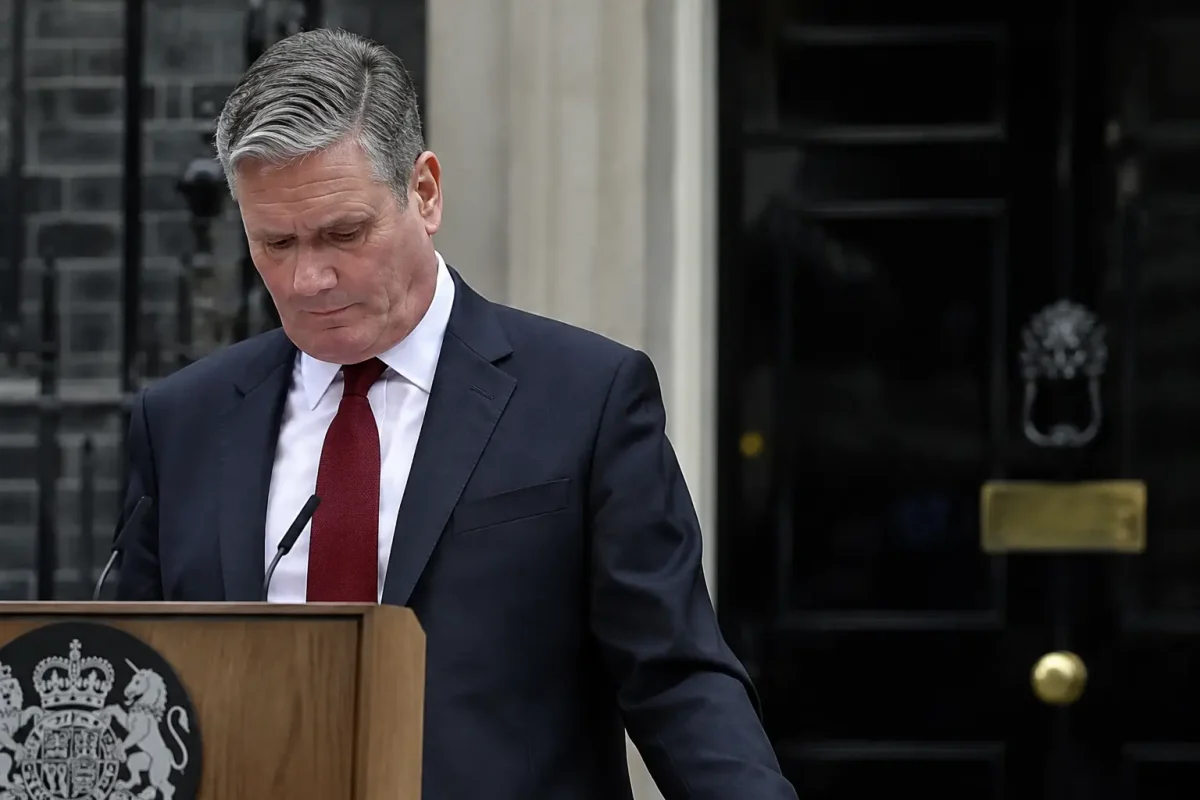
Keir Starmer resigned as UK prime minister and Labour leader after less than two years in office following mounting pressure from Labour MPs, declining approval ratings, disappointing election results, and controversy surrounding key political decisions.
Although Labour secured a historic victory in 2024, the government struggled to maintain public confidence and party unity throughout 2025 and 2026.
Key Highlights:
- Growing dissatisfaction among Labour MPs
- Falling public approval ratings
- Poor local and by-election performances
- Fallout from the Peter Mandelson controversy
- Andy Burnham’s emergence as a leadership alternative
- Leadership transition without a general election
The resignation marked a significant turning point for both Labour and UK politics.
Why Did Keir Starmer Resign After Less Than Two Years in Downing Street?
Keir Starmer resigned after concluding that he no longer had sufficient support within the Parliamentary Labour Party to lead Labour into the next general election.
Pressure increased following a series of political setbacks, declining poll ratings, and growing internal dissatisfaction.
Key factors behind his resignation included:
- Declining public support
- Poor electoral results
- Internal Labour Party pressure
- Concerns about future election prospects
“Leadership ultimately depends on maintaining the confidence of both Parliament and the public.” — Senior Westminster Political Analyst
Rather than prolonging uncertainty, Starmer chose to step aside and allow Labour to begin a leadership transition.
What Political Challenges Weakened Starmer’s Position?
Several political challenges gradually undermined Starmer’s authority and created growing concerns within Labour ranks.
Declining Public Approval Ratings
One of the biggest challenges facing Starmer was a sharp decline in public support. Although Labour entered government with significant goodwill following its 2024 victory, that momentum faded quickly.
Public dissatisfaction increased as voters questioned the government’s handling of key domestic issues, including the cost of living, public services, welfare reforms, and economic growth. By 2026, opinion polls showed Labour trailing behind rivals in several key political measures.
Approval rating trends:
| Period | Political Position |
| July 2024 | Strong post-election support |
| Late 2024 | Approval ratings began declining |
| Early 2025 | Labour polling below expectations |
| Late 2025 | Support dropped below 20% in some surveys |
| Mid-2026 | Record dissatisfaction among voters |
These figures intensified concerns among Labour MPs about the party’s electoral prospects.
Why Did Labour’s Electoral Results Increase Pressure on Starmer?
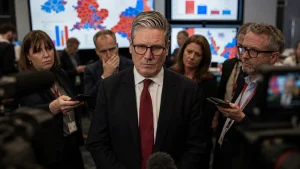
A series of disappointing election results increased concerns that Labour was losing public support despite its parliamentary majority.
The unexpected defeat in the Gorton and Denton by-election, along with poor local election performances, raised doubts about the party’s electoral strength.
Key Electoral Concerns:
- Losses in traditional Labour strongholds
- Growing support for Reform UK
- Declining voter enthusiasm
- Reduced confidence among Labour MPs
- Calls for leadership change
These setbacks convinced many MPs that a leadership change might be needed before the next general election, significantly increasing pressure on Starmer.
How Did the Peter Mandelson Controversy Affect Starmer’s Position?
The controversy surrounding Peter Mandelson became a significant challenge for Keir Starmer’s government. Concerns emerged following Mandelson’s appointment as UK ambassador to the United States, with reports raising questions about the vetting process and attracting widespread media attention.
As scrutiny increased, criticism shifted from Mandelson himself to the government’s decision-making process. Many opponents argued that the episode reflected poor judgement within Downing Street.
Although Starmer remained in office, the controversy weakened confidence in his leadership and added to growing concerns among Labour MPs. It also reinforced a wider perception that the government had made several avoidable political mistakes during its time in power.
Why Was Andy Burnham’s Rise a Turning Point for Starmer?
Andy Burnham’s return to Westminster significantly changed Labour’s internal political landscape. Before his return, many MPs were unhappy with Starmer’s leadership but lacked a strong alternative candidate.
Burnham’s victory in the Makerfield by-election demonstrated his continued popularity among Labour members and voters. It also provided MPs with a credible leadership option at a time when confidence in Starmer was declining.
“The emergence of a viable alternative leader often accelerates leadership challenges because it transforms dissatisfaction into a realistic pathway for change.” — Former Government Adviser
As Burnham’s support grew, pressure on Starmer increased, making his leadership position increasingly difficult to maintain.
How Did Labour Party Pressure Ultimately Force Starmer to Step Down?
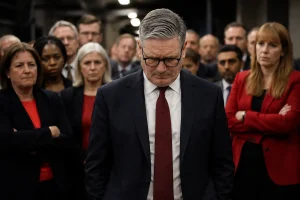
While public opinion created challenges, it was internal Labour pressure that ultimately proved decisive.
Following poor election performances and declining poll numbers, increasing numbers of Labour MPs openly questioned Starmer’s future. Senior figures reportedly expressed concerns privately, while others publicly called for a clear timetable for his departure.
Several developments intensified the pressure:
- Calls for resignation from MPs after election setbacks
- Growing cabinet dissatisfaction
- Concerns about Labour’s electoral future
- Leadership speculation surrounding Andy Burnham
- Internal disagreements over policy direction
The situation worsened as prominent figures distanced themselves from Starmer’s leadership. Cabinet tensions and disagreements over major policy decisions further weakened his authority.
By June 2026, it became increasingly clear that maintaining party unity would be difficult without a leadership change. Faced with declining support inside his own party, Starmer concluded that stepping aside was the most practical option.
The decision reflected not a single event but the cumulative impact of multiple political challenges over an extended period.
What Happens After Keir Starmer’s Resignation?
Following Starmer’s announcement, attention quickly shifted to the process of selecting Labour’s next leader and prime minister.
The Labour Leadership Contest Explained
Labour’s leadership rules require candidates to secure nominations from MPs before entering the contest. If multiple candidates qualify, party members and affiliated supporters may participate in a leadership vote.
However, if only one candidate secures sufficient support, that person can become leader without a full contest.
The timetable announced by Labour indicated that nominations would open in July, with the party aiming to complete the process before Parliament returned from its summer recess.
Who Could Replace Keir Starmer?
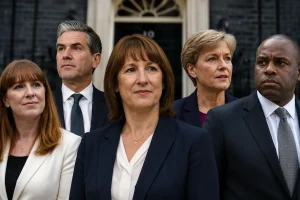
Andy Burnham immediately emerged as the leading contender following his Makerfield victory. Many MPs viewed him as the frontrunner due to his experience, popularity within the party, and strong electoral profile.
Support from influential Labour figures further strengthened his position.
Potential leadership considerations:
| Factor | Significance |
| Parliamentary support | Essential for nomination |
| Public popularity | Important for future elections |
| Government experience | Valuable for leadership credibility |
| Economic agenda | Key policy priority |
| Party unity | Critical for stability |
At the time of Starmer’s resignation, Burnham appeared to be in the strongest position to secure the leadership.
Why a General Election Is Not Automatically Required?
One of the most common questions following Keir Starmer’s resignation is whether the UK must hold a general election. The answer is no.
Under the UK’s parliamentary system, a prime minister holds office by commanding the confidence of the House of Commons rather than through a direct public vote.
Since Labour retains a substantial parliamentary majority, a new Labour leader can become prime minister without triggering a nationwide election.
Key Reasons:
- Labour still holds a parliamentary majority
- The House of Commons determines who forms the government
- Leadership changes can occur during a parliamentary term
As a result, the next general election is not legally required until the end of the current parliamentary term unless an earlier election is called.
What Could Keir Starmer’s Resignation Mean for Labour and the UK?
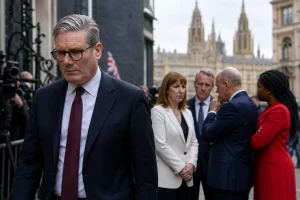
Starmer’s resignation creates both opportunities and risks for Labour. A new leader may provide an opportunity to reset public perceptions, improve party unity, and develop a refreshed policy agenda. Supporters of leadership change believe Labour can regain momentum before the next general election.
However, leadership transitions also carry uncertainty. Any new prime minister will inherit significant economic, political, and international challenges. Questions surrounding growth, public services, defence spending, and voter confidence will remain central to the government’s agenda.
“Leadership changes can create short-term political momentum, but long-term success depends on delivering measurable results that voters can see and feel.” — UK Public Policy Director
For the wider UK political landscape, Starmer’s departure represents another major change during a period of significant political volatility.
The coming months will determine whether Labour can rebuild confidence under new leadership or face continued electoral challenges.
Conclusion
Keir Starmer’s resignation followed growing political pressure, declining public support, disappointing election performances, and increasing concerns within the Labour Party about its future direction.
Combined with the emergence of strong alternative leadership figures, these factors weakened confidence in his ability to lead Labour into the next general election.
His departure marks a significant moment for the party, creating an opportunity for new leadership and potentially reshaping Labour’s strategy, priorities, and role within the future landscape of UK politics
Frequently Asked Questions
When did Keir Starmer announce his resignation?
Keir Starmer announced his resignation in June 2026, stating that he accepted the view of many Labour MPs that a new leader would be better positioned to lead the party into the next general election.
Who is expected to succeed Keir Starmer as Labour leader?
Andy Burnham is widely viewed as the leading candidate following his victory in the Makerfield by-election and growing support among Labour MPs.
Did Labour MPs vote to remove Keir Starmer?
No formal vote removed Starmer from office. However, increasing pressure and loss of support among Labour MPs played a major role in his decision to step down.
Does the UK need a general election when a prime minister resigns?
No. If the governing party retains a parliamentary majority, it can choose a new leader who becomes prime minister without a general election.
What was the Peter Mandelson controversy?
The controversy centred on Mandelson’s appointment as UK ambassador to the United States and subsequent scrutiny regarding security vetting and related allegations.
How low did Keir Starmer’s approval ratings fall?
Reports indicated that Starmer’s approval ratings reached historically low levels during his premiership, contributing significantly to concerns about Labour’s electoral prospects.
What role did Andy Burnham play in the leadership change?
Burnham’s return to Westminster and his successful by-election campaign provided Labour MPs with a credible alternative leader, accelerating discussions about the party’s future direction.