
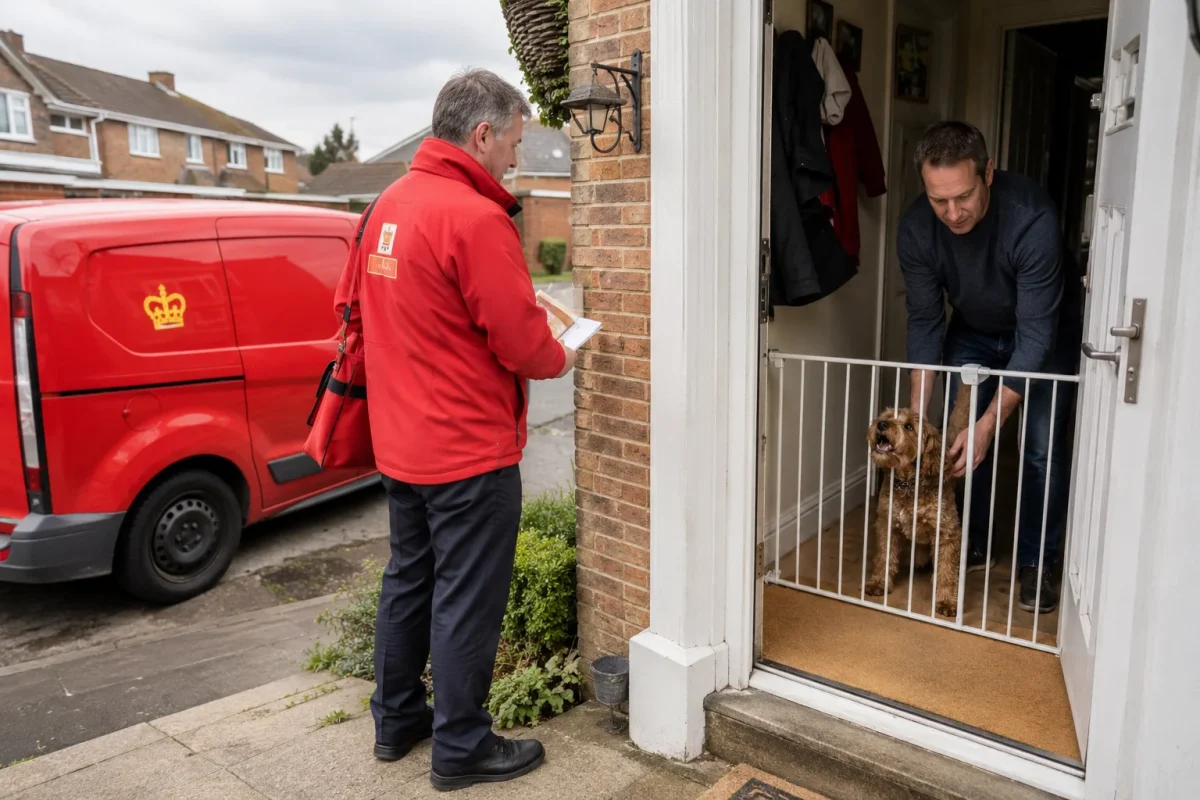
The Royal Mail Dog Warning highlights the growing risk that dogs can pose to postal workers and encourages owners to take simple steps to ensure safer deliveries.
According to Royal Mail, 2,197 dog attacks on postal workers were reported, averaging 42 incidents every week across the UK.
Many of these attacks occurred at front doors, in gardens, and through letterboxes, demonstrating that even well-loved family pets can react unpredictably when protecting their territory.
By understanding dog behaviour and implementing practical safety measures, homeowners can help protect postal workers, visitors, and their pets while avoiding potential legal consequences.
Key Takeaways:
- Royal Mail recorded 2,197 dog attacks on postal workers.
- Nearly half of attacks occurred at the front door.
- Letterbox injuries accounted for 18% of reported incidents.
- Dogs can become territorial and unpredictable during deliveries.
- Securing dogs before answering the door significantly reduces risk.
- External mailboxes and letterbox cages improve delivery safety.
- Responsible dog ownership protects postal workers, families, and pets.
- Blue Cross webinars provide free guidance on preventing incidents.
- Dog attacks can result in legal action against owners.
- Simple preventative measures can help create safer deliveries across the UK.
Why Has Royal Mail Issued a Dog Warning to UK Households?
The Royal Mail Dog Warning has been issued because dog attacks continue to be one of the most serious safety risks faced by postal workers across the UK.
Every day, postmen and postwomen visit homes, flats, rural properties, businesses, and shared access buildings. While most deliveries happen safely, a loose or startled dog can quickly turn an ordinary delivery into a dangerous incident.
Even the most lovable dog can react unexpectedly when it feels its home or family is being protected.
Dogs are naturally territorial. A postal worker approaching the gate, walking up the path, opening a porch, or posting letters through the letterbox may be seen by the dog as a stranger entering its space. This is why Royal Mail continues to ask dog owners to secure their pets before the postperson arrives.
Understanding the Growing Risk to Postal Workers
Royal Mail reported 2,197 dog attacks on postal workers, which means there were around 42 attacks every week across the UK. Some attacks caused serious wounds, long-term pain, emotional distress, and time away from work.
| Royal Mail Dog Attack Data | Reported Figure |
| Dog attacks on postal workers | 2,197 |
| Average attacks per week | 42 |
| Significant injuries recorded | 74 |
| Days of absence caused by dog attacks | 2,700 |
| Longest absence after an attack | 108 days |
These figures show that dog attacks are not rare, isolated events. They affect postal workers in towns, cities, villages, and rural areas. The warning is not aimed at blaming dogs. It is about encouraging owners to take small, practical steps that reduce danger.
How Dogs React to Delivery Visits?
A dog may bark, jump, scratch, growl, chase, or bite when it hears a letterbox, knock, gate, or doorbell. Some dogs react because they are nervous. Others react because they are excited or protective.
The dog may think it is doing its job by warning the household about a stranger.
The problem is that postal workers often arrive at the same property regularly. Over time, a dog may learn to associate the sound of delivery with excitement or stress. If the dog is free to reach the front door, letterbox, gate, garden, or driveway, the risk increases.
The Impact of Dog Attacks on Posties and Families
A dog attack can affect more than the injured worker. It can lead to police involvement, legal action, disrupted deliveries, and distress for the dog owner. It may also place the dog at risk if authorities decide action is needed.
| Who Is Affected? | Possible Impact |
| Postal worker | Injury, trauma, time off work |
| Dog owner | Legal action, stress, compensation claims |
| Dog | Behaviour concerns, restrictions, possible enforcement action |
| Household | Delivery changes, worry, inconvenience |
| Community | Reduced trust and safety around deliveries |
The Royal Mail Dog Warning asks households to prevent these outcomes by making the delivery area safer.
What Do the Latest Royal Mail Dog Attack Statistics Reveal?
Royal Mail’s latest dog awareness report shows that attacks rose by 2% compared with the previous reporting period.
Although serious and significant injuries reduced from 82 to 74, the overall number remains high.
Key Findings from the 2025 Dog Awareness Report
The figures show that many attacks happen in familiar places where householders may assume the dog is under control.
The front door remains the most common location, followed by gardens, drives, yards, and letterboxes.
| Location of Attack | Number of Attacks | Share of Total |
| Front door | 1,005 | 46% |
| Garden, drive or yard | 606 | 28% |
| Street or road | 183 | 8% |
| Through the letterbox | 403 | 18% |
This data makes one point very clear. Many attacks happen at the exact moment when the homeowner opens the door, receives a parcel, signs for an item, or allows the dog access to the hallway.
Most risks appear in the ordinary moments people do not think twice about.
Areas with the Highest Number of Reported Incidents
Royal Mail also identified the postcode areas with the highest number of dog attacks on postal workers.
| Rank | Postcode Area | Location | Reported Attacks |
| 1 | S | Sheffield | 66 |
| 2 | PO | Portsmouth | 60 |
| 3 | TN | Kent, Sussex and Surrey | 56 |
| 4 | GU | Guildford | 54 |
| 5 | NG | Nottingham | 49 |
| 6 | CM | Chelmsford | 47 |
| 6 | BN | Brighton | 47 |
| 7 | BT | Belfast | 45 |
| 7 | NE | Newcastle | 45 |
| 8 | SN | Swindon | 44 |
| 9 | DN | Doncaster | 42 |
| 10 | ST | Staffordshire | 40 |
The Sheffield postcode area recorded the highest number, with 66 attacks. Portsmouth followed with 60, while the TN postcode area recorded 56. These figures show that the issue affects many parts of the UK, not only one region.
Where Do Most Dog Attacks Occur?
The front door is the highest-risk location because it brings the dog, owner, and postal worker into close contact.
A dog standing behind the owner can slip through the gap as soon as the door opens. Children answering the door can also struggle to control a dog, especially if it is excited.
Letterbox attacks are also a major concern. A postal worker’s fingers can be bitten when pushing letters through the door. This can happen even when the owner is not at home.
How Can Dog Owners Help Ensure Safer Mail Deliveries?
Dog owners can help by creating a simple routine around delivery times. The safest approach is to move the dog away from the front door before the postal worker arrives.
Securing Dogs Before the Post Arrives
The dog should be placed in a separate room, behind a secure internal gate, in a crate if crate-trained, or in a safe enclosed garden away from the delivery route. The dog should not have access to the front door, porch, gate, letterbox, or driveway.
| Safety Step | Why It Helps |
| Put the dog in another room | Prevents sudden door escapes |
| Close internal doors | Creates a barrier between dog and postie |
| Use a stair gate or pet gate | Adds controlled separation |
| Secure side gates | Stops dogs reaching the front path |
| Use an external mailbox | Reduces contact at the door |
| Keep children away from the door with the dog | Prevents dogs pushing past them |
Securing the dog before opening the door is one of the simplest ways to prevent an attack.
Managing Front Door Encounters Safely
Dog owners should never open the front door with the dog standing behind them. Even a small dog can push forward suddenly.
A larger dog can knock someone off balance or reach the postal worker before the owner reacts.
If a parcel requires a signature, the dog should be secured first. It is better to take a few extra seconds than to risk an incident.
If the dog is barking or excited, the owner should wait until the dog is calm and safely separated before speaking to the postal worker.
Preventing Garden and Driveway Incidents
Many attacks happen outside the front door. A dog loose in the garden, yard, or driveway may run towards the postal worker before the owner sees what is happening. Side gates and broken fences can also create hidden risks.
Dog owners should check whether the dog can move from the back garden to the front of the property. If the postal worker uses a path, shared entrance, or gate, that area should be dog-free during delivery times.
Why Are Letterbox Attacks a Serious Concern for Royal Mail Staff?
Letterbox attacks are a serious part of the Royal Mail Dog Warning because they can happen without the postal worker ever entering the property. The worker may simply be delivering letters when the dog bites through the opening.
Understanding Letterbox-Related Injuries
Royal Mail reported 403 letterbox-related injuries, which accounted for 18% of attacks on postal workers. These injuries can affect fingers, hands, and wrists. Some may require medical treatment, time off work, or long-term recovery.
The letterbox may look harmless from inside the home, but for a postie it can be one of the most dangerous points of contact.
Dogs that jump at the door, bite mail, or wait for letters can become conditioned to attack anything coming through the letterbox. Over time, this behaviour may become stronger.
Legal Responsibilities of Dog Owners
Royal Mail has highlighted that dog owners can be prosecuted if their dog injures a postal worker through the letterbox. Court rulings have clarified that postal workers are not trespassing when placing mail through a letterbox for delivery purposes.
This means owners should not assume they are free from responsibility because the dog remained inside the property. If the dog has access to the letterbox and causes injury, the owner may still face consequences.
Practical Letterbox Safety Solutions
A wire letter cage fitted inside the door can catch the mail and stop the dog reaching the postal worker’s fingers. An external mailbox at the edge of the property can be even safer because it removes the need for the worker to approach the door.
| Letterbox Safety Option | Best For | Main Benefit |
| Wire letter cage | Homes with door letterboxes | Protects fingers and catches mail |
| External wall-mounted mailbox | Houses with front paths | Keeps delivery away from the door |
| Parcel box | Frequent parcel deliveries | Reduces face-to-face contact |
| Door sign or dog warning card | Homes with reactive dogs | Alerts delivery workers before opening |
| Internal barrier near hallway | Dogs that rush to the door | Keeps dog away from the letterbox |
What Simple Steps Can Reduce the Risk of a Dog Attack?
The safest homes are those where the dog’s movement is managed before the delivery happens. Dog owners do not need complicated systems. They need a consistent routine.
A useful routine may include checking the usual delivery time, moving the dog away from the hallway, closing the door to the room, and only then answering the door or allowing mail to be posted.
Small habits repeated every day can stop a serious incident before it begins.
Useful steps include:
- Keep the dog in another room before deliveries.
- Never open the door while the dog is behind the person answering.
- Close side gates and garden access.
- Give the dog a toy, chew, or food puzzle during delivery times.
- Wait around 10 minutes after post arrives before letting the dog back into the hallway.
- Use a wire letter cage to protect hands and mail.
- Fit a secure external mailbox where needed.
- Do not let children answer the door when the dog is loose.
These actions are especially important for dogs that bark at the post, bite letters, jump at doors, guard the hallway, chase visitors, or become unsettled by doorbells.
How Does Responsible Dog Ownership Protect Everyone Involved?
Responsible dog ownership means understanding that a dog’s behaviour can change depending on the situation. A dog may be gentle with family members but anxious or defensive around visitors.
Understanding Territorial Behaviour
Dogs often see the home as a safe space. When a postal worker approaches regularly, the dog may believe it has successfully chased the person away each time the delivery ends. This can reinforce barking or lunging.
For example, the dog barks, the postal worker leaves, and the dog feels it has protected the home. Over time, the dog may become more confident in this behaviour.
Training Dogs Around Visitors and Deliveries
Training can help dogs respond more calmly to door sounds and visitors. Owners can reward quiet behaviour, teach dogs to go to a bed or mat, and practise calm door routines.
A dog that struggles with delivery visits may benefit from support from a qualified trainer or behaviourist. Royal Mail’s partnership with Blue Cross also gives owners access to practical advice through online webinars.
Creating a Safer Environment for Postal Workers
A safer environment includes physical controls and better habits. The dog should be unable to reach delivery workers, even by accident. Gates should close properly, doors should be secure, and the letterbox should not allow the dog direct access to hands.
The safest delivery is one where the dog and postie never need to meet.
What Can Dog Owners Learn from Real-Life Postal Worker Experiences?
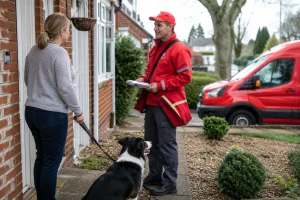
Real-life stories show why this issue matters. Royal Mail shared the experience of a Farnborough postwoman who was attacked by a dog while delivering mail to a property she had visited many times before.
The Farnborough Dog Attack Case Study
The postwoman was aware that one of the dogs at the property had an aggressive temperament. On the day of the attack, the front door was open while the customer worked on a car. One dog appeared first, then both dogs came to the door. One charged and bit her several times above the knee.
The injury was severe. She needed hospital treatment, antibiotics, and time away from work. She also developed an infection and was off sick for three weeks.
Physical and Emotional Consequences of Dog Attacks
The physical injury was only part of the harm. The postwoman later described the emotional impact as worse than the wound itself. After the attack, she found herself freezing when seeing or hearing dogs.
This shows that dog attacks can leave lasting fear. Postal workers may continue doing their rounds, but the memory of an attack can affect how safe they feel every day.
Lessons for Homeowners and Pet Owners
The most important lesson is that owners should not take chances. A familiar delivery route does not remove the risk. A dog that has seen the postal worker before can still attack if the situation changes.
The owner in the case later put a parcel and mailbox at the bottom of the road, preventing posties from approaching the house. This is a practical example of how delivery arrangements can be changed after a serious incident, although ideally such measures should be taken before harm occurs.
How Is Royal Mail Working to Reduce Dog Attacks?
Royal Mail is working to reduce dog attacks through awareness campaigns, safety training, public guidance, partnerships, and legal action where necessary.
Dog Awareness Week Initiatives
Royal Mail’s Dog Awareness Week encourages households to think carefully about delivery safety. The campaign reminds dog owners that attacks are often preventable when pets are secured before postal workers arrive.
The 2025 campaign ran from 30 June to 6 July and focused on responsible dog ownership. It highlighted the scale of attacks and the need for cooperation from the public.
Partnerships with Blue Cross
Royal Mail works with Blue Cross to offer free online webinars for dog owners. These webinars are designed for households where concerns have been raised about a dog’s behaviour but no attack has yet happened.
The sessions cover canine behaviour, practical management, consequences of incidents, and ways to prevent future risks.
Staff Safety Training and Public Awareness Campaigns
Royal Mail also invests in staff safety training. Postal workers need to recognise warning signs, avoid unsafe situations, and report risks. However, the company makes clear that public cooperation is essential.
Postal worker safety cannot depend on training alone. It also depends on dog owners securing their pets.
How Can the Blue Cross Webinar Help Dog Owners Improve Safety?
The Blue Cross webinar provides clear guidance for dog owners who want to manage their pets more safely around delivery workers.
What the Webinar Covers?
The webinar explains why dogs may react to postal workers, how owners can reduce triggers, and what practical steps can be used at home. It also helps owners understand the consequences if a dog injures someone.
| Webinar Topic | How It Helps Dog Owners |
| Dog behaviour around visitors | Helps owners understand reactions |
| Delivery-related triggers | Identifies sounds and situations that cause stress |
| Safe management steps | Gives practical prevention methods |
| Legal and personal consequences | Shows why prevention matters |
| Further support | Guides owners towards extra help |
Benefits for Dog Owners
The webinar helps owners feel more confident. Instead of waiting for an incident, they can act early. This is especially helpful for owners whose dogs bark at the door, bite post, rush visitors, or struggle with unfamiliar people.
Positive Results from Participant Feedback
Between July 2024 and April 2025, the webinar attracted 402 participants across five sessions. Royal Mail reported that 100% of participants felt more confident managing their dogs around postal workers after attending.
This shows that education can make a real difference. Many owners want to do the right thing but need simple, practical advice.
What Are the Legal Consequences of Dog Attacks on Postal Workers?
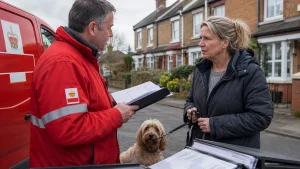
Dog attacks on postal workers can lead to legal consequences for owners or those responsible for the dog at the time.
Dangerous Dogs Act and Postal Worker Protection
Changes to the Dangerous Dogs Act in England and Wales extended protection in situations where attacks happen on private property. This matters because many postal worker attacks happen at homes, gardens, driveways, and doorways.
Royal Mail Prosecutions and Court Cases
Royal Mail has carried out more than 30 private prosecutions against dog owners. It has also taken High Court action to clarify the law around letterbox injuries.
The courts confirmed that a postal worker placing mail through a letterbox is not trespassing when doing so for delivery purposes. This means owners cannot rely on that argument if a dog bites a worker’s fingers through the door.
Responsibilities of Property Owners
Property owners and dog owners should make sure their dog cannot reach postal workers. This includes controlling the dog inside the home, outside the home, and at the letterbox.
| Risk Area | Owner Responsibility |
| Front door | Secure dog before opening |
| Letterbox | Prevent dog access to posted mail |
| Garden or drive | Keep dog away from delivery route |
| Side gate | Make sure it is closed and secure |
| Children answering door | Ensure dog is controlled first |
| Parcel delivery | Move dog before signing or opening |
Legal action is serious, but the better outcome is prevention before anyone is hurt.
What Are the Most Important Royal Mail Safety Tips for Dog Owners?
The most important Royal Mail safety tips are based on prevention. Owners should not wait until a dog has shown aggressive behaviour. Any dog can become unpredictable in the wrong situation.
Key tips include securing the dog before deliveries, keeping the hallway clear, fitting a safe letterbox solution, and making sure the dog cannot access the front garden or driveway when post is being delivered.
A calm delivery routine protects everyone. The dog feels less pressure to react, the owner avoids panic at the door, and the postal worker can complete the delivery safely.
How Can Communities Work Together to Prevent Future Dog Attacks?
Communities can help by treating dog safety as a shared responsibility. Dog owners can secure pets, postal workers can report risks, neighbours can share awareness, and families can teach children safe door habits.
For households with dogs, the message is simple. The post person should never have to guess whether a dog is secure. Safe systems should already be in place.
The Royal Mail Dog Warning is not just about postal routes. It is about making everyday deliveries safer for people, pets, and communities across the UK.
Conclusion
The Royal Mail Dog Warning serves as an important reminder that preventing dog attacks starts with responsible ownership and simple daily precautions.
By securing dogs before deliveries, managing access to doors and gardens, and using safer letterbox solutions, homeowners can significantly reduce risks to postal workers.
These measures not only protect delivery staff from injury but also safeguard dogs and their owners from emotional and legal consequences. A few proactive steps can help ensure safer, smoother deliveries for everyone involved.
FAQs
How common are dog attacks on Royal Mail workers in the UK?
Royal Mail reported 2,197 dog attacks on postal workers in 2024/25, which equals around 42 attacks every week across the UK.
Can a dog owner be prosecuted if their dog attacks a postal worker?
Yes. Dog owners can face legal action if their dog attacks a postal worker, including incidents that happen at the door, in the garden, or through the letterbox.
Why do dogs often react aggressively to delivery workers?
Dogs can be territorial and may see postal workers as strangers approaching their home. This can lead to barking, lunging, chasing, or biting.
What should homeowners do before opening the door to receive mail?
Homeowners should place their dog in another room or secure area before opening the door to a postal worker or delivery person.
Are letterbox injuries covered by UK law?
Yes. Royal Mail has highlighted court rulings confirming that dog owners may be liable if a dog injures a postal worker through the letterbox.
How can dog training help reduce delivery-related incidents?
Training can help dogs become calmer around visitors, doorbells, knocks, and letterbox sounds. It can also help owners manage territorial behaviour.
What is Royal Mail’s Dog Awareness Week?
Royal Mail’s Dog Awareness Week is an annual campaign that encourages responsible dog ownership and raises awareness of dog attacks on postal workers.
Does installing an external mailbox improve delivery safety?
Yes. An external mailbox can stop postal workers from needing to approach the front door or put their fingers through a letterbox.