
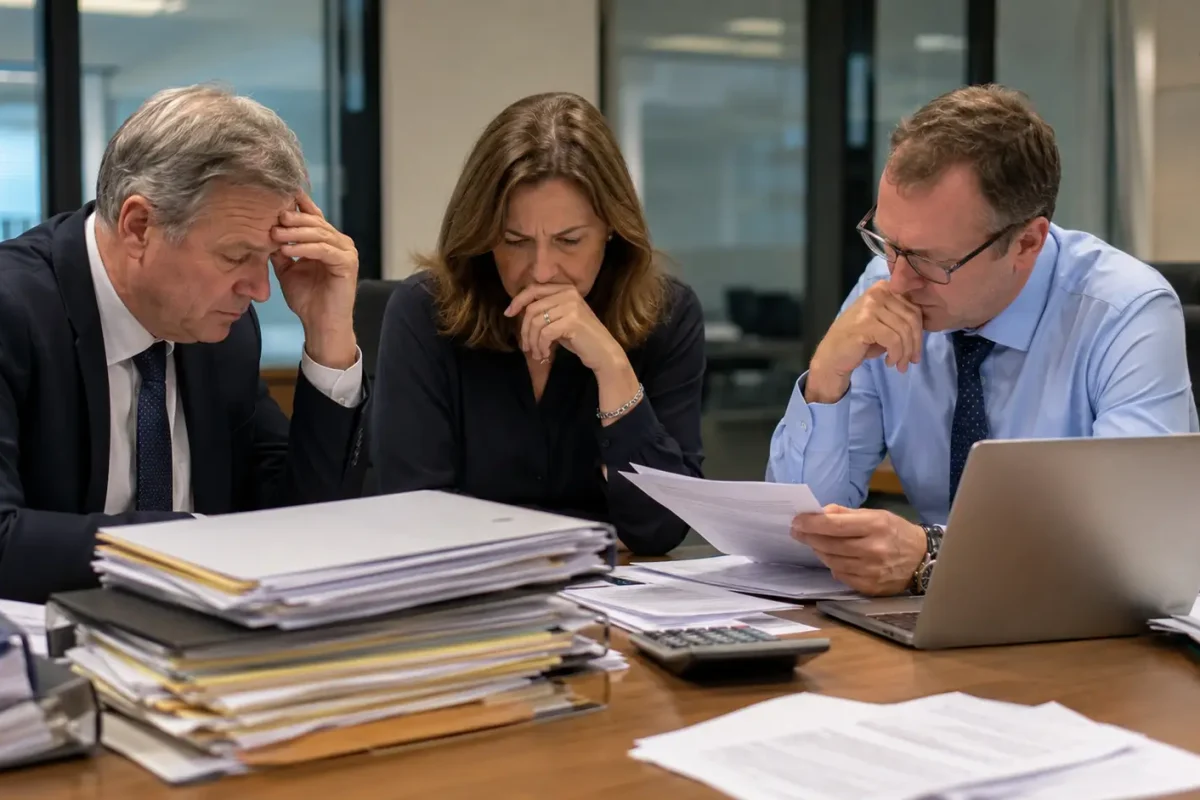
Capita civil service pension failures have become a major UK public-service and business issue because delays in administering the Civil Service Pension Scheme are now affecting scheme members, bereaved families, government confidence and Capita’s financial outlook.
The company has warned of a major profit and cash-flow impact, while ministers are increasing pressure over backlogs, missed standards and poor service delivery.
Key takeaways:
- Capita expects the Civil Service Pension Scheme problems to affect 2026 adjusted operating profit by £25m to £40m.
- The expected free cash flow impact is between £35m and £50m.
- The UK government has withheld £9.9m from Capita over contract performance concerns.
- Retirement quotations, bereavement cases and delayed pension processing are central issues.
- The problem is about administration failures, not a confirmed loss of pension entitlement.
- Further audit work, enforcement action and possible contract changes remain under discussion.
Last Checked: 10 July 2026
What Are The Capita Civil Service Pension Failures?

The Capita civil service pension failures refer to delays, backlogs and service problems connected with Capita’s administration of the Civil Service Pension Scheme.
The issue has attracted national attention because the scheme serves current and former civil servants, including people relying on accurate pension quotations, timely payments and bereavement support.
Pension administration is not just routine paperwork. It affects retirement decisions, household income, dependants and confidence in public services.
When calculations, quotations or payments are delayed, the result can be financial uncertainty for people who may already be retired or preparing to leave work.
Why the Issue Has Become Urgent?
The issue has become urgent because the service problems are now linked to both human impact and corporate financial pressure. Capita has acknowledged that the service has not been good enough, particularly for members waiting on bereavement, retirement and quotation cases.
The company’s latest contract update says the Civil Service Pension Scheme issues and wider Pension Solutions impact are expected to reduce 2026 adjusted operating profit by £25m to £40m, with a £35m to £50m free cash flow impact.
What the Failures Involve?
The reported failures mainly centre on delays, weak case handling and poor communication across important pension processes. For many members, the issue is not only that cases are taking longer than expected, but that they may not know when their pension matter will be resolved.
The main concerns include:
- Delayed retirement quotations for members planning when to leave work
- Slow bereavement case handling for families waiting for support after a death
- Missed service standards and unresolved case backlogs
- Unclear updates, which can increase stress and uncertainty
In practical terms, these failures can affect someone deciding whether they can afford to retire, a bereaved family waiting for pension-related support, or a former civil servant expecting a payment that should already have been processed.
This is why the problem has become both a service issue and a public accountability concern.
Why Has Capita Warned Of A £40m Profit Hit?
Capita’s warning matters because it shows that the pension failures have moved beyond a service complaint and become a material financial issue for the company. A £25m to £40m adjusted operating profit impact is significant for investors, public-sector clients and the wider outsourcing market.
The expected cash-flow impact is also important. Free cash flow affects how much flexibility a business has after costs, investment and operational pressures. A £35m to £50m hit can influence investor confidence and management priorities.
What May Be Driving the Cost?
The cost appears to be linked to the extra work needed to stabilise the Civil Service Pension Scheme service and reduce delays. Large pension schemes can be expensive to fix because each case may involve data checks, employer input, member contact and payment calculations.
Key cost pressures may include:
- Additional staffing to process delayed and incoming cases.
- Remediation work to correct problems and improve service levels.
- Technology and system improvements to support recovery.
- The financial impact of missed performance standards.
Where backlogs build up, recovery is rarely straightforward. New cases continue to arrive while older cases still need attention, meaning Capita must manage historical delays and current demand at the same time.
Why the Wider Business Still Matters?
Capita has also said the wider group continues to perform, so this should not be treated as a claim that every part of the business is failing. However, the Civil Service Pension Scheme contract is highly sensitive because it involves public money, former public servants and government accountability.
That is why the reputational risk is so high. A private contractor may recover financially over time, but trust in pension administration can take much longer to rebuild.
What Has The UK Government Done About Capita?

The UK government has taken a tougher public position because the Civil Service Pension Scheme is an essential service. Ministers have said performance has fallen below acceptable standards and have used commercial pressure to push for improvement.
A government recovery plan has set out ongoing work on retirement quotations, pension payments, pension arrears, bereavements, contact-centre performance and older sensitive cases.
Why Withholding Money Matters?
The government has withheld £9.9m from Capita, which signals that ministers believe contractual standards have not been met. It is a financial consequence, but it does not automatically mean the Civil Service Pension Scheme contract will be terminated.
This matters because:
- It shows the government is willing to use commercial levers.
- It increases pressure on Capita to improve service levels.
- It helps demonstrate accountability for public contracts.
- It keeps focus on reducing delays and protecting scheme members.
For taxpayers, withheld payments show that supplier performance is being challenged. For scheme members, the key issue is whether enforcement leads to faster case handling, clearer communication and less harm from pension delays.
Enforcement and Oversight
The Cabinet Office has also been linked with further oversight and enforcement steps. These include independent audit work, system checks, a remedial adviser and possible escalation if performance does not improve.
Civil Service World reported that the Cabinet Office’s enforcement plan could examine system integrity, data quality, compliance and longer-term options, including whether the scheme should be brought in-house.
Who Has Been Affected By The Pension Delays?
The people most affected are Civil Service Pension Scheme members and families waiting for pension-related decisions, quotations or payments. This may include newly retired civil servants, people approaching retirement, dependants and bereaved families.
The problem is especially serious because pensions are often planned income. A delay can affect bills, housing costs, care arrangements, tax planning and day-to-day financial stability.
Retired Civil Servants
A retired civil servant may depend on a pension payment as part of normal monthly income. If a payment or quotation is delayed, it can create uncertainty about whether planned retirement is affordable.
Even where a member’s pension entitlement remains in place, the delay itself can still cause hardship. A pension that arrives late may still leave someone struggling in the weeks or months before the issue is resolved.
Bereaved Families
Bereavement cases are particularly sensitive. Families may be dealing with grief, funeral costs, changes in household income and urgent paperwork. Delays in pension-related bereavement support can make an already difficult situation more stressful.
This is one reason why the failures have drawn strong concern. They are not only administrative errors. They affect people at vulnerable moments.
MPs, Unions and Caseworkers
When members cannot resolve issues through normal service channels, they may contact MPs, unions or caseworkers. That increases political pressure and shows that the problem has moved beyond ordinary customer-service frustration.
A pension service that requires repeated outside intervention is not working as it should. The government and Capita are therefore under pressure to show measurable improvement, not just issue apologies.
Is The Civil Service Pension Itself At Risk?

There is no confirmed evidence that the Civil Service Pension Scheme itself has become financially unsafe because of Capita’s administration failures. The main reported issue is administration performance, including delays, backlogs and poor case handling.
This distinction matters. Pension administration failure can be serious without meaning that members have lost their pension rights.
Administration Failure vs Pension Entitlement
Administration is about how cases are processed, calculated, communicated and paid. Pension entitlement is about a member’s rights under the scheme rules.
The current concern is focused on administration. That still matters because poor administration can delay access to money and information people rely on.
Why Readers Should Avoid Panic?
Readers should avoid assuming that delayed processing means their pension has disappeared. They should also avoid relying on social media claims that are not backed by official updates.
The safer approach is to check official scheme communications, keep written records and ask for support if a case has caused hardship or remains unresolved.
Could Capita Lose The Civil Service Pension Contract?
Capita could face further consequences if performance does not improve, but losing the contract is not currently a confirmed outcome. Government action can include withheld payments, audit work, remedial advisers, legal options, step-in rights or contract restructuring.
Bringing the scheme in-house has also been discussed. However, immediate transfer can be difficult because pension administration is complex and any sudden change could risk further disruption for members.
Why Immediate Change May Be Difficult?
A pension scheme relies on data, systems, trained staff, employer inputs and payment processes. Moving administration from one provider to another is not like switching a small supplier.
If a contract is changed too quickly, there is a risk that members waiting for urgent cases could face more disruption. That is why ministers must balance accountability with service continuity.
What Could Happen Next?
The most likely next steps are continued pressure on Capita, closer government oversight, backlog monitoring and further updates on whether service levels are improving.
If performance does not recover, stronger action may follow. However, any responsible article should avoid claiming that termination or insourcing is certain before official confirmation.
Timeline Of The Capita Civil Service Pension Problems

The timeline shows how an operational issue became a wider business and government accountability story.
| Stage | What happened | Why it matters |
| Contract transition | Capita took on Civil Service Pension Scheme administration | Large pension transfers carry data and service risks |
| Backlogs emerged | Members experienced delays and unresolved cases | Retirement and bereavement cases became key concerns |
| Government pressure increased | Ministers criticised performance and withheld money | The issue became a public-contract accountability matter |
| Recovery work began | Taskforce and support measures were used | Extra help was needed to restore service levels |
| Profit warning followed | Capita warned of a £25m to £40m operating profit impact | The crisis became financially material for the company |
What Should Affected Scheme Members Do Next?
Affected members should rely on official communications and avoid acting on rumours. They should keep copies of letters, emails, case references and dates of calls.
Where a case is delayed, the member or family should ask for written confirmation of the current status and any expected next step. If financial hardship is involved, they should make that clear when contacting the relevant support channel.
Practical Steps for Members
Members may want to:
- Check official Civil Service Pension Scheme updates.
- Keep a written timeline of contact attempts.
- Save copies of all correspondence.
- Ask for a case reference where possible.
- Escalate through official channels if the delay is causing hardship.
These steps do not guarantee faster resolution, but they can make it easier to explain the case clearly and prove what has happened.
When to Ask for Extra Help?
If normal channels do not resolve the issue, members may consider contacting their employer, union representative or MP. This should be done with clear evidence, including dates, case references and details of the impact.
The aim should be practical resolution, not simply complaint escalation.
Why This Matters For UK Public-Sector Outsourcing?

The Capita pension failures raise wider questions about how essential public services are outsourced, monitored and fixed when performance falls short.
Public-sector outsourcing can work only when contracts are realistic, transitions are well managed and service quality is closely monitored. Pension administration needs particular care because errors and delays can affect people’s income and wellbeing.
Lessons for Future Contracts
The case highlights several lessons for future government contracts. Data transfer must be tested properly. Service standards must be realistic and enforceable. Contingency plans must be ready before problems become severe.
It also shows that technology alone is not enough. Automation and AI may help improve service delivery, but they cannot replace accurate data, trained people, clear accountability and proper communication with members.
Conclusion
The Capita civil service pension failures have turned into a major UK outsourcing and pension-administration crisis. The issue is now affecting Capita’s financial outlook, government confidence and the lives of people waiting for important pension decisions.
The next stage will depend on whether backlogs are cleared, whether members receive better communication and whether ministers believe the contract can be restored to an acceptable standard.
Until then, the story remains a serious test of public-service delivery, supplier accountability and trust in outsourced pension administration.
FAQs
What are the Capita civil service pension failures?
They are administration problems linked to Capita’s handling of the Civil Service Pension Scheme. The failures include delays, backlogs, missed service standards and concerns about retirement quotation and bereavement case processing.
How much could the pension failures cost Capita?
Capita expects a £25m to £40m impact on 2026 adjusted operating profit and a £35m to £50m impact on free cash flow. These figures show that the issue is financially significant for the company.
Has the UK government withheld money from Capita?
Yes. The UK government has withheld £9.9m from Capita in connection with contract performance concerns. This is a sign of increased pressure, but it does not automatically mean the contract will end.
Are Civil Service pensions still safe?
There is no confirmed evidence that the pension scheme itself is financially unsafe because of these administration failures. The main issue is delayed processing and service performance, not confirmed loss of pension entitlement.
Why are bereavement cases important in this story?
Bereavement cases are important because they affect families after a death. Delays can cause financial uncertainty and emotional stress at a time when people need sensitive and reliable support.
Could Capita lose the Civil Service Pension Scheme contract?
It is possible that further action could be considered if performance does not improve, but contract termination has not been confirmed. Options may include stronger oversight, legal escalation, step-in remedies or longer-term structural change.
Could the scheme be brought in-house?
Insourcing has been discussed as a longer-term option. However, bringing the service in-house immediately could be complex because pension administration depends on systems, data, staff and continuity of payments.
What should affected members do now?
Affected members should check official updates, keep written records, save correspondence and ask for case references. If a delay is causing hardship, they should explain the impact clearly through official support channels.
Why does this matter to UK taxpayers?
It matters because public money is used to fund and manage essential services. When a contractor fails to deliver, taxpayers need confidence that the government is enforcing standards and protecting affected people.
Editorial Note
This article is intended to provide clear, informational coverage of the Capita Civil Service Pension Scheme failures for UK readers. It explains the business, pension-administration and public-service accountability issues without offering legal, financial or pension advice.
The content has been written to support reader understanding, AI Overview accuracy, answer engine visibility and responsible semantic SEO. It avoids unsupported claims, keyword stuffing and speculation presented as fact.
How We Checked?
This article was checked against current company updates, government recovery information and reputable public-sector reporting available as of 10 July 2026.
The focus was on confirmed figures, official statements, service-recovery details and clearly attributed reporting about enforcement options.
Where outcomes remain uncertain, such as contract termination or insourcing, the article uses cautious language and separates confirmed facts from possible future developments.