
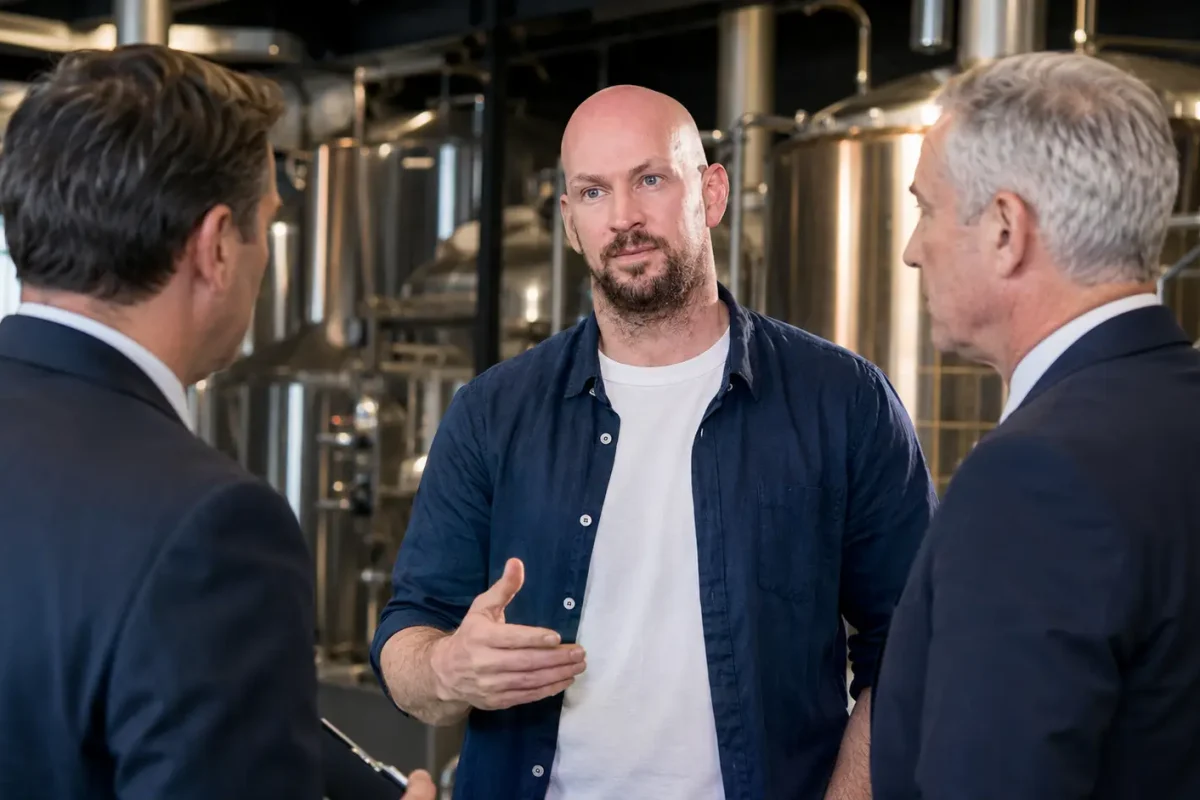
James Watt has launched a bid through his Second Best venture to buy back parts of BrewDog, but Tilray Brands, which controls the business, says it is “not for sale”.
Watt claims an offer was submitted on 15 July 2026, while Tilray CEO Irwin Simon says he has not received or discussed it. No negotiations or agreement have been confirmed.
The bid remains an unsolicited proposal, with its success depending on funding and Tilray’s willingness to consider a sale.
Key takeaways:
- Watt says Second Best has submitted an offer to buy BrewDog assets.
- Tilray says BrewDog is not for sale.
- The proposal reportedly exceeds £30 million when new investment is included.
- Watt appears to be targeting BrewDog’s intellectual property and Ellon brewery.
- Former Equity Punks and employees have been promised conditional ownership.
- No formal negotiations or agreed transaction have been confirmed.
The immediate story is therefore a disagreement between a founder seeking a comeback and an owner that says it has no intention of selling.
What Is the Latest Position on the BrewDog James Watt Takeover Bid?

The proposed takeover has attracted attention because James Watt and BrewDog have presented different public positions on the bid, leaving uncertainty over its current status.
Watt announced that Second Best had made an offer directly to Tilray. He stated:
“We have formally submitted our offer to buy BrewDog.”
Simon responded that BrewDog was an integral part of Tilray and publicly rejected the suggestion that it was available to buy. The two accounts differ over whether an offer has been formally received or recognised.
What is confirmed, claimed and unknown:
- Confirmed: Watt has publicly announced a new takeover attempt.
- Confirmed: Tilray controls BrewDog’s brand and core operating assets.
- Watt’s claim: A formal offer has been sent to Tilray.
- Tilray’s position: BrewDog is not for sale.
- Unclear: Whether Tilray has formally reviewed written terms.
- Unconfirmed: The exact price, funding structure and complete list of assets.
- Not announced: Due diligence, negotiations or a binding agreement.
Until Tilray confirms receipt or agrees to engage, the proposal remains at an early stage rather than becoming an active sale process.
What Exactly Is James Watt Offering to Buy from Tilray?
The proposal appears to focus on strategically important BrewDog assets, including its intellectual property and Ellon brewery in Aberdeenshire. Complete transaction documents have not been published, so it is not yet clear whether Watt wants every BrewDog operation or a narrower group of assets.
The official acquisition transaction record states that Tilray paid £33 million for BrewDog’s worldwide intellectual property, UK brewing operations and 11 pubs in the UK and Ireland. The assets included locations such as DogTap Ellon, Waterloo, Manchester and Edinburgh DogHouse.
Reported terms and missing details:
| Transaction issue | Current information | What remains unknown |
| Bid vehicle | Second Best | Full investor and lender structure |
| Reported value | More than £30 million, including investment | Purchase price versus operating capital |
| Target assets | Intellectual property and Ellon brewery | Exact pubs, territories and companies |
| Equity Punks | Replacement ownership proposed | Share class, allocation and restrictions |
| Employees | Ownership stake proposed | Eligibility, percentage and vesting |
| Tilray response | BrewDog is not for sale | Whether the terms will be formally assessed |
This distinction matters because purchasing selected assets would not automatically restore BrewDog plc, revive the original shares or transfer every former liability.
Why Has Tilray Said BrewDog Is “Not for Sale”?
Tilray acquired BrewDog as part of a wider international beverage strategy. The brand provides brewing capacity, recognised beer products, hospitality venues and distribution opportunities in several markets.
Tilray’s Strategy for Retaining Brewdog
A later worldwide ownership confirmation statement says Tilray owns BrewDog’s brand and intellectual property worldwide. It also outlines plans to integrate BrewDog’s US brewery, pubs and hotel into its wider beverage platform.
Tilray has presented BrewDog as a long-term growth asset rather than a short-term investment. Its original acquisition announcement said the company intended to return the operations to profitable growth through wider distribution, operational efficiencies and investment in the brand.
Has Tilray Formally Rejected the Bid?
Simon’s direct response was: “BrewDog’s not for sale.” He also said he had no communication with Watt about the approach.
That statement is a clear commercial rejection of the sale idea. However, it does not confirm whether Tilray’s board or advisers have received and formally assessed detailed written terms.
Tilray could continue refusing discussions, consider a substantially higher proposal or examine a partial asset transaction. There is currently no evidence that it has appointed sale advisers, opened due diligence or invited Watt to negotiate.
How Did BrewDog Reach a £33 Million Administration Sale?
BrewDog was founded by Watt and Martin Dickie in 2007. It expanded through craft beer products, international breweries, bars and its Equity for Punks crowdfunding model.
The company later experienced sustained losses, operating pressure and reputational controversies. Watt stepped down as chief executive in May 2024 after 17 years, initially moving into a non-executive role.
The formal company insolvency record confirms that BrewDog plc entered administration on 2 March 2026. Tilray completed its acquisition of selected assets on the same date.
The ownership timeline:
- 2007: Watt and Dickie establish BrewDog.
- 2009–2021: Equity for Punks campaigns attract retail investors.
- 2017: A private-equity transaction values the company at a much higher level.
- May 2024: Watt steps down as chief executive.
- 2 March 2026: BrewDog plc enters administration.
- 2 March 2026: Tilray pays £33 million for selected assets.
- 15 July 2026: Watt announces another buyback proposal.
The £33 million figure should not be described as money personally paid to Watt for the entire company. It was the consideration for selected assets acquired through an administration process.
A distressed asset sale is also not directly comparable with BrewDog’s earlier headline valuations. Those valuations reflected different expectations about growth, debt, profitability and future investor returns.
What Would Watt’s Proposal Mean for Equity Punks and BrewDog Employees?
Watt says registered former Equity Punks and BrewDog employees would receive ownership if his bid succeeds. This forms a central part of his attempt to position the proposal as a community and employee-led recovery.
Equity Punks and Replacement Ownership
BrewDog’s crowdfunding campaigns reportedly raised more than £75 million from retail investors between 2009 and 2021. Those investors received shares and benefits such as discounts, but their existing equity produced no recovery from the administration asset sale.
Watt says around 43,000 former Equity Punks have registered with Second Best and would receive an ownership stake if he regains BrewDog. The final eligibility rules and allocation method have not been published.
Would New Shares Repay Previous Losses?
Replacement equity would not be the same as returning an investor’s original cash. Its value would depend on the new company’s finances, debts, shareholder rights and future performance.
Investors would need to know the share class, voting rights, dilution terms, dividend policy and whether the shares could be sold. Until formal documents exist, no value or financial recovery can be guaranteed.
Employee Ownership and Pay Commitments
Watt has also proposed giving BrewDog employees a stake and restoring the real living wage. These commitments may strengthen the public appeal of the bid, but they remain conditional on Watt completing the acquisition.
No details have been released about the percentage allocated to employees, eligibility requirements or whether shares would vest over time. Current employees should therefore distinguish proposed future benefits from their existing employment rights.
How Strong Is James Watt’s Financial and Strategic Case for Buying BrewDog Back?
James Watt has extensive knowledge of BrewDog, its products and its customer base, giving him a strong strategic connection to the brand. However, this does not oblige Tilray to consider or accept his offer.
The reported proposal exceeds £30 million, although it remains unclear how much would be paid to Tilray and how much would support BrewDog’s future operations.
Watt previously attempted to acquire BrewDog assets, but Tilray’s £33 million bid was ultimately accepted. While reports state that Watt received around £50 million during BrewDog’s 2017 private-equity deal, this does not confirm his current funding capacity.
His proposal is based on founder experience and stakeholder ownership, whereas Tilray’s position is supported by legal ownership and its long-term business strategy.
Could the BrewDog Takeover Bid Succeed, and What Are the Realistic Outcomes?
The bid cannot progress without Tilray’s participation. Watt may announce proposals publicly, but only the asset owner can agree to provide due-diligence access, negotiate terms and transfer control.
Four Realistic Outcomes
Tilray could reject all further approaches and continue rebuilding BrewDog. Watt could return with a higher or more clearly financed offer. The parties could discuss selected UK assets rather than the worldwide business. Alternatively, Watt could develop Second Best as an independent competitor.
Tilray reportedly invested further funds after completing the acquisition, strengthening its argument that BrewDog is part of a longer-term turnaround rather than an asset prepared for resale.
What Would Prove Genuine Progress?
A takeover typically progresses through several recognised stages before ownership changes hands. Each stage provides stronger evidence that a transaction is moving forward.
Takeover evidence ladder
| Stage | Evidence required |
| Public approach | Buyer announces an intention to make an offer |
| Indicative proposal | Price and transaction structure are submitted |
| Confirmed receipt | Owner acknowledges receiving the proposal |
| Negotiations | Both parties appoint advisers and discuss terms |
| Due diligence | Financial and legal information is examined |
| Binding agreement | A signed purchase contract is announced |
| Completion | Payment, approvals and control transfer occur |
The current position appears to sit between a public approach and a claimed indicative proposal. There is no public evidence of acknowledged negotiations or due diligence.
What Should Investors, Employees and Customers Watch for Next?
The next meaningful change must come through a formal corporate development rather than another social media post or unverified report.
Developments that would matter:
- Tilray confirming receipt of Watt’s written proposal.
- Disclosure of Second Best’s financial backers.
- Separation of the purchase price from future investment.
- Identification of the assets and countries covered.
- Appointment of transaction advisers.
- Details of employee and Equity Punk ownership.
- Evidence that formal due diligence has started.
- A binding agreement or regulatory announcement.
These indicators would show whether the BrewDog James Watt takeover bid is becoming a genuine transaction or remaining a public campaign.
For now, Tilray controls the BrewDog brand and core assets, and its stated position is that they are not for sale. Watt’s proposal has reopened debate about BrewDog’s ownership, former investors and future direction, but it has not changed who controls the business.
Conclusion
The BrewDog James Watt takeover bid has revived questions about ownership, investor losses and the brewer’s future, but it has not changed control of the business.
Tilray remains the owner of BrewDog’s core assets and says they are not for sale. Watt’s proposal may attract attention because of its employee and Equity Punk commitments, yet its success depends on verified funding and Tilray’s willingness to negotiate.
Until formal talks begin, the bid remains a proposal rather than an agreed takeover.
Frequently Asked Questions
Did James Watt buy back BrewDog?
No. Watt has announced a bid through Second Best, but no purchase, binding agreement or formal negotiation has been confirmed. Tilray continues to control BrewDog’s brand and core operating assets.
How much did James Watt make from BrewDog?
There is no verified public figure covering all of Watt’s salary, dividends and share transactions. Reporting suggests he received approximately £50 million from a 2017 private-equity deal, but that was separate from the £33 million administration transaction in 2026.
Why did James Watt leave BrewDog?
Watt stepped down as chief executive in May 2024 after 17 years. He initially moved into a non-executive position, meaning his departure from day-to-day management happened almost two years before BrewDog plc entered administration.
Does James Watt still have shares in BrewDog?
Any legacy interest connected with BrewDog plc is separate from ownership of the brand and operating assets acquired by Tilray. Public information does not show Watt owning or controlling Tilray’s BrewDog assets.
Are my BrewDog shares worthless?
Existing BrewDog plc shares reportedly received no financial recovery from the administration sale. Investors should check communications from the administrators for their individual legal position. Any replacement equity proposed by Watt would be new and conditional, not a guaranteed repayment.
How much did Tilray pay for BrewDog?
Tilray paid £33 million for selected assets, including worldwide intellectual property, UK brewing operations and 11 pubs. The transaction was an administration asset purchase, not James Watt personally selling the entire business for £33 million.
What is Second Best?
Second Best is Watt’s new beer venture and the vehicle behind the latest BrewDog proposal. It has also been used to register former Equity Punks interested in receiving ownership. The venture could continue independently if the BrewDog acquisition does not proceed.
Editorial Note:
This article covers a developing business story. A publicly announced proposal is not the same as an agreed acquisition. Claims about the offer, funding, replacement shares and employee ownership have been identified as reported, proposed or unconfirmed where formal documents are unavailable.
Pro Business Blog has no disclosed financial relationship with BrewDog, Tilray Brands, James Watt or Second Best. The article should be updated if Tilray confirms receipt of the offer, negotiations begin or binding transaction documents are released.