
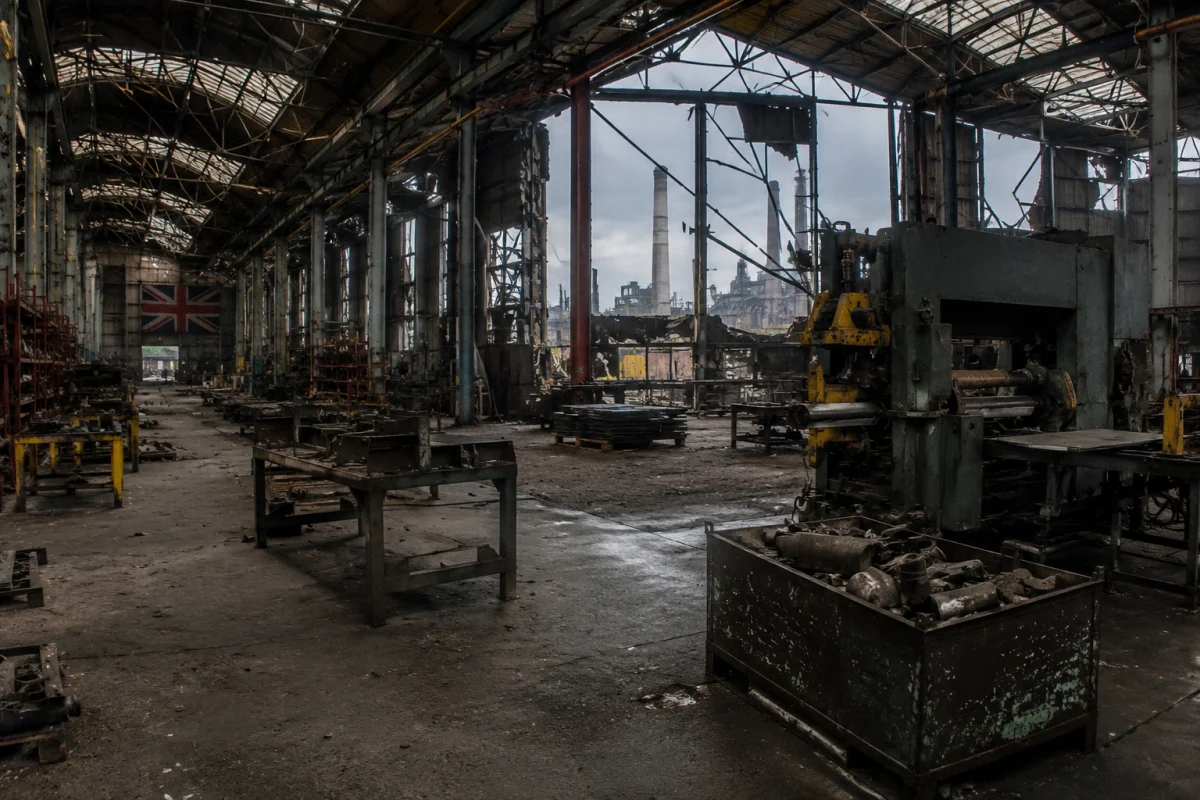
Britain’s manufacturing sector is facing growing financial pressure as persistently high energy costs, weaker business confidence and rising operating expenses threaten the competitiveness of UK factories.
Industry leaders have warned that without urgent intervention, more manufacturers could delay investment, cut jobs, relocate production overseas or face insolvency.
Recent survey findings from Make UK highlight concerns that the country risks a gradual loss of industrial capacity if cost pressures continue to outpace those faced by competitors in Europe and the United States.
Key Takeaways:
- UK manufacturers face some of the highest industrial energy costs among major economies.
- One in 10 manufacturing firms fears insolvency within the next year.
- A quarter of companies have moved or are considering moving production overseas.
- Rising costs are forcing businesses to delay investment and reduce hiring.
- Industry groups are urging the Treasury to provide faster energy cost relief.
- Government support measures exist, but many manufacturers believe implementation is too slow.
- The future of UK manufacturing will depend on improving competitiveness and restoring business confidence.
Why Is Britain Facing a Manufacturing Deindustrialisation Crisis?

Britain’s industrial sector is facing renewed pressure as manufacturers warn that high energy prices, weak confidence and rising operating costs are pushing firms towards difficult decisions. The british manufacturing deindustrialisation crisis has become a serious concern because many companies now see relocation, investment delays or even insolvency as realistic outcomes.
The growing pressure on UK manufacturers
Make UK’s latest feedback suggests that many businesses are no longer dealing with a temporary cost problem. Instead, manufacturers are facing a structural competitiveness issue.
| Pressure Area | Current Concern |
| Energy prices | Around twice the average in continental Europe |
| US comparison | Around four times higher than in the US |
| Business confidence | Reported at a four-year low |
| Profitability | 98% expect a significant squeeze |
| Insolvency risk | One in 10 see insolvency as likely or very likely |
How energy costs are affecting competitiveness?
Energy-intensive firms depend on predictable costs. When electricity and gas prices remain high, companies struggle to price products competitively, fund machinery upgrades, and protect jobs. For exporters, the gap between UK and overseas energy prices can make British-made goods harder to sell internationally.
How Are High Energy Prices Pushing Manufacturers Towards Bankruptcy?
High energy prices are not just reducing profit margins; they are changing survival calculations. According to the Make UK survey, one in 10 manufacturing companies believes insolvency is likely or very likely within the next 12 months. That figure shows how quickly a cost issue can become a bankruptcy risk.
A manufacturing finance adviser described the pressure clearly:
“I speak to firms that are still busy, but they are not making enough margin to feel secure. I would not describe this as weak demand alone; I see it as a cost crisis that is eating into the foundations of otherwise viable businesses.”
| Survey Finding | Reported Impact |
| 46% hit by further energy bill rises | Higher operating pressure |
| 60% passing increases to customers | Rising prices across supply chains |
| 98% expecting profit squeeze | Weaker short-term confidence |
| 38% delaying investment | Lower future productivity |
| 21% reducing headcount | Direct impact on employment |
This is why industry leaders are calling for immediate Treasury action rather than further consultation.
Why Are Some British Manufacturers Moving Production Overseas?

Some UK manufacturers are already moving, or considering moving, production abroad. Make UK reported that a quarter of manufacturing companies either planned to move production overseas or had already done so.
Cost advantages in Europe and Asia
Businesses are looking at countries where energy is cheaper, government support is clearer and industrial policy offers stronger certainty. For large, internationally owned manufacturers, shifting production may be easier than absorbing repeated cost shocks in Britain.
The impact on UK jobs and investment
The concern is not only that factories may leave. It is that suppliers, apprenticeships, engineering skills and regional employment may weaken with them.
| Reason for Relocation | Likely Business Effect |
| Lower overseas energy costs | Improved production margins |
| Stronger industrial subsidies | Better investment confidence |
| More predictable policy | Easier long-term planning |
| Pressure on UK profits | Reduced domestic expansion |
What Does the Make UK Survey Reveal About Industry Confidence?
The survey paints a gloomy picture despite factory output remaining relatively robust in the previous quarter. This gap between current activity and future confidence is important. It suggests manufacturers may still be producing today while preparing for a weaker tomorrow.
Key findings include:
- A quarter of firms have moved or may move production overseas.
- One in 10 companies fears insolvency within 12 months.
- Almost half have faced further energy bill increases.
- More than half have yet to see benefits from the industrial strategy.
- Investment delays and job cuts are already taking place.
Stephen Phipson, Make UK’s chief executive, warned that Britain faces deindustrialisation unless manufacturers receive relief from high energy prices. His message was direct: the sector needs action now.
How Is the Manufacturing Crisis Affecting Jobs, Investment, and Growth?

The manufacturing crisis is already affecting decisions inside factories. Companies that might have invested in new machinery, cleaner technology or workforce training are delaying spending. Smaller firms, in particular, may have fewer options because they cannot easily relocate production overseas.
An operations director at a Midlands engineering firm explained the situation in practical terms:
“We want to invest, hire and grow, but every budget meeting now starts with energy costs. I cannot commit to new machinery when the next bill could wipe out the margin we planned for.”
| Business Area | Reported Effect |
| Jobs | 21% have reduced headcount |
| Investment | 38% have delayed investment |
| Prices | Many firms passing costs to customers |
| Profitability | Almost all expect pressure |
| Growth | Expansion plans becoming harder |
This matters for the wider UK economy because manufacturing supports skilled employment, exports, research, local supply chains and regional growth.
What Support Are Industry Leaders Calling For From the Treasury?

Make UK is calling on the Treasury to cover the cost of taxes and levies paid by industrial businesses through general taxation, similar to approaches used in France and Germany. The organisation says around half of industrial energy bills, amounting to about £3bn, are made up of government carbon taxes and levies linked to grid upgrade costs.
The British Industrial Competitiveness Scheme is intended to reduce bills for qualifying heavy energy users, but it does not take effect until April 2027. Although support is expected to be backdated, industry leaders argue this may come too late for firms already close to collapse.
The TUC has also called for stronger action, warning that thousands of well-paid jobs, often in poorer areas, could be at risk.
Can the Government’s Industrial Strategy Prevent Further Deindustrialisation?
The government says manufacturing is vital to UK growth and that it is tackling energy cost challenges through its modern industrial strategy. Support for chemicals and ceramics has also been announced, alongside measures to cut electricity costs for industries across Great Britain.
However, the concern from manufacturers is timing. If firms are already delaying investment, cutting jobs or preparing to move abroad, long-term strategy may not prevent immediate damage. More than half of respondents in the Make UK survey said they had not yet seen benefits from the industrial strategy.
A further issue is the UK’s reliance on gas. In 2024, gas accounted for 30% of UK electricity generation, compared with 16% in Germany and 3% in France. Because marginal pricing links electricity prices to gas generation costs, manufacturers can face high bills even when much electricity comes from renewables or nuclear.
What Could Happen If Action Is Delayed?

If action is delayed, the UK could face a deeper loss of industrial capacity. Once production lines, skilled workers and supply chains disappear, they are difficult to rebuild.
Possible outcomes include:
- More factory closures and insolvencies.
- Higher relocation of production overseas.
- Reduced investment in modern equipment.
- Job losses in industrial regions.
- Weaker export competitiveness.
- Lower resilience in defence and essential supply chains.
This is why the british manufacturing deindustrialisation crisis is not only a business issue. It is also a national economic and regional policy issue.
Conclusion
British manufacturing can still avoid long-term decline, but industry leaders argue that the window for action is narrowing. The sector remains productive and strategically important, yet high energy prices are placing manufacturers at a disadvantage against competitors in Europe, Asia and the US.
To reduce bankruptcy fears, the government may need to deliver faster energy relief, clearer industrial support and stronger confidence for investment. Without that, the UK risks losing factories, skilled jobs and industrial capability that will be difficult to recover.
Frequently Asked Questions
Why are UK manufacturing energy costs higher than those in Europe?
UK manufacturers face higher costs partly because of gas-linked electricity pricing, policy levies and the country’s greater reliance on gas for power generation compared with some European competitors.
What is deindustrialisation in the British context?
Deindustrialisation refers to the decline of domestic industrial activity, including factory closures, reduced production, falling investment, job losses and companies moving manufacturing overseas.
How does manufacturing contribute to the UK economy?
Manufacturing supports exports, skilled jobs, apprenticeships, regional development, research, innovation and supply chains across sectors such as defence, transport, food, chemicals and engineering.
What industries are most vulnerable to rising energy costs?
Energy-intensive sectors such as steel, chemicals, ceramics, glass, paper, food processing and heavy engineering are especially vulnerable because energy is a major part of their production cost.
What is the British Industrial Competitiveness Scheme?
The British Industrial Competitiveness Scheme is a government support measure designed to cut electricity costs for qualifying energy-intensive businesses, although industry groups argue the timeline may be too slow.
How could overseas relocation affect the UK workforce?
Relocation could reduce factory jobs, weaken local supply chains, limit apprenticeship opportunities and damage communities that depend on stable industrial employment.
What measures could improve manufacturing competitiveness in Britain?
Lower industrial energy costs, faster relief schemes, clearer investment incentives, grid reform, stable policy and support for energy-intensive sectors could help improve competitiveness.