
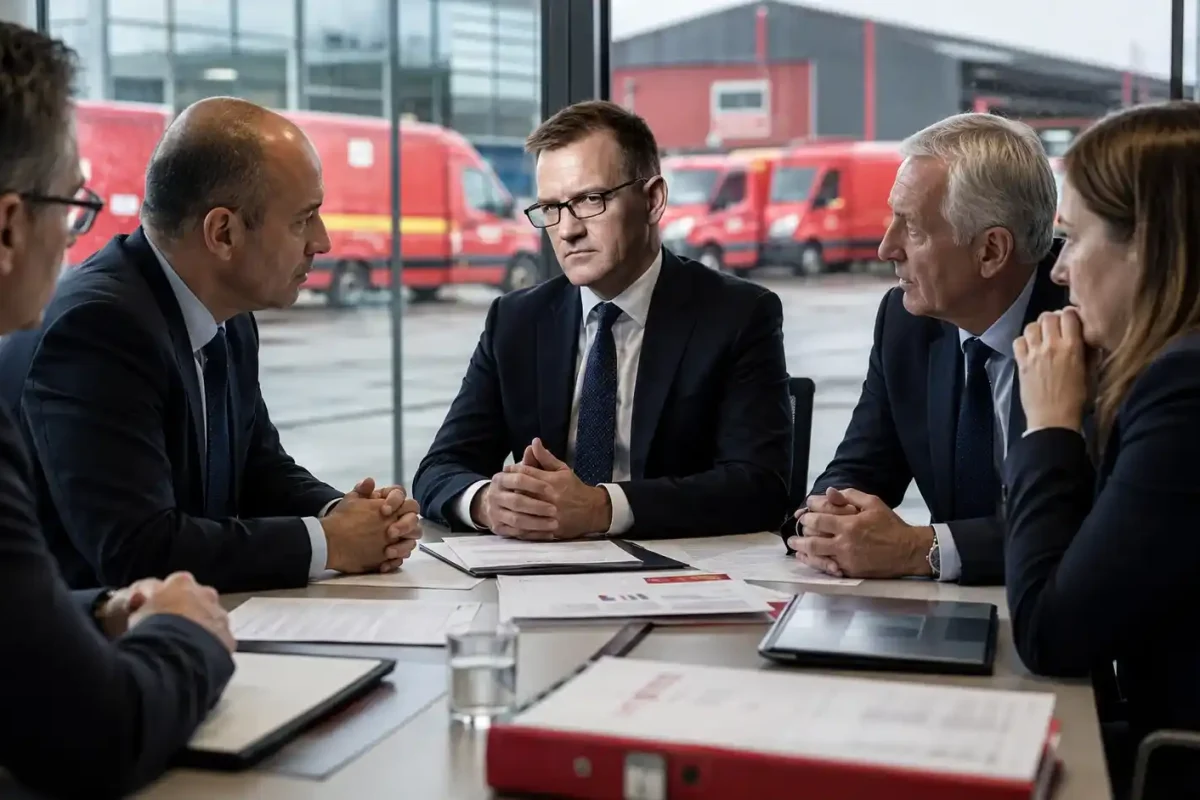
It has become clear that the Daniel Kretinsky Royal Mail takeover continues to generate significant debate across the UK, particularly as questions grow around delivery performance, executive pay, service reforms and long-term investment.
The takeover represents one of the biggest changes in Royal Mail’s modern history and has implications for customers, employees, businesses and regulators alike.
Key takeaways:
- Royal Mail is now under the ownership of Daniel Kretinsky’s EP Group.
- The company remains subject to regulatory obligations and oversight.
- Service reforms are being introduced to address declining letter volumes.
- Questions remain over delivery performance and financial management.
- Significant investment commitments have been announced for future improvements.
Understanding what has changed, what remains protected and what customers can realistically expect is essential for assessing the future of the UK’s postal service.
What Is the Daniel Kretinsky Royal Mail Takeover and Why Does It Matter?
The Daniel Kretinsky Royal Mail takeover refers to the acquisition of International Distribution Services (IDS), the parent company of Royal Mail, through a deal valued at approximately £3.6 billion. The transaction moved the business from public market ownership into private ownership under EP Group.
The significance of the takeover extends beyond corporate ownership. Royal Mail remains a critical national service responsible for delivering letters and parcels across every part of the UK. Any ownership change therefore attracts attention from politicians, regulators, businesses and consumers.
Unlike many private acquisitions, this deal included commitments designed to protect public interests, including maintaining key aspects of the Universal Service Obligation (USO), preserving UK headquarters operations and continuing engagement with recognised trade unions.
Daniel Kretinsky said, “Long-term investment and operational reform must work together if service quality is to improve while maintaining nationwide postal coverage.”
The central question is whether private ownership can deliver the investment and efficiency improvements that Royal Mail has struggled to achieve in recent years.
Overview of the Takeover
| Item | Details |
| Acquirer | EP Group |
| Owner | Daniel Kretinsky |
| Deal Value | Approximately £3.6 billion |
| Target Company | International Distribution Services (IDS) |
| Includes | Royal Mail and GLS |
| Status | Approved and completed |
| Key Focus | Modernisation and operational improvement |
The takeover marks a major turning point for one of Britain’s oldest institutions.
Who Is Daniel Kretinsky and Why Did He Buy Royal Mail?
Understanding the background of Daniel Kretinsky and his motivations for acquiring Royal Mail helps explain the strategic direction of the company under its new ownership.
Daniel Kretinsky’s EP Group and IDS Ownership
Daniel Kretinsky is a Czech billionaire investor with interests spanning energy, retail, logistics and infrastructure. Before the acquisition, he was already a significant shareholder in IDS, giving him extensive familiarity with the business.
His investment case centres on Royal Mail’s extensive delivery network, trusted brand and growing parcel operations. While traditional letter volumes continue to decline, parcel demand remains a major growth opportunity.
Why Does Royal Mail Still Matter as UK Infrastructure?
Despite the growth of digital communication, Royal Mail continues to perform functions that remain vital to society. Government communications, legal notices, healthcare correspondence and small-business deliveries still depend heavily on the postal network.
The business also operates under regulatory obligations that require nationwide coverage, making it different from many purely commercial delivery operators.
Highlights:
- Nationwide delivery network.
- Strong brand recognition.
- Expanding parcel infrastructure.
- Essential public service responsibilities.
- Significant long-term investment potential.
These factors help explain why Royal Mail remains attractive despite its operational challenges.
What Has Changed at Royal Mail Since the Takeover?
Since the takeover, Royal Mail has undergone several operational, financial and regulatory changes that continue to shape its performance and public perception.
Delivery Performance, Letter Delays and Ofcom Scrutiny
One of the most controversial issues remains delivery performance. Royal Mail has faced repeated criticism for missing delivery targets and delivering substantial volumes of mail late.
Regulatory investigations and financial penalties have increased pressure on management to improve reliability while adapting to changing customer behaviour.
Stamp Prices, Falling Letter Volumes and Parcel Growth
The postal market has changed dramatically over the past decade. Letter volumes continue to decline while parcel deliveries have become increasingly important.
Changing Business Trends
| Area | Trend |
| Letter Volumes | Declining |
| Parcel Volumes | Growing |
| Delivery Expectations | Increasing |
| Operational Costs | Rising |
| Automation Requirements | Expanding |
| Competition | Increasing |
This shift is forcing Royal Mail to redesign its operations around modern customer needs.
Executive Pay, Debt Costs and Public Trust
Another major topic has been executive remuneration. Significant increases in leadership compensation have attracted public scrutiny, particularly during a period when service performance remains under pressure.
At the same time, the takeover introduced substantial financing costs, contributing to broader discussions about how ownership changes affect corporate finances and public confidence.
Sarah Mitchell, a corporate governance analyst at London-based consultancy Governance Insight, said that public trust is strengthened when operational performance improves alongside financial results.
Ultimately, management will be judged less by ownership structures and more by customer outcomes.
Is the £114m Payment a Dividend or a Debt-Related Cost?
The £114 million payment has become one of the most discussed aspects of the Daniel Kretinsky Royal Mail takeover.
A key distinction is that Royal Mail stated the payment should not be viewed as a dividend paid directly to Daniel Kretinsky or EP Group. Instead, the funds were reportedly used to meet interest obligations associated with the debt financing that supported the acquisition.
Payment Clarification
| Question | Explanation |
| Was £114m paid out? | Yes |
| Was it described as a dividend? | A dividend was paid within the ownership structure |
| Was it paid directly to EP Group? | The company says no |
| Purpose stated by the company | Debt interest servicing |
| Why controversial? | Service performance concerns remain |
For many observers, the controversy is not solely about accounting classifications. The debate focuses on whether significant payments linked to the takeover are appropriate while delivery performance continues to face criticism.
This distinction is important because debt servicing and shareholder dividends are treated differently from both financial and governance perspectives.
How Will Universal Service Obligation Changes Affect UK Customers?

Understanding these changes is essential for anyone who relies on Royal Mail for regular deliveries, as they will directly influence service frequency and reliability.
Confirmed Changes to Second Class Deliveries
Royal Mail has secured approval for changes to aspects of the Universal Service framework. These reforms are intended to align operations with declining letter volumes and changing customer habits.
Customers can expect adjustments to the frequency of certain second-class delivery services while maintaining nationwide coverage.
What Stays the Same for First Class Post and Parcels?
Several important protections remain in place.
Key Protections:
- Nationwide delivery coverage continues.
- First-class services remain available.
- Parcel services continue across the UK.
- Regulatory oversight remains active.
- Customer complaint processes remain unchanged.
These safeguards are intended to balance operational efficiency with public service obligations.
The overall objective is to create a more sustainable postal model while preserving essential services.
What Does the Takeover Mean for Postal Workers, Unions and Small Businesses?
The impact on employees and small businesses remains a significant area of interest.
Royal Mail’s workforce has experienced years of operational restructuring, technological change and industrial disputes. Following negotiations, agreements have been reached that support the implementation of planned service reforms.
For small businesses, postal reliability remains a critical concern. Many firms depend on affordable nationwide delivery for customer communication and product fulfilment.
I recently spoke with a small online retailer who regularly sends products throughout the UK. They explained the practical challenges they face when deliveries are delayed.
Retail analyst Sarah Collins said, “When customers don’t receive expected deliveries on time, they often assume the retailer is responsible, even when the delay happens after dispatch.”
This experience reflects concerns shared by many businesses that depend on dependable postal services.
If investment commitments translate into improved reliability, small, successful businesses could become among the biggest beneficiaries of the takeover.
Can Daniel Kretinsky’s Royal Mail Takeover Fix the UK Postal Service?
The answer depends on whether investment, operational reforms and regulatory compliance can work together effectively.
Royal Mail faces several interconnected challenges. Letter volumes continue to decline, operating costs remain high and customer expectations have never been greater. At the same time, parcel growth creates opportunities for expansion and improved profitability.
The new ownership has pledged substantial investment over the coming years, including funding aimed at improving service quality and operational efficiency.
Ofcom chief executive Dame Melanie Dawes said, “Successful postal reform requires balancing public service obligations with commercial sustainability.”
While ownership changes alone will not solve every problem, they can provide resources and strategic direction that support long-term improvement.
The coming years will provide the clearest indication of whether those commitments deliver measurable results.
Conclusion
The Daniel Kretinsky Royal Mail takeover represents far more than a simple ownership change. It sits at the centre of wider debates about postal reform, service quality, regulation and the future of national infrastructure.
Confirmed developments include new ownership, investment commitments and approved service reforms. Proposed improvements focus on efficiency, staffing and modernisation. Meanwhile, misinformation often arises when complex financial transactions are confused with direct shareholder distributions.
For customers, workers and businesses, the most important measure of success will be whether Royal Mail can consistently deliver a more reliable, efficient and sustainable service. The future of the UK’s postal network will depend not only on ownership but also on execution, accountability and continued public trust.
Frequently Asked Questions
Is Royal Mail still a British company after the takeover?
Royal Mail continues to operate in the UK and remains subject to UK laws, regulations and postal service obligations despite its change in ownership.
Does Daniel Kretinsky personally manage Royal Mail’s daily operations?
No. Day-to-day management remains the responsibility of the company’s executive leadership team.
Why are letter deliveries becoming less frequent?
Declining letter volumes and rising operational costs have prompted reforms designed to make the postal service more sustainable.
What role does Ofcom play after the takeover?
Ofcom continues to regulate postal services, monitor performance and investigate compliance issues where necessary.
Are postal workers protected under the new ownership?
Various commitments relating to recognised unions and employment arrangements formed part of the takeover process.
Why has parcel delivery become more important than letters?
Consumer behaviour has shifted towards online shopping, making parcel services a key growth area for postal operators.
What should customers do if important mail is delayed?
Customers should use Royal Mail’s complaints process, retain proof of posting and consider tracked services for time-sensitive items.