
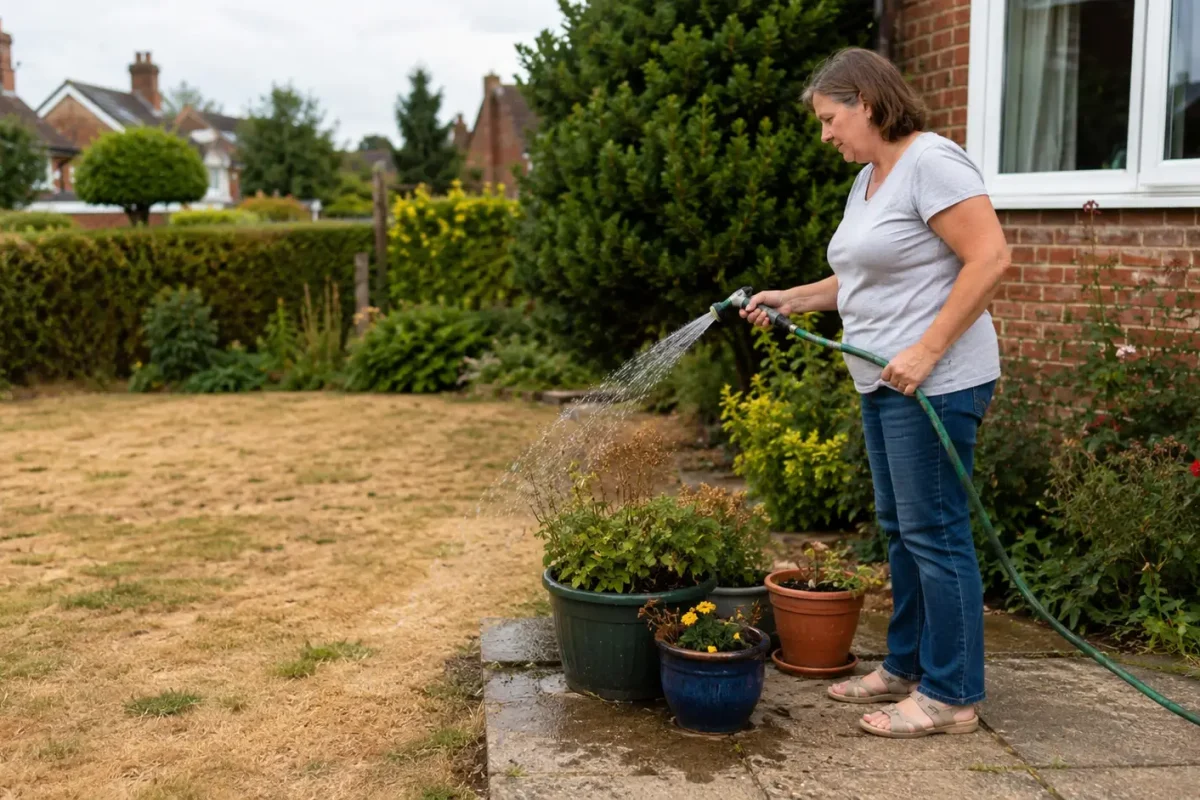
Hosepipe ban benefit exemptions do exist, but they do not mean that every person receiving benefits can automatically ignore a hosepipe ban.
The current controversy centres largely on exemptions available to customers who are on certain support schemes, including a water-bill tariff whose eligibility can involve qualifying benefits alongside either a large family or significant medical water needs.
The key distinction is between receiving benefits and meeting the full conditions of an exempt category.
Some customers may also be exempt because they are on a Priority Services Register or hold a Blue Badge. The exact position depends on the water supplier imposing the Temporary Use Ban and its published rules.
Key Highlights
- Some benefit recipients may qualify indirectly through an exempt support tariff.
- Receiving benefits alone does not necessarily create a universal exemption.
- Health, disability, household circumstances and support-scheme membership can affect eligibility.
- Exemptions may differ between water suppliers and restriction areas.
- Customers should check both their eligibility and what their exemption permits.
The practical answer is therefore more precise than the headline claim that “benefit claimants can ignore the hosepipe ban”.
Are Benefit Claimants Really Exempt From The Hosepipe Ban?

Some are, but there is no single UK-wide rule giving every benefit claimant unrestricted permission to use a hosepipe.
The issue reported in July 2026 concerns customers who fall within specific exempt categories. In one current ban, customers on the Priority Services Register, the WaterSure tariff and Blue Badge holders are exempt.
WaterSure eligibility can involve receipt of a qualifying benefit, but benefit status is only part of the wider eligibility test for that tariff.
This means two statements can sound similar while having very different meanings. “Some people receiving benefits are exempt” may be accurate in a particular supplier area. “Everyone on benefits can ignore every hosepipe ban” is not.
A Temporary Use Ban is imposed by a water undertaker for specified uses of water. It can cover activities such as watering a garden with a hosepipe, cleaning a private vehicle or filling certain pools.
The legal framework therefore focuses on restricted uses of water, while suppliers publish the exceptions and exemptions relevant to their own bans.
Which Benefits And Personal Circumstances May Qualify For An Exemption?
There is no universal list of benefits that automatically exempts a person from every hosepipe ban. The important question is whether the customer meets the conditions of an exemption recognised by the supplier imposing the restriction.
Benefits And Financial Eligibility
For the WaterSure tariff involved in the current debate, official scheme rules include qualifying benefits as one part of the eligibility framework.
The household must also meet further conditions, such as having three or more children under 19 in full-time education or approved training, or having a resident with a medical condition requiring significant additional water use.
The precise eligibility conditions should be checked against the current exemption eligibility rules before assuming that benefit receipt creates an exemption.
Disability, Health And Additional Support Needs
Medical conditions can be relevant where they create a genuine need for significant water use. Separately, customers registered for priority services or holding a Blue Badge may fall within exemptions published for a particular ban.
When Benefit Status And Health Needs Overlap?
A household may satisfy more than one support criterion. However, the safest interpretation is to establish the actual exempt category rather than relying on the broad label “benefit claimant”.
What Do Affinity Water’s Hosepipe Ban Benefit Exemptions Actually Allow?

The current rules state that customers on the Priority Services Register, the WaterSure tariff and Blue Badge holders are exempt from the hosepipe ban. This is the clearest basis for the recent benefit-related headlines.
However, the benefit connection requires context. WaterSure is a bill-capping scheme for eligible metered households with higher essential water needs.
Its eligibility rules can include qualifying benefits together with either a large-family condition or specified medical water needs. Therefore, the exemption is attached to being on the tariff, not simply to the fact that someone receives any benefit.
What The Exemption Means In Practice:
- Customers already within a named exempt category are treated differently from customers who are merely benefit recipients.
- WaterSure eligibility involves conditions beyond receiving a qualifying benefit.
- Priority-service and Blue Badge exemptions provide separate routes to exemption.
- Customers who can avoid unnecessary hosepipe use are still encouraged to conserve water.
The supplier’s current ban information also asks exempt customers to avoid hosepipe use where they are able to do so. That reinforces an important distinction: a formal exemption can remove a restriction without making unnecessary water consumption desirable.
How Do Anglian Water’s Restrictions And Exceptions Compare?
The rules in another major affected region demonstrate why hosepipe ban benefit exemptions should not be treated as a single national policy.
Restrictions there cover activities including watering gardens and plants, washing cars and cleaning patios with a hosepipe, while published exceptions address particular circumstances.
Restricted Activities And Permitted Uses
A household must first establish whether its intended activity is restricted. Using a watering can or bucket may remain possible even when using a hosepipe for the same general task is prohibited.
Readers can compare their circumstances with the official restriction and exception guidance rather than assuming that an exemption reported elsewhere automatically applies to them.
Exceptions For Vulnerability And Additional Needs
Health, safety, accessibility and other defined needs can affect how exceptions operate. The supplier also publicly asked customers to “live within the spirit of these restrictions immediately” when announcing the ban.
The comparison shows why the identity of the water supplier matters: similar Temporary Use Bans can contain different exemption wording and practical conditions.
Does A Hosepipe Ban Exemption Mean Someone Can Use A Hosepipe Without Limits?

Not necessarily. An exemption should be read according to the exact wording published for the relevant ban.Some exemptions identify a category of customer, while other exceptions relate to a specific activity or necessity.
A person should therefore avoid assuming that permission for one purpose automatically authorises every form of hosepipe use.
What To Check Before Using A Hosepipe:
| Check | Why It Matters |
| Exempt category | The customer must fall within the supplier’s published rules |
| Intended activity | An exception may apply only to a particular use |
| Supplier | Different companies can publish different exemptions |
| Location | A ban may cover only specified supply areas |
| Current guidance | Rules can be amended as conditions change |
For example, an exception connected with health or safety should not automatically be interpreted as permission for unrelated recreational water use. The wording of the applicable restriction remains decisive.
Why Has The Benefit Claimant Exemption Debate Become Controversial?
The controversy arose because news reports highlighted the apparent difference between households required to stop using hosepipes and some customers who may remain exempt through support schemes linked partly to benefit eligibility.
Critics have described this as a “two-tier” approach. That is a political or editorial characterisation, not the legal definition of the policy.
The underlying rules are more specific: the exemption applies to named customer categories, while eligibility for a support tariff may itself require both a qualifying benefit and additional household or medical conditions.
The Main Distinctions Behind The Debate
- A benefit-related eligibility condition is not the same as a blanket exemption for all claimants.
- A tariff exemption can include people with unusually high essential water needs.
- Other exempt groups may include priority-service customers and Blue Badge holders.
- Public criticism concerns fairness, while the operational rules concern defined eligibility categories.
The debate is therefore partly about how the policy is presented. A headline can accurately identify a benefit connection while still omitting the additional conditions that determine who actually qualifies.
How Can Someone Check Whether They Qualify Before Using A Hosepipe?

The safest approach is to verify the restriction before using a hosepipe. A person should not rely solely on a news headline, social-media post or assumption based on receiving a particular benefit.
Check The Water Supplier And Affected Postcode
First, confirm which company supplies the property and whether the address is within the area covered by a current Temporary Use Ban.
Read The Exemption Criteria And Permitted-Use Conditions
Next, check whether the household belongs to a named exempt group and whether any conditions apply. Where a support tariff is involved, the customer should confirm actual membership rather than assuming eligibility.
Confirm Unclear Cases Directly With The Supplier
If the wording is uncertain, the customer should seek confirmation before carrying out a restricted activity. The legal basis for these restrictions is set out in the statutory temporary use ban rules.
A Simple Eligibility Check
| Question | Action |
| Is a ban active at the property? | Check the current restriction area |
| Is the household in an exempt category? | Read the published eligibility wording |
| Is a support tariff involved? | Confirm actual tariff membership |
| Is the planned activity covered? | Check restrictions and exceptions separately |
| Is anything unclear? | Contact the water supplier before using the hosepipe |
This process reduces the risk of confusing potential eligibility with a confirmed exemption.
What Should Readers Remember About Hosepipe Ban Benefit Exemptions?

The central point is that hosepipe ban benefit exemptions are specific, not universal. Some people receiving qualifying benefits may be exempt because they are enrolled in a particular support tariff, but that does not mean every benefit recipient can ignore every UK hosepipe restriction.
Readers should remember:
- Benefit receipt may be one eligibility condition rather than the whole test.
- WaterSure can involve qualifying benefits plus large-family or medical-need criteria.
- Priority Services Register customers and Blue Badge holders may be separately exempt under particular rules.
- Restrictions and exemptions can vary between suppliers.
- Current official guidance should take priority over simplified headlines.
Breaching a Temporary Use Ban can carry consequences. The water regulator states that a person breaking hosepipe-ban rules could face a fine of up to £1,000, making it important to establish the actual rules before relying on an assumed exemption.
Conclusion
Hosepipe ban benefit exemptions have become a significant UK news issue because some exempt customer groups can include people whose support-tariff eligibility is linked partly to qualifying benefits.
However, describing the position simply as “people on benefits can ignore the ban” removes important eligibility details.
The more accurate answer is that exemptions depend on the rules of the relevant Temporary Use Ban.
A customer may qualify through an exempt tariff, priority-service status, a Blue Badge or another recognised circumstance, but benefit receipt alone should not automatically be treated as universal permission to use a hosepipe.
Anyone unsure of their position should check the current rules for their own supplier, confirm that the restriction applies to their address and verify that they are genuinely within an exempt category before carrying out an otherwise restricted activity.
Frequently Asked Questions
Does Universal Credit Automatically Qualify Someone For A Hosepipe Exemption?
No. Receiving Universal Credit should not automatically be treated as a universal hosepipe-ban exemption. It may be relevant to eligibility for a support tariff, but additional household, medical or scheme conditions can apply.
Can Someone Receiving PIP Use A Hosepipe During A Ban?
Receiving Personal Independence Payment does not by itself establish a universal UK-wide right to use a hosepipe. The person should check whether they fall within an exemption published by their own water supplier.
Do Pensioners Receive Special Hosepipe Ban Exemptions?
Age alone does not necessarily create an automatic exemption. A pensioner may qualify through another category, such as priority-service registration, disability-related circumstances or a specific supplier rule.
Can A Water Company Ask For Evidence Before Accepting An Exemption?
Requirements can vary. Customers should follow the published process for the relevant ban and be prepared to confirm their status where the supplier requires clarification.
Can An Exempt Household Still Wash A Car Or Water A Garden?
That depends on the scope of the exemption. A customer should check whether the exemption applies broadly to the person or narrowly to a particular activity before using a hosepipe.
Are Hosepipe Ban Exemptions The Same Across England And Wales?
No single exemption list should be assumed to apply everywhere. Temporary Use Bans are imposed by individual water undertakers, and the published exceptions can differ.
Can Exemption Rules Change After A Temporary Use Ban Begins?
Yes. Restrictions can be amended or withdrawn as circumstances change, so customers should check the latest official guidance rather than relying indefinitely on an earlier announcement.
Editorial Note
This article reflects information and published rules available at the time of checking, which may change as water conditions and restrictions develop. Readers should confirm their individual position with the water supplier responsible for their property before relying on an exemption.
How We Checked?
The article was checked against current official restriction pages, exemption information, tariff eligibility rules and the statutory framework for Temporary Use Bans.
Recent news reports were reviewed to understand the public claim that benefit recipients can “ignore” hosepipe restrictions.
Where reporting and official wording differed in emphasis, the article prioritised the more specific eligibility conditions in primary-source material. No invented spokesperson quotations or unsupported claims have been included.