

The correct answer to the UK driving theory-test question “What part of the car does the law require you to keep in good condition?” is seat belts.
Under the Road Vehicles (Construction and Use) Regulations 1986, legally required seat belts and their anchorage points must be maintained in a safe and working condition.
However, the legal responsibility does not stop with seat belts. UK drivers must ensure their vehicles remain roadworthy, including the tyres, brakes, steering, lights, mirrors and windscreen.
A valid MOT certificate does not automatically mean a car is safe to drive.
Understanding these requirements can help learner drivers answer theory-test questions correctly while allowing experienced motorists to avoid preventable safety risks, MOT failures and legal penalties.
Why Are Seat Belts the Correct Driving Theory-Test Answer?
Seat belts are the expected answer because UK vehicle legislation includes specific maintenance requirements for restraint systems.
The question commonly appears with four possible answers:
| Answer Option | Correct or Incorrect |
| Door locks | Incorrect |
| Transmission | Incorrect |
| Gearbox | Incorrect |
| Seat belts | Correct |
The law specifically addresses the condition of seat belts, including their webbing, fastenings, adjustment mechanisms, retractors and anchorage points.
Regulation 48 of the Road Vehicles (Construction and Use) Regulations 1986 requires relevant seat belt components to remain free from defects that could adversely affect their ability to restrain an occupant during an accident.
This is important because a seat belt that appears functional during ordinary driving might fail to provide adequate protection in a collision if its materials or mounting points are weakened.
For learners preparing for their theory examination, the distinction is straightforward:
Theory-test answer: Seat belts.
Everyday legal responsibility: Keep the entire vehicle roadworthy.
What Does UK Law Say About Keeping Seat Belts in Good Condition?
UK vehicle safety legislation places specific obligations on the maintenance of legally required seat belts.
In Great Britain, Regulation 48 of the Road Vehicles (Construction and Use) Regulations 1986 covers the maintenance of seat belts and anchorage points.
The requirements concern several components.
Seat Belt Webbing
The webbing is the strong woven material that holds an occupant in position.
It must not have significant cuts, excessive fraying, stretching or other visible damage likely to reduce its effectiveness.
Buckles and Fastenings
The buckle must lock securely when the seat belt is fastened and release correctly when required.
A buckle that repeatedly opens unexpectedly or refuses to release can create a serious safety problem.
Retracting Mechanisms
Retracting seat belts must operate as intended.
A defective retractor may leave the belt excessively loose or prevent it from functioning correctly.
Anchorage Points
Anchorage points secure the seat belt to the vehicle structure or seat assembly.
These mounting points must remain sufficiently strong and free from serious corrosion, distortion or damage.
Even a seat belt with undamaged webbing can become unsafe if its anchorage is weakened.
How Can You Tell Whether a Seat Belt Is in Good Condition?
Drivers can identify many potential seat belt problems through simple visual and functional checks.
The following warning signs deserve attention:
- Frayed Webbing: Loose or damaged fibres around the edges of the belt.
- Visible Cuts: Tears or cuts that could weaken the belt during sudden loading.
- Faulty Buckles: A fastening that does not engage or release correctly.
- Poor Retraction: A belt that remains excessively loose or fails to retract as designed.
- Twisted Webbing: A belt that cannot sit correctly across the occupant’s body.
- Loose Mountings: Movement or visible deterioration around seat belt anchorage points.
- Collision Damage: Signs that a belt or pretensioner has been subjected to significant crash forces.
A twisted belt does not automatically mean the restraint system is defective, but it should be corrected before use.
Similarly, some retractors operate differently depending on vehicle design. An unusual response should be assessed against the manufacturer’s instructions rather than automatically treated as a failure.
Any suspected safety-critical defect should be inspected by a qualified technician.
Can a Damaged Seat Belt Cause an MOT Failure?
Yes. Damaged or incorrectly functioning seat belts can result in an MOT failure.
The Driver and Vehicle Standards Agency (DVSA) MOT inspection manual sets out the conditions that testers must examine.
These include seat belt security, webbing condition, buckles, retractors and the surrounding anchorage structure.
| Seat Belt Defect | MOT Classification |
| Legally required seat belt missing | Major |
| Webbing significantly stretched or weakened | Major |
| Buckle damaged or not operating correctly | Major |
| Retractor not functioning as intended | Major |
| Seat belt anchorage loose | Major |
| Anchorage structure likely to detach during a collision | Dangerous |
A major defect results in an MOT failure and requires repair. A dangerous defect indicates a direct and immediate risk to road safety.
The distinction matters because not all seat belt faults carry the same level of risk.
An MOT tester assesses the severity of the fault against the official inspection criteria.
What Happens If Seat Belt Anchorage Points Are Corroded?
Corrosion near a seat belt anchorage can weaken the structure supporting the restraint system.
MOT inspectors assess the load-bearing structure within the prescribed area around seat belt anchorages.
Where corrosion significantly reduces structural strength, the vehicle can fail its MOT.
More severe deterioration that could allow an anchorage to detach during a collision can receive a dangerous classification.
Drivers should not assume that replacing the visible belt will resolve a structural problem.
What Other Car Parts Must Be Kept in Good Condition?
Although seat belts are the answer to this particular theory-test question, several other components must satisfy UK vehicle safety requirements.
The Highway Code emphasises that drivers must ensure their vehicles comply with relevant construction, use and lighting regulations.
The following components are particularly important.
| Car Component | Main Maintenance Requirement | Potential Problem |
| Tyres | Legal tread, suitable inflation and safe condition | Reduced grip or tyre failure |
| Brakes | Effective braking performance | Longer stopping distances |
| Steering | Safe and reliable control | Loss of vehicle control |
| Lights | Correct operation and alignment | Poor visibility |
| Indicators | Effective signalling | Other drivers misjudging intentions |
| Windscreen | Clear forward visibility | Obstructed road view |
| Wipers and washers | Effective windscreen cleaning | Poor visibility in bad weather |
| Mirrors | Required rearward visibility | Reduced awareness |
| Seat belts | Secure and effective restraint | Increased collision injury risk |
| Suspension | Safe handling and stability | Poor vehicle control |
| Exhaust system | Compliant noise and emissions | Excessive emissions or noise |
| Number plates | Correct, clean and readable display | Identification offences |
Tyres and Legal Tread Depth
For cars in Great Britain, the minimum legal tyre tread depth is 1.6 mm across the central three-quarters of the tread and around the entire circumference.
Tyres must also be correctly inflated for the vehicle and load, and free from defects that make them unsafe.
A tyre can therefore be illegal even when its tread depth meets the minimum requirement if it has dangerous structural damage.
Brakes and Steering
Braking and steering systems are fundamental to controlling a vehicle.
Drivers should investigate symptoms such as grinding brakes, unusual steering vibration, pulling to one side or warning lights indicating potential faults.
These problems should not be ignored simply because the vehicle recently passed an MOT.
Windscreen and Visibility
Drivers must maintain a clear view of the road.
Windscreen damage, dirt, ineffective wipers and obstructed mirrors can compromise visibility.
The Highway Code also requires lights, indicators, reflectors and number plates to be kept clean and clear.
Does a Valid MOT Certificate Mean Your Car Is Roadworthy?
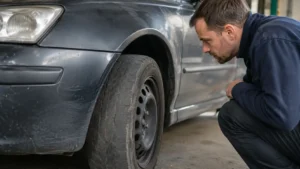
No. A valid MOT certificate does not guarantee that the vehicle is currently safe to drive.
An MOT records whether a vehicle met the relevant test requirements at the time of inspection.
Faults can develop afterwards.
For example, a vehicle might pass its MOT in January, but a tyre could become damaged in February or a seat belt buckle might stop working in March.
The driver must still ensure the vehicle remains roadworthy.
This is particularly important for businesses operating company cars or commercial vehicles.
Fleet operators should maintain servicing schedules, vehicle inspection records and systems for reporting defects.
Businesses using larger electric vans also need to understand how vehicle classification affects testing requirements.
The UK electric van MOT changes explain the revised testing arrangements for eligible zero-emission commercial vehicles.
However, changes to MOT classifications do not remove the underlying responsibility to operate safe vehicles.
What Checks Should You Carry Out Before Driving?
A short vehicle safety inspection can help identify obvious defects before a journey.
Drivers do not need specialist mechanical knowledge to carry out basic checks.
A practical routine includes:
- Inspect Seat Belts: Check visible webbing, buckles and normal operation.
- Check Tyres: Look for significant cuts, bulges, low pressure and inadequate tread.
- Test Lights: Ensure headlights, indicators, brake lights and other required lamps work.
- Assess Brakes: Confirm the brakes respond normally and investigate unusual behaviour.
- Clean Windows: Keep the windscreen, side windows and mirrors free from obstructions.
- Inspect Wipers: Check that wipers clear the windscreen effectively and washer fluid is available.
- Check Warning Lights: Investigate persistent safety-related dashboard warnings.
- Secure Loads: Make sure luggage and equipment cannot interfere with vehicle controls or occupants.
Not every check must involve detailed mechanical testing before every journey.
However, defects that could make a vehicle unsafe should be addressed before it is used.
Drivers should also follow the manufacturer’s recommended maintenance intervals.
What Are the Penalties for Driving an Unsafe Car?
Driving a vehicle in a dangerous condition can lead to legal penalties.
Government roadworthiness guidance states that drivers may face:
- A fine of up to £2,500.
- Three penalty points.
- A possible driving ban.
These are potential penalties for the relevant dangerous-condition offence, rather than an automatic punishment for every minor vehicle defect.
Different offences, such as using tyres that do not meet legal requirements or failing to display compliant number plates, can attract different penalties.
The exact consequences depend on the nature of the defect and the applicable offence.
Drivers should therefore distinguish between a minor maintenance issue, an MOT failure and a defect that makes the vehicle dangerous to use.
Who Is Responsible for Maintaining a Company Car?
The driver remains responsible for ensuring that the vehicle is safe to drive, even when it is owned or supplied by an employer.
Employers, vehicle operators and fleet managers can also have legal duties relating to vehicle safety and maintenance.
For organisations operating company cars, effective procedures should include regular servicing, prompt repairs and clear defect-reporting arrangements.
Employees should know how to report concerns such as defective seat belts, worn tyres or abnormal braking.
A vehicle should not remain in use where a serious defect makes it unsafe.
Keeping records of inspections and repairs can help businesses demonstrate that appropriate maintenance arrangements are in place.
Can You Repair a Damaged Seat Belt Yourself?
Seat belts are safety-critical components, so drivers should avoid improvised repairs.
Techniques such as stitching damaged webbing, modifying a buckle or interfering with a pretensioner can compromise the restraint system.
Modern vehicles may include seat belt pretensioners that operate as part of the supplemental restraint system during a collision.
These components require appropriate handling and repair procedures.
If a seat belt is damaged:
- Stop using the affected seating position.
- Check the vehicle manufacturer’s guidance.
- Arrange professional inspection.
- Replace or repair components using approved procedures and suitable parts.
- Confirm that the restraint system operates correctly before returning it to use.
After a significant collision, a professional assessment may be necessary even when the seat belt has no obvious visible damage.
Why Is This Question Important for Learner Drivers?

This question tests knowledge of vehicle safety rather than mechanical expertise.
Learners sometimes choose brakes or tyres because these components seem more important to driving.
However, the expected multiple-choice answer concerns the specific legal requirements for seat belts.
The question also reinforces an important principle: the driver has an ongoing duty to ensure that the vehicle is safe.
That knowledge remains relevant during practical driving tests and after obtaining a full licence.
Learners should understand both the examination answer and the broader requirements for maintaining a roadworthy vehicle.
Conclusion
For the UK driving theory-test question, the correct answer is seat belts.
The Road Vehicles (Construction and Use) Regulations 1986 establish maintenance requirements covering seat belts, their mechanisms and their anchorage points.
However, a driver’s legal responsibility extends to the whole vehicle. Tyres, brakes, steering, lights, visibility equipment and other safety-related components must remain compliant and roadworthy.
Regular checks and prompt repairs can reduce the risk of accidents, MOT failures and legal penalties. A valid MOT is important, but maintaining a safe vehicle is an ongoing responsibility.
Frequently Asked Questions
What part of a car must legally be kept in good condition?
The expected UK theory-test answer is seat belts. Required seat belts must remain properly maintained, while the entire vehicle must also be roadworthy.
Is it illegal to drive with a broken seat belt?
A defective legally required seat belt can make a vehicle non-compliant with safety regulations. Serious defects should be repaired before the vehicle is driven.
Do rear seat belts have to work properly?
Yes. Rear seat belts that are legally required must meet applicable maintenance requirements. The exact fitment rules depend partly on the vehicle’s age and type.
Will a car fail its MOT for a faulty seat belt buckle?
Yes. A seat belt buckle that is required and does not function correctly can be classified as a major defect, resulting in an MOT failure.
How often should seat belts be checked?
Drivers should look for obvious damage and check normal operation regularly. Seat belts are also examined during applicable MOT inspections and should be assessed after a collision if damage is suspected.
Can you drive without an MOT if the car is in good condition?
Generally, a car that legally requires a valid MOT cannot be used on the road without one, subject to limited exceptions such as certain journeys to pre-arranged tests or repairs. Roadworthiness is a separate requirement.
Are seat belts compulsory in every vehicle?
Seat belt fitment requirements vary depending on vehicle type, age and seating arrangement. Modern passenger cars generally have legally required seat belts, but exceptions exist for certain vehicles and seats.