


Child Benefit commonly appears in a bank account overnight or during the early morning of the scheduled payment date. However, HMRC does not publish or guarantee one exact deposit time for every bank.
The important point is the payment date, not whether the money appears precisely at midnight. One bank may display the payment shortly after midnight, while another may update the balance later in the morning.
Child Benefit is administered by HM Revenue and Customs (HMRC), not the Department for Work and Pensions (DWP). It is normally paid every four weeks on a Monday or Tuesday, although weekly payments are available in certain circumstances.
Child Benefit payment times at a glance
| Question | Answer |
| Who pays Child Benefit? | HMRC |
| What time does it arrive? | Commonly overnight or early in the morning, but no exact hour is guaranteed |
| What day is it paid? | Usually Monday or Tuesday |
| How often is it paid? | Normally every four weeks |
| Can it be paid weekly? | Yes, for single parents and people receiving certain qualifying benefits |
| What happens on a bank holiday? | HMRC may change the payment date; it is not always moved to the preceding Friday |
| How can a payment be checked? | Through the bank statement, HMRC app or online Child Benefit payment history |
| Who should be contacted if it is missing? | The bank first, followed by the Child Benefit Office |
The official Child Benefit payment timetable confirms that most recipients are paid every four weeks on a Monday or Tuesday.
Is Child Benefit paid by HMRC or DWP?
Child Benefit is paid by HMRC.
This distinction matters when a payment is late. A Universal Credit, PIP or State Pension problem would normally be dealt with by the DWP, but a Child Benefit payment problem should be taken to the HMRC Child Benefit Office.
People sometimes describe Child Benefit as a DWP payment because many other UK benefits are administered by that department. Searching a Universal Credit journal or calling a DWP helpline will not resolve a Child Benefit payment problem.
If a household receives both payments, Child Benefit and Universal Credit will follow separate schedules. Our explanation of when Universal Credit reaches your bank covers the different monthly Universal Credit cycle.
Does Child Benefit go into the bank at midnight?
Child Benefit can appear shortly after midnight, but midnight is not a guaranteed release time.
HMRC sends scheduled payments by direct credit transfer. These payments are processed through the banking system before being credited to the recipient’s account.
According to the Bacs processing cycle, the beneficiary’s account is credited on the third stage, known as the entry day.
The receiving bank decides when the incoming credit becomes visible in its app, online banking system or statement. That means:
- Two claimants with the same HMRC payment date may see their money at different times.
- A payment may arrive at the normal time one month and slightly later the next.
- Overnight bank maintenance can temporarily delay when a balance is updated.
- A payment that is not visible at 12:01am is not necessarily late.
- A bank cannot normally release a payment it has not yet received.
Bacs states that a Direct Credit payment arrives as cleared funds on the date it is expected. It does not provide a universal consumer guarantee that every bank must display the payment at the same hour.
The safest expectation is therefore that the money should arrive on the scheduled date, not at one particular minute.
What time does Child Benefit arrive at different banks?
Most banks do not publish a guaranteed Child Benefit deposit time. Exact bank-by-bank times found online are usually based on customer reports rather than contractual payment schedules.
| Bank or account provider | What recipients should expect |
| Barclays | Often reported overnight or during the early morning, but Barclays does not guarantee a Child Benefit-specific hour |
| Lloyds, Halifax and Bank of Scotland | Commonly reported during overnight processing; the precise release time can vary |
| NatWest and Royal Bank of Scotland | Payments may appear overnight or in the early morning; no universal time is guaranteed |
| HSBC and First Direct | Usually expected on the scheduled payment date, with the display time controlled by the bank |
| Santander | Often reported during overnight processing, but customers should rely on the payment date rather than a particular hour |
| Nationwide | The time can vary between payment cycles; Nationwide states that the time it receives regular Bacs credits may differ each week or month |
| TSB, Metro Bank, Virgin Money and Chase | The payment should be checked throughout the scheduled date because no official Child Benefit-specific time is published |
| Starling | Incoming payments may be shown quickly once processed, but the exact Child Benefit arrival time is not guaranteed |
| Monzo | An eligible incoming Bacs payment may be available through Paid Early at 4pm on the preceding working day |
| Credit union or other provider | Processing depends on the individual provider; contact it directly if the payment does not appear |
Nationwide’s current-account information specifically warns that the time it receives regular Bacs payments can differ between weeks or months.
Can Monzo release Child Benefit early?
Monzo allows customers to access an eligible incoming Bacs payment from 4pm on the working day before it is due. Its Paid Early terms state that the feature applies to any Bacs payment of up to £20,000.
The payment must first appear as an upcoming Bacs credit in the Monzo app. If no upcoming payment is displayed, do not assume that HMRC has definitely issued it or that the Paid Early feature will become available.
Accessing the money early does not change the official HMRC payment date or the date of the following Child Benefit payment.
How often is Child Benefit paid?
Most people receive Child Benefit once every four weeks. This is a repeating 28-day schedule, not a calendar-month schedule.
That distinction means:
- The money will not always arrive on the same numbered date each month.
- A claimant will normally receive 13 four-weekly payments during a full 52-week year.
- The usual weekday generally remains the same.
- A bank-holiday adjustment does not necessarily create a new permanent payment day.
For example, if a normal payment arrives on Monday 7 September, the next payment would ordinarily be due four weeks later on Monday 5 October, subject to any official payment-date adjustment.
Who can receive Child Benefit weekly?
HMRC can pay Child Benefit weekly where the claimant is a single parent or the claimant or their partner receives a qualifying benefit.
The current Child Benefit claim form lists:
- Income Support
- Income-based Jobseeker’s Allowance
- Pension Credit
- Income-related Employment and Support Allowance
- Universal Credit
A claimant who believes they qualify for weekly payments should contact the Child Benefit Office. Switching to weekly payments changes the frequency, not the total underlying weekly entitlement.
How much Child Benefit should arrive in 2026?
The Child Benefit rates for the 2026/27 tax year are:
| Child | Weekly rate | Usual four-week payment |
| Eldest or only child | £27.05 | £108.20 |
| Each additional child | £17.90 | £71.60 |
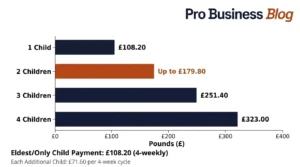
A family receiving Child Benefit for two children would ordinarily receive:
- £108.20 for the eldest or only child; plus
- £71.60 for the additional child.
That produces a normal four-week payment of £179.80.
A payment can differ where it includes a partial entitlement period, arrears, an adjustment or a correction. Contact the Child Benefit Office if the amount is unexpectedly higher or lower and the reason cannot be identified from HMRC correspondence.
How can you work out your next Child Benefit payment date?
Start with the last normal scheduled payment date and count forward four weeks, or 28 days.
For example:
- Last normal payment: Monday 10 August
- Add four weeks: Monday 7 September
- Expected next payment: Monday 7 September
The calculation becomes less straightforward when the previous payment was changed because of a bank holiday. HMRC specifically warns claimants not to count four weeks from a holiday-adjusted payment without checking the official dates.
If a payment due on Monday was brought forward to Friday, the following payment does not automatically become due four weeks after that Friday. Check the normal payment schedule or award notice instead.
Child Benefit bank-holiday payment dates for 2026
Child Benefit does not follow one universal “paid on the Friday before” rule. HMRC publishes specific dates, and some Scotland- or Northern Ireland-only adjustments move payments later rather than earlier.
The official 2026 Child Benefit bank-holiday dates are:
| Normal due date | Revised payment date | Area |
| 5 January 2026 | 6 January 2026 | Scotland only |
| 17 March 2026 | 18 March 2026 | Northern Ireland only |
| 6 April 2026 | 2 April 2026 | UK |
| 4 May 2026 | 1 May 2026 | UK |
| 25 May 2026 | 22 May 2026 | UK |
| 13 July 2026 | 14 July 2026 | Northern Ireland only |
| 14 July 2026 | 15 July 2026 | Northern Ireland only |
| 3 August 2026 | 4 August 2026 | Scotland only |
| 4 August 2026 | 5 August 2026 | Scotland only |
| 31 August 2026 | 28 August 2026 | UK |
| 28 December 2026 | 24 December 2026 | UK |
| 29 December 2026 | 30 December 2026 | Northern Ireland only |
HMRC also warns that local holidays may delay payments in:
- Edinburgh on 21 September 2026
- Glasgow on 28 September 2026
- Dundee on 5 October 2026
Recipients in Scotland or Northern Ireland should therefore check the specific national and local arrangements rather than relying on payment information written only for England and Wales.
Receiving Child Benefit early does not mean HMRC has made an extra payment. It usually means the ordinary payment has been moved, creating a longer interval before the next one.
How long does the first Child Benefit payment take?
An established payment schedule is different from a new claim.
HMRC says a first Child Benefit payment can take up to 12 weeks. It can take longer if the claimant has recently moved to the UK.
The award notice should state the first payment date. If the claim is successful, Child Benefit can normally be backdated for up to three months from the claim date.
A new claimant should not assume the payment is missing simply because another parent received their Child Benefit shortly after applying. Processing time can depend on identity checks, documents, residency circumstances and whether HMRC needs additional information.
Once the first payment has been made, count forward four weeks from the scheduled date to estimate the next one, unless a bank holiday affects it.
How to identify Child Benefit on a bank statement
HMRC says the bank-statement reference begins with “HMRC Child Benefit” and contains 18 characters.
The exact way it appears can vary because banking apps shorten or format transaction descriptions differently. Search the account used on the claim rather than every account held by the household.
It is also possible to view up to five previous Child Benefit payments through HMRC’s online service. A claimant may need to sign in using Government Gateway or GOV.UK One Login and complete an identity check.
The payment history is especially useful for confirming:
- The last payment date
- Whether the pattern is weekly or four-weekly
- The normal payment amount
- Which payment should be expected next
- Whether an apparent delay is caused by counting from the wrong date
What should you do if Child Benefit has not gone in today?
Work through the following checks in order.
1. Confirm that the payment is due
Check the award notice, last normal payment date and four-week cycle. Do not assume Child Benefit is paid monthly or on the same numbered date every month.
2. Check for a bank-holiday adjustment
Use HMRC’s published Child Benefit dates, especially if you live in Scotland or Northern Ireland.
An earlier payment may already have been received. If so, the missing payment might be the result of mistaking an adjusted payment for an additional payment.
3. Check the correct bank account
Look at the account registered with HMRC. This is particularly important if:
- You recently changed banks.
- You use several current accounts.
- Child Benefit is paid into a joint account.
- The account belongs to your partner or another nominated person.
- You completed a current-account switch.
4. Look for the HMRC payment reference
Search the statement for an 18-character reference beginning with HMRC Child Benefit. Check both completed and pending transactions where the banking app provides that information.
5. Check HMRC payment history
The online history can show the five most recent payments. If HMRC records the payment but it is not visible in the bank account, contact the bank first.
6. Contact the bank
HMRC’s published procedure says claimants should contact their bank before calling the Child Benefit Office.
Ask the bank to check whether:
- An incoming credit is pending.
- The account is restricted.
- Overnight processing has been delayed.
- A recent account switch affected the credit.
- The payment was rejected or returned.
7. Contact the Child Benefit Office
If the bank cannot locate the payment and it is genuinely overdue, contact HMRC.
Have the following ready:
- National Insurance number
- Full name and address
- Expected payment date
- Last payment date
- Normal payment amount
- Relevant bank account details
- Details of any recent change reported to HMRC
Why might Child Benefit have stopped?
A missing payment is not always a banking delay. HMRC identifies several circumstances that can stop or interrupt Child Benefit:
- HMRC was not told that the bank account changed.
- HMRC could not contact the claimant at their recorded address.
- The claimant did not reply to an HMRC letter.
- The child now lives with somebody else.
- The claimant is no longer eligible.
- HMRC was not told that the child would remain in approved education or training after turning 16.
- The child left qualifying education or training.
- A family or residency change affected entitlement.
Child Benefit normally stops on 31 August following a child’s 16th birthday if the child leaves approved education or training.
It can continue for an eligible young person under 20 who remains in approved education or training, but HMRC must have the correct information.
Use HMRC’s service to report changes affecting Child Benefit promptly. Delaying a change can result in missed payments or an overpayment that later has to be repaid.
What if the bank account has changed?
Tell HMRC before relying on the new account for the next payment. The claimant can update bank or building-society details online or through the HMRC app.
Do not close the old account until HMRC has confirmed the change where it is practical to keep it open. Updating details immediately before a payment is due may not give HMRC enough time to redirect that payment.
Can Child Benefit be paid into a joint account?
Yes. Child Benefit can be paid into:
- An account in the claimant’s name
- A joint account
- An account in the claimant’s partner’s name
- An account belonging to someone acting on the claimant’s behalf
- Another nominated account capable of receiving direct credits
HMRC pays Child Benefit into only one account. It cannot divide one claim between several bank accounts.
The official account-payment rules exclude Post Office card accounts and a Nationwide CashBuilder account with sort code 07-00-30 where that account is in somebody else’s name.
Using an account in the claimant’s own name can make it easier to access the money and investigate a missing payment.
How to contact the Child Benefit Office
The current Child Benefit helpline details are:
- Telephone: 0300 200 3100
- Outside the UK: +44 161 210 3086
- Relay UK: 18001 followed by 0300 200 3100
- Opening hours: Monday to Friday, 8am to 6pm
- Bank holidays: Closed
HMRC can discuss a claim only with the claimant or an authorised representative. The claimant should have their National Insurance number ready and ensure the address in their Personal Tax Account is up to date.
While the phone line is closed, the HMRC app and online services may remain available. Our page covering HMRC helpline availability on bank holidays explains which digital services can still be used.
Final answer
Child Benefit normally reaches a bank account on its scheduled Monday or Tuesday payment date. It frequently appears overnight or early in the morning, but no exact time is guaranteed across every UK bank.
If the money is missing, confirm the four-week payment date, check HMRC’s bank-holiday table and online payment history, and then contact the bank. If the bank cannot trace the payment, call the Child Benefit Office on 0300 200 3100.
Frequently asked questions
What time does Child Benefit usually go into the bank?
It commonly appears overnight or during the early morning of the scheduled payment date. HMRC does not guarantee one exact time for every bank.
Can Child Benefit arrive after 2am?
Yes. A payment arriving after 2am is not automatically late. Banks have different processing schedules, and the display time can vary between payment cycles.
What time does Child Benefit go into Barclays?
Barclays does not publish a guaranteed Child Benefit-specific time. Customers commonly report overnight or early-morning credits, but the scheduled date is more reliable than an estimated hour.
What time does Child Benefit go into a NatWest account?
NatWest payments may appear overnight or in the early morning. There is no universal time guaranteed for every account or payment cycle.
What time does Child Benefit go into Santander?
Santander customers often report seeing scheduled credits during overnight processing. However, neither HMRC nor Santander guarantees one exact Child Benefit deposit time.
What time does Child Benefit go into Nationwide?
Nationwide states that the time it receives regular Bacs payments can differ each week or month. Check throughout the scheduled payment date rather than relying on a fixed time.
Can Child Benefit be paid early through Monzo?
If the payment appears as an eligible upcoming Bacs credit, Monzo may allow it to be accessed from 4pm on the preceding working day through Paid Early.
Is Child Benefit paid weekly or monthly?
It is normally paid every four weeks, not monthly. Single parents and claimants receiving certain qualifying benefits can request weekly payment.
Is Child Benefit paid on Saturday or Sunday?
Child Benefit is normally scheduled for Monday or Tuesday. Where a holiday affects the date, HMRC publishes a revised payment date. Do not assume every affected payment will arrive on Friday.
Why has Child Benefit not gone in today?
Possible reasons include using the wrong expected date, a bank-holiday adjustment, bank processing, changed account details, unanswered HMRC correspondence or a change in the child’s circumstances or eligibility.
How can I check whether HMRC has paid me?
Check the bank statement for the HMRC Child Benefit reference and sign in to the HMRC service that displays the five most recent Child Benefit payments.
How long should a first Child Benefit payment take?
HMRC says a first payment can take up to 12 weeks and may take longer for somebody who has recently moved to the UK. Successful claims can normally be backdated for up to three months.